Reading Time: 6minutesA one-hour road trip checklist for your car: tire pressure and tread, oil, fluids, battery, lights, belts, warning codes and the emergency kit to pack.
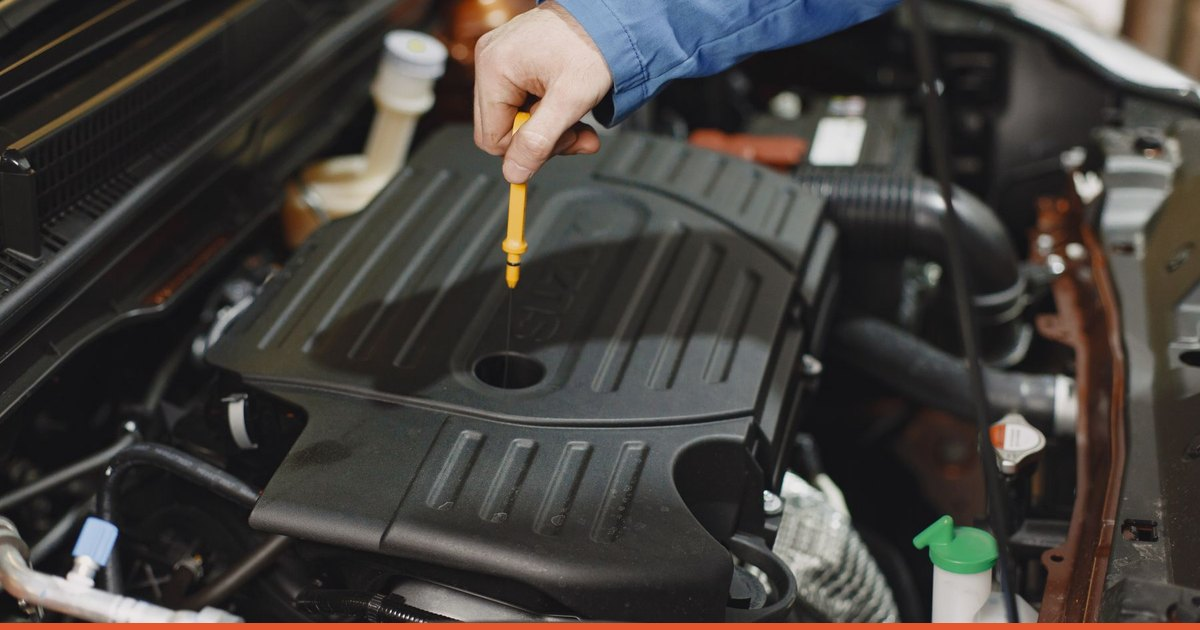
Pulling the dipstick, the first five minutes of any road trip check (Photo: Gustavo Fring, Pexels)
Reading Time: 6minutes
The bags are by the door, the snacks are bought and the route is planned. The car, the thing that has to carry all of it for 600 miles, gets a glance and a full tank. That is how a lot of road trips end up with an afternoon at a rural repair shop waiting on a part.
Most roadside breakdowns come from a short list of things: tires, batteries, fluids and belts. You can check nearly all of them in your driveway in about an hour, a few days before you leave, which gives you time to fix anything you find. Here is the checklist, in the order we would do it.
Disclosure: GarageWise is reader-supported. As an Amazon Associate we earn from qualifying purchases, at no extra cost to you.
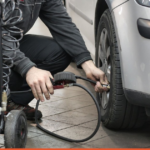
Use the pressure on the sticker inside the driver’s door jamb, not the number molded into the tire sidewall, which is the maximum the tire can hold. Check first thing in the morning before driving, because warm tires read high. A loaded car on a long highway run is exactly when underinflation hurts most: it builds heat, wears the shoulders and cuts fuel economy.
A digital tire gauge costs very little and is more trustworthy than the gauge on a gas station hose. If you are carrying a lot of weight, some cars list a higher pressure for a full load on the same sticker, so read it all.
If you find a low tire, a portable inflator lets you fix it in the driveway and keeps doing its job for the rest of the trip.
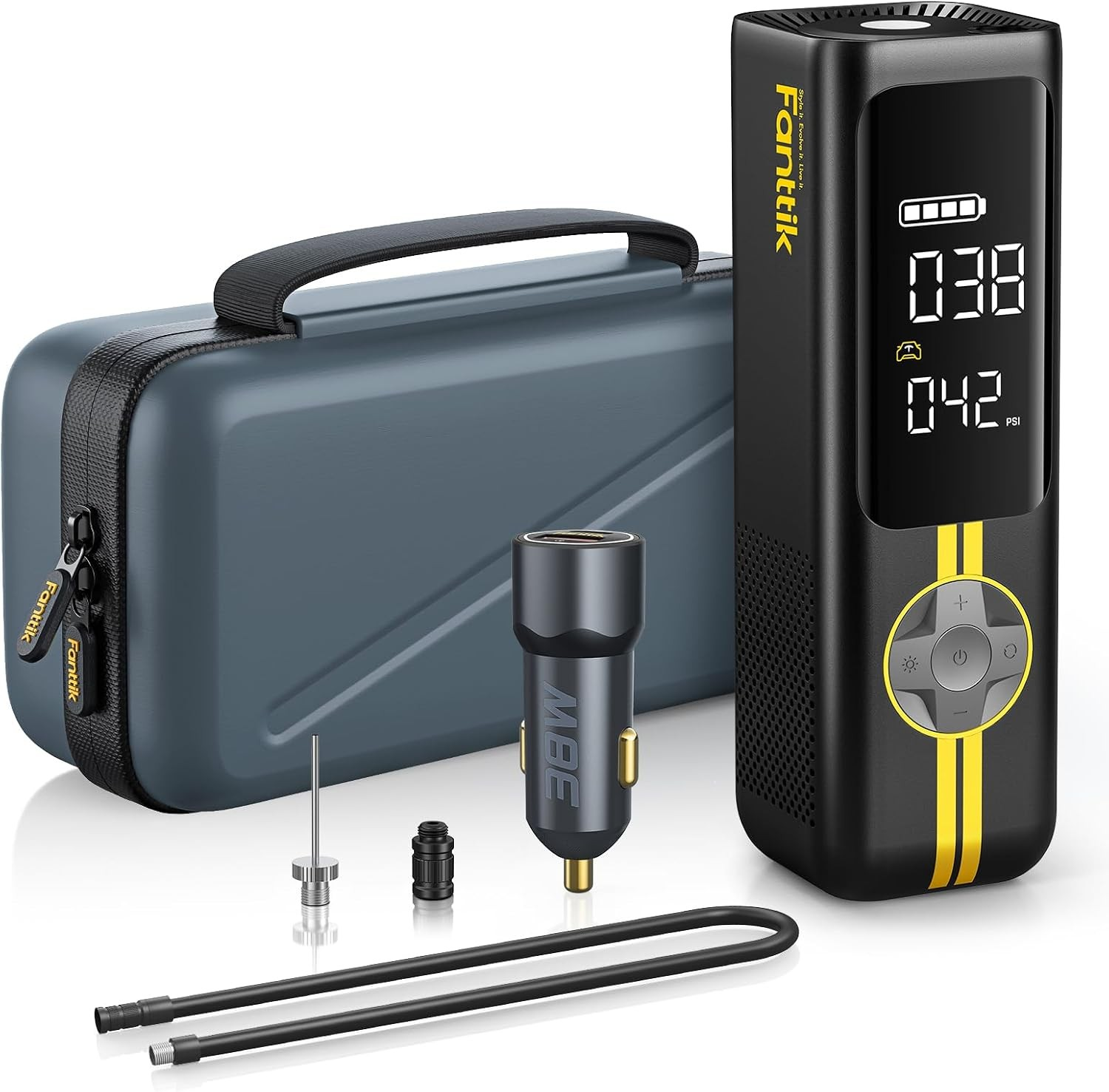
Fanttik X8 APEX: small enough for the glovebox
The Fanttik X8 APEX is the one we would pack for a trip. Fanttik lists it at 150 PSI with preset modes for car, bike, motorcycle and ball, and it doubles as a power bank with a built-in light. It is not the fastest pump, but it is small enough to live in the glovebox. Charge it before you leave.
Slow leak at a rest stop? A glovebox inflator gets you to the next town without hunting for an air machine.
Do not forget the spare. A compact spare usually runs a much higher pressure than your regular tires (often 60 PSI; it is printed on the tire or the placard), and it is the tire most likely to have been ignored for five years.
2. Tread and sidewalls
Put a penny into the shallowest-looking groove with Lincoln’s head pointing down. If you can see the top of his head, the tread is at or near 2/32 of an inch and the tire is due. A tread depth gauge gives you an actual number and costs a couple of dollars. Measure the inside and outside edges as well as the middle; uneven wear points to alignment or pressure problems.
Run a hand around each sidewall looking for bulges, cuts or cracking, and check that there is no nail sitting in the tread. If the tires are due for rotation, doing it before the trip is easy; see how to rotate your tires in the driveway.
3. Oil
Park on level ground, let the engine sit for a few minutes, pull the dipstick, wipe it, push it fully back in and pull it again. The level should be between the marks. If the next oil change will come due during the trip, do it before you go. Low, dark, gritty oil on a 10-hour drive is an avoidable risk. Our guide to changing your own oil lists the tools if you want to do it yourself.
4. Coolant, brake fluid and washer fluid
Check coolant at the overflow reservoir with the engine cold, never by opening a hot radiator cap. Brake fluid should sit between the min and max lines; a level that keeps dropping is a sign of worn pads or a leak and worth a shop visit before a mountain drive. Fill the washer reservoir all the way, because bugs on the highway empty it fast.
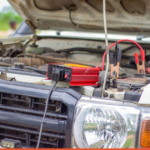
Look at the date sticker; batteries in hot climates in particular often give up somewhere around three to five years. Check the terminals for white or green corrosion and make sure the clamps are tight. If you have a multimeter, a resting reading of about 12.6 V means a full charge, and 12.2 V means it is only around half charged.
A dead battery at a motel parking lot is the classic road-trip failure, and a lithium jump starter means you do not need to find a stranger with cables.
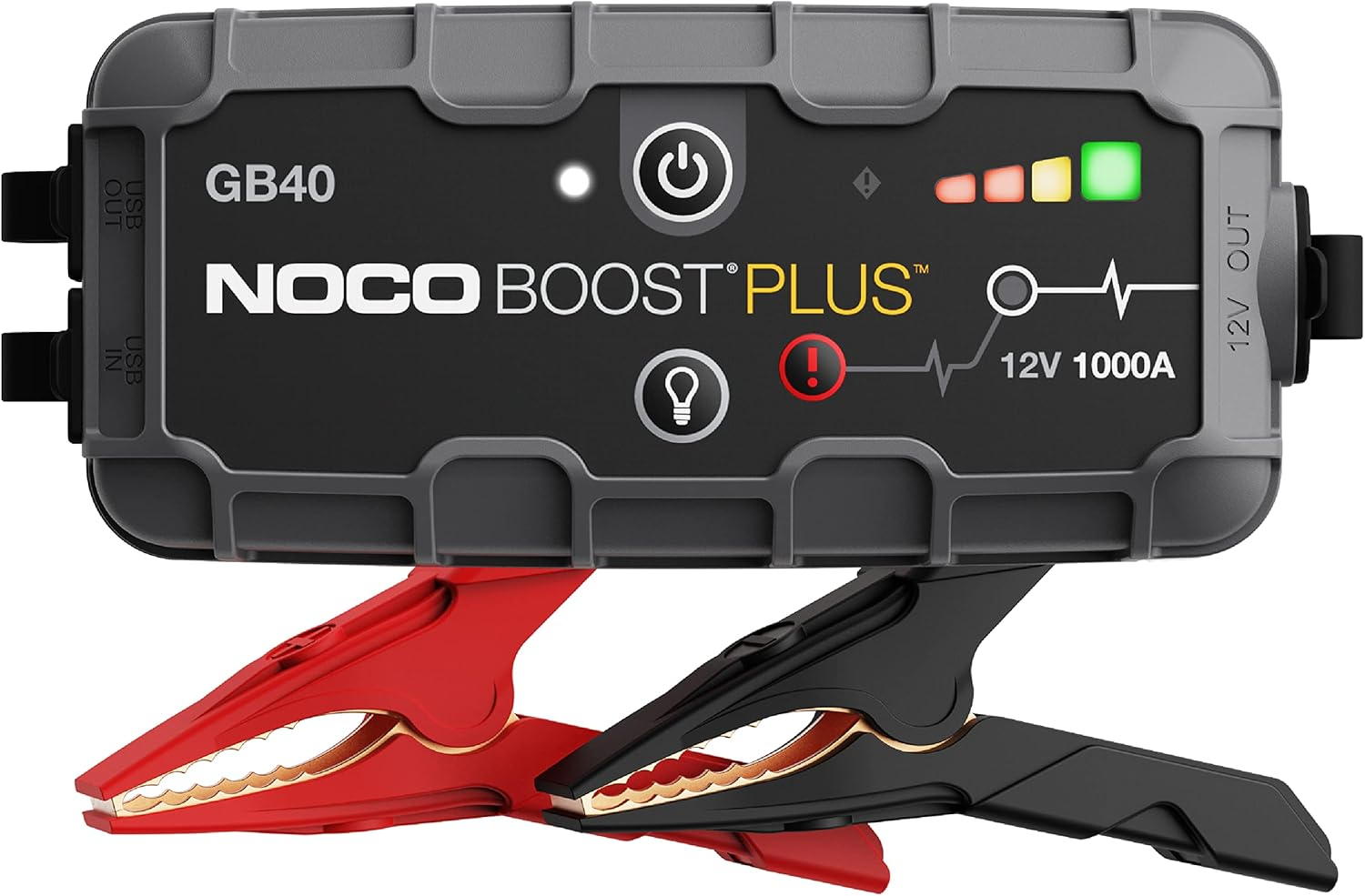
NOCO Boost Plus GB40 jump starter with its clamps
The NOCO Boost Plus GB40 is a common choice for good reason. NOCO rates it at 1,000 amps for gas engines up to 6.0 liters and diesels up to 3.0 liters, with spark-proof clamps and reverse-polarity protection. It weighs 2.4 pounds, has an IP65 rating, a 100-lumen flashlight with SOS and strobe modes, and can recharge a phone over USB. NOCO lists it at $99.95 on its own site.
No one around with jumper cables? A charged GB40 in the trunk turns a dead battery into a two-minute fix.
Have someone stand outside while you run through headlights (low and high), brake lights, turn signals, hazards and reverse lights. Or back up to a garage door and watch the reflection. Wipers that streak or chatter are worth replacing before a trip, since you cannot predict the weather 400 miles away.
7. Belts and hoses
With the engine off and cool, look at the serpentine belt for cracks, glazing or fraying, and squeeze the main radiator hoses. They should feel firm, not mushy, swollen or brittle. Any wet spots or crusty residue around hose ends point to a slow coolant leak. These are cheap parts that cause expensive tows when they fail.
8. Warning lights and stored codes
A check engine light that has been on for months is not something to drive across the country with without at least knowing what it is. Even with no light on, a scan can show pending codes that have not lit the lamp yet.
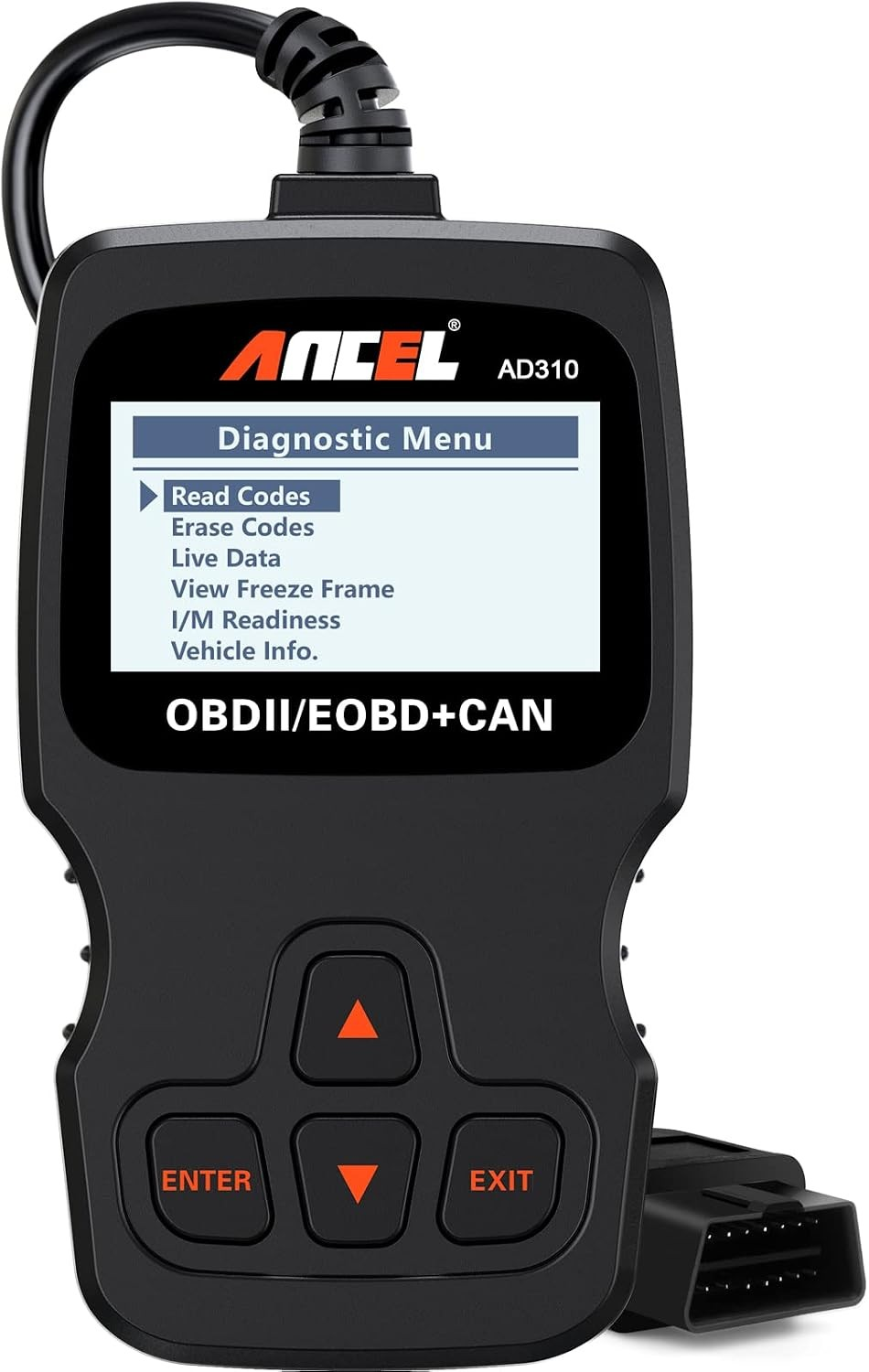
ANCEL AD310 plugs into the OBD2 port under the dash
The ANCEL AD310 is a simple reader that we like for this. ANCEL lists it for 1996 and newer OBD2 vehicles; it reads and clears engine codes, shows live data and freeze frame and checks readiness. It does not read ABS or airbag codes, but it tells you whether the light is a loose gas cap or something to sort out before you leave.
Light came on halfway through the trip? A code reader in the glovebox tells you whether to keep driving or find a shop.
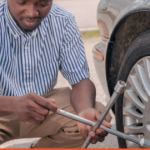
Even a perfectly prepared car can pick up a nail. Before you go, confirm that the jack, lug wrench and wheel lock key are actually in the car, and pack:
Phone charger and cable
Flashlight or headlamp
Gloves and a small tarp or mat to kneel on
Warning triangles or flares
Water, snacks and a blanket
A basic tool roll and a roll of duct tape
Your roadside assistance number written down, in case your phone is dead
Plan the checks for a few days before, not the night before
Doing this on the weekend before a trip means a worn tire or a weak battery can be replaced at a normal price, at a shop you know, instead of whatever is open on a Sunday off an interstate exit. On the morning you leave, all you need is a walk around the car, a glance at the tires and a full tank.