
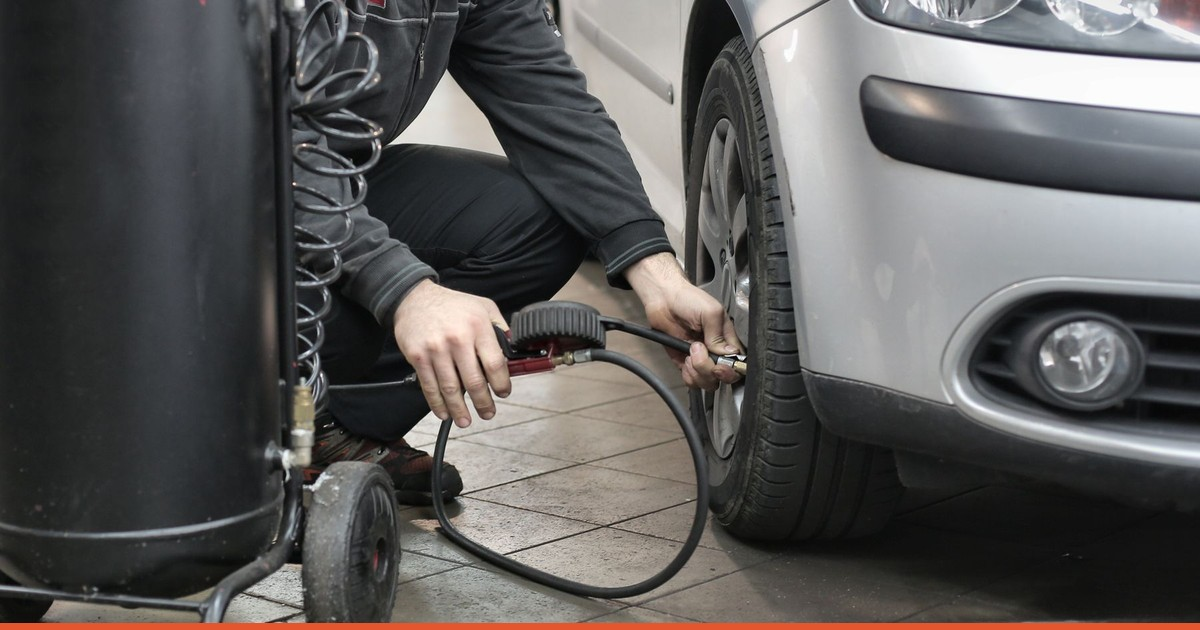
Most people buy their first air compressor for one job. The tires keep losing a few PSI, or there’s a trim project that needs a brad nailer, or a neighbor made an impact wrench look like magic.
Then they find out the compressor they bought is too loud for an attached garage, too small for the tool they really wanted, or way more than they needed to top up four tires.
Choosing well comes down to one question: what will you actually run off it? Answer that, and the specs sort themselves out.
Disclosure: GarageWise is reader-supported. As an Amazon Associate we earn from qualifying purchases, at no extra cost to you.
Start with the tools, not the compressor
Every air tool has an air consumption rating, usually printed as CFM (cubic feet per minute) at 90 PSI. That number, not horsepower or tank size, decides whether a compressor can keep up.
As a rough guide:
- Tire inflation, sports balls, pool toys: tiny air demand. A cordless inflator or any small compressor will do.
- Brad and finish nailers, staplers: low demand per shot. A small pancake compressor keeps up easily for trim work.
- Blow guns and occasional bursts: a 6- to 8-gallon unit handles short jobs well.
- Impact wrenches, ratchets, die grinders: much hungrier, and they run in longer bursts. Check the tool’s CFM rating against the compressor’s.
- Sanders, spray guns, media blasters: continuous high demand. This is big-stationary-compressor territory.
Look up the CFM figure for the hungriest tool you plan to use, then buy a compressor that delivers comfortably more than that at 90 PSI.
Specs that matter
CFM at 90 PSI
This is the headline number. Make sure you compare CFM at the same pressure, because some boxes quote a bigger figure at 40 PSI. At 90 PSI is the one that matches how air tools are rated.
Tank size
The tank is a buffer, not a power source. A bigger tank lets you work longer before the motor kicks on, but it can’t make a small pump keep up with a hungry tool. A 6-gallon tank with a good pump beats a 20-gallon tank with a weak one for nailing.
Maximum pressure
A higher max PSI means more air packed into the same tank, so you get more nails or a longer blast before the pump restarts. Your tools still run at the pressure you set on the regulator.
Noise
This is the spec people regret ignoring. A standard oil-free pancake compressor is loud enough to be unpleasant in an attached garage. “Quiet” models run much lower, and if the garage shares a wall with a bedroom, it is worth paying for.
Oil-free versus oiled
Oil-free pumps need almost no maintenance and are the norm for home garages. Oil-lubricated pumps tend to run cooler and quieter and last longer under heavy use, but they need oil changes and aren’t as portable.
Power supply
Small and mid-size compressors run on a regular 120 V outlet. Large stationary units often need a dedicated 240 V circuit. Manufacturers generally recommend a longer air hose over a long extension cord, because a thin cord starves the motor.
Our picks at a glance
| Pick | Best for | Key specs | |
|---|---|---|---|
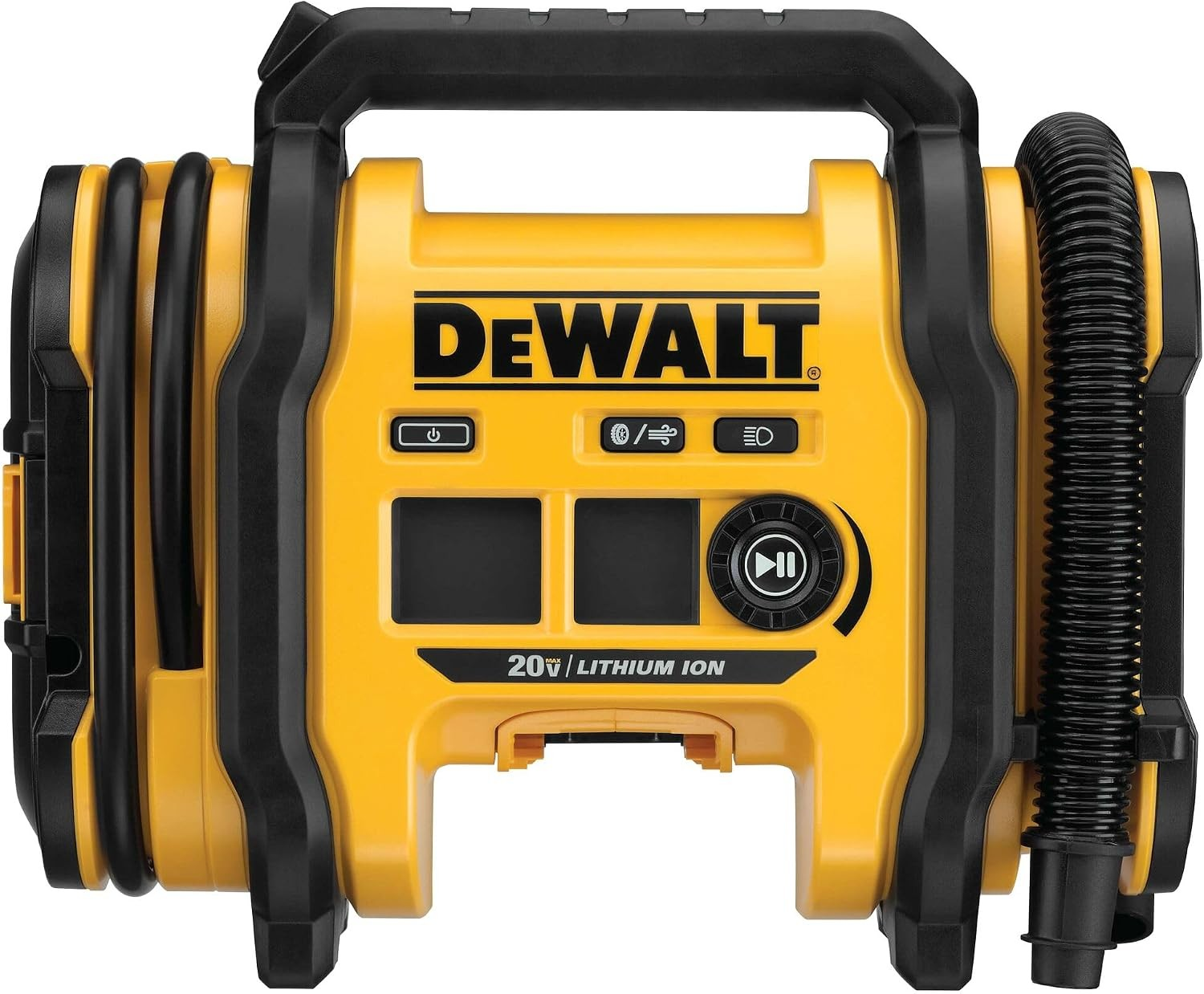 DEWALT DCC020IB inflator | Tires and inflatables only | 160 PSI max, three power sources | Check Price |
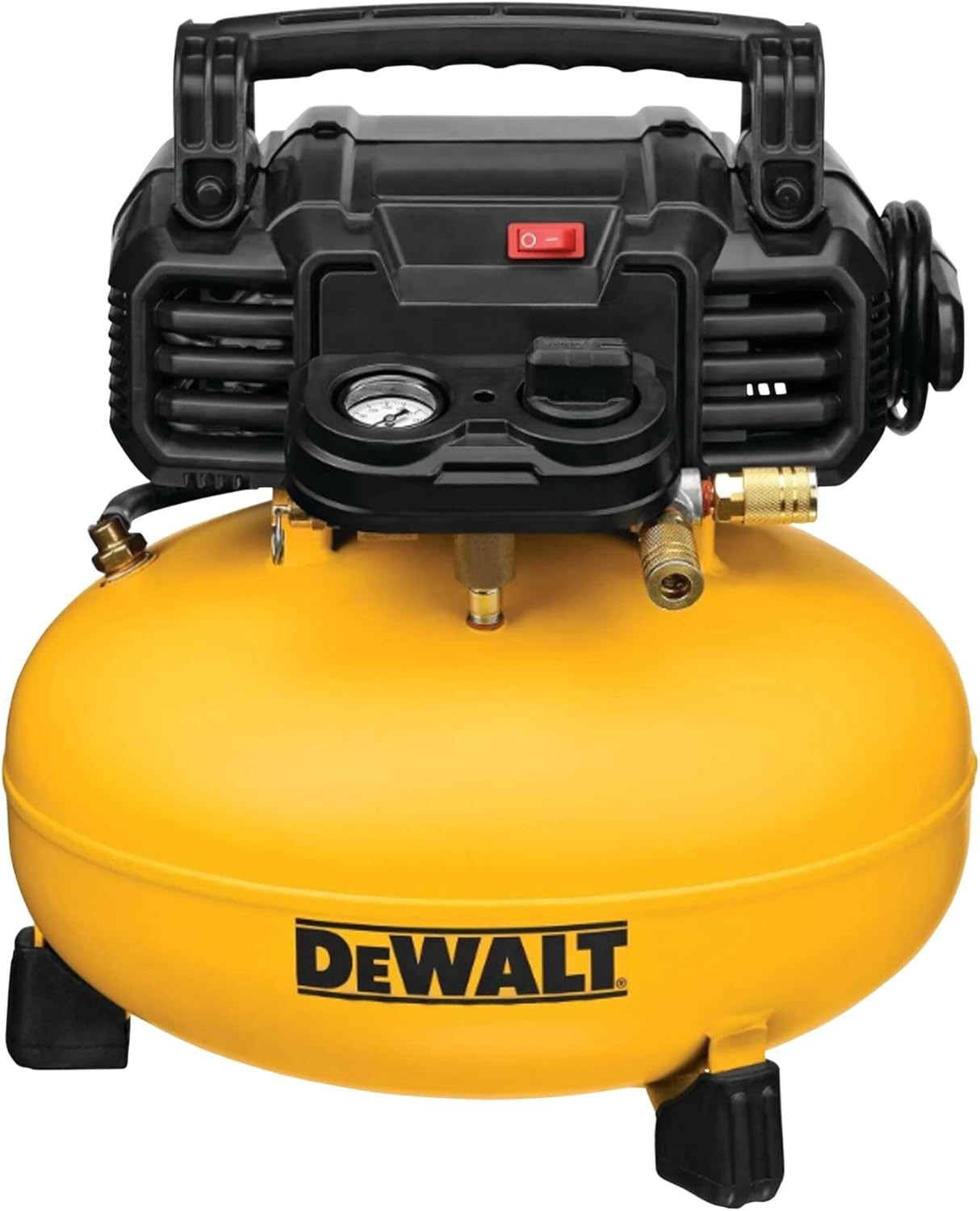 DEWALT DWFP55126 pancake | DIY trim, nailing, tires | 6 gal, 165 PSI, 2.6 SCFM @ 90 PSI, 75.5 dBA | Check Price |
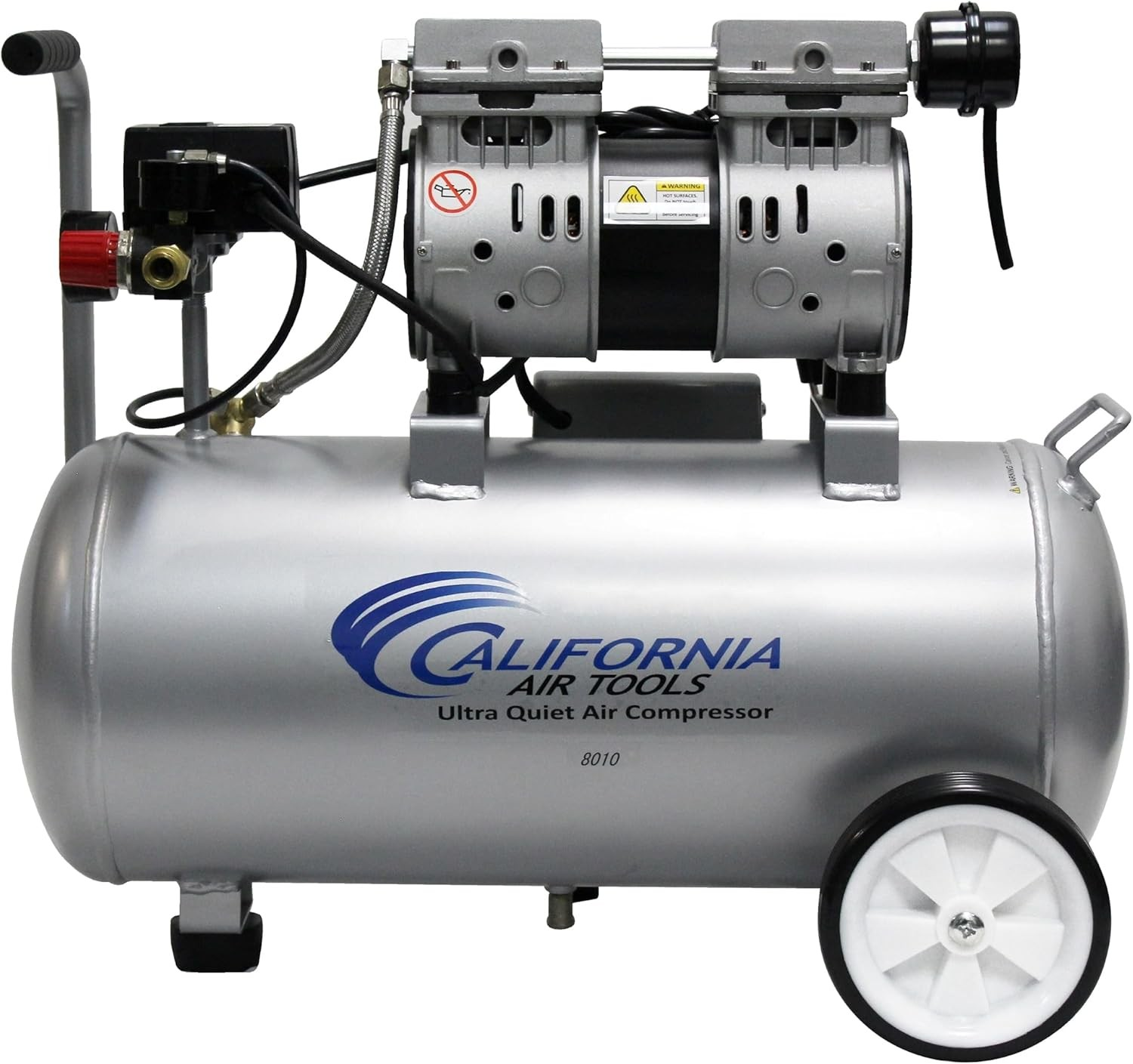 California Air Tools 8010 | Attached garages and quiet work | 8 gal, 120 PSI, 2.20 CFM @ 90 PSI, 60 dB | Check Price |
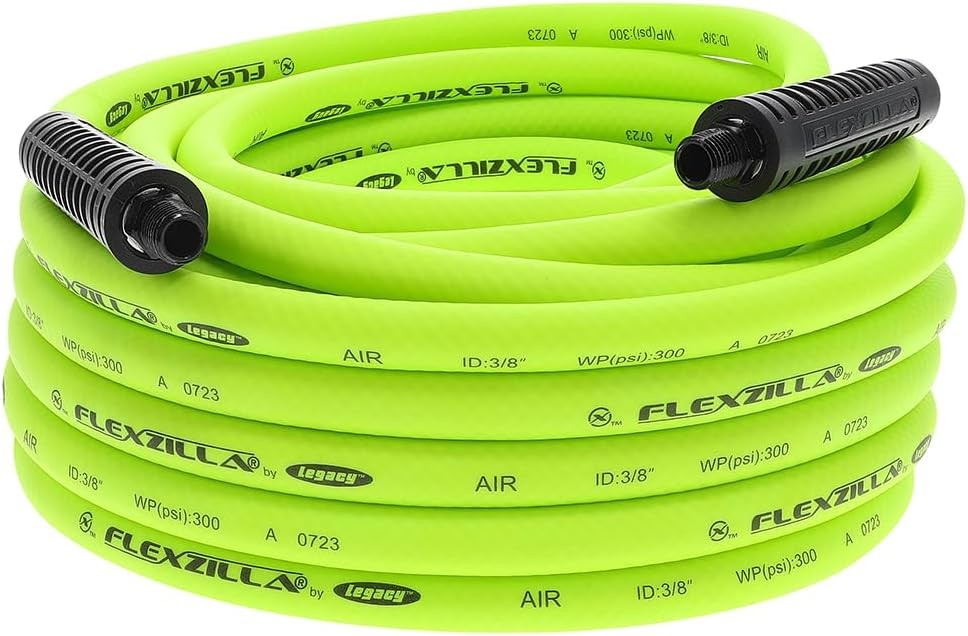 Flexzilla 3/8 in. x 50 ft. hose | Any of the above | 3/8 in. x 50 ft., 300 PSI | Check Price |
If you just want full tires: DEWALT DCC020IB
Be honest about this one. If tires, bike tubes and the occasional air mattress are all you will ever inflate, you don’t need a tank at all.
DEWALT’s DCC020IB is an inflator that runs off a 20V MAX battery, a 12 V car socket or a 110 V wall outlet. Its high-pressure mode tops up to 160 PSI and shuts off automatically at the pressure you set, and a separate high-volume mode inflates and deflates things like air mattresses quickly.
It has an LED light, onboard storage for the nozzles and a threaded chuck that screws onto the valve rather than clamping. It is sold as a bare tool, so it makes the most sense if you already own DEWALT 20V batteries.
What you give up: it won’t run air tools. It is an inflator, not a compressor.
Already on DEWALT 20V batteries? The DCC020IB turns them into a tire inflator that lives in the trunk or on the garage shelf.
Check the DCC020IB Price →The homeowner’s all-rounder: DEWALT DWFP55126
A 6-gallon pancake compressor is the classic first compressor for a reason. It fills tires, runs brad and finish nailers through a whole trim job, powers a blow gun and goes in the trunk when you help a friend.
The DWFP55126 is one of the better ones. DEWALT rates it at 165 max PSI with 2.6 SCFM delivered at 90 PSI from an oil-free pump. It weighs 30 lb, has two couplers so two people can work off it, and a ball drain valve that makes emptying the tank quick.
DEWALT lists the noise level at 75.5 dBA, which is low for a pancake but still noticeable indoors.
What you give up: 2.6 SCFM isn’t enough for continuous impact wrench or sanding work. It will drive lug nuts in short bursts, then make you wait.
One compressor for trim, tires and toys? The DWFP55126 handles the typical homeowner list without taking over the garage.
See It on Amazon →For attached garages and early mornings: California Air Tools 8010
If the garage is under a bedroom or you like to work while the house is asleep, noise is the spec that matters most. California Air Tools built its name on this.
The 8010 has an 8-gallon steel tank, a 1.0 HP motor driving an oil-free pump, 120 PSI max and delivers 2.20 CFM at 90 PSI. Its 60 dB rating is far quieter than a typical pancake compressor. You can hold a conversation next to it.
At 48 pounds it is heavier, but it has wheels and a handle. The bigger tank also gives you a little more working time between pump cycles.
What you give up: a little air delivery compared with the DEWALT, and a lower maximum pressure. It’s the same class of compressor in a quieter package, not a bigger one.
There is also an 8010A version with an aluminum tank, which is lighter and doesn’t rust.
Garage shares a wall with the house? The 8010 does what a pancake does at a fraction of the noise.
Check Price on Amazon →Don’t forget the hose: Flexzilla 3/8 in. x 50 ft.
The hose that comes free with a compressor kit is usually short, stiff and determined to tangle. A good hose makes every job nicer.
Flexzilla’s HFZ3850YW2 is a 3/8-inch by 50-foot hybrid polymer hose rated to 300 PSI, with 1/4-inch MNPT fittings on both ends. Flexzilla sells it as a no-kink, all-weather hose, and that’s the point: it stays manageable in a cold garage instead of fighting you.
Fifty feet reaches around a car in a two-car garage and out to the driveway, which means you rarely need to drag the compressor itself.
Tired of fighting the hose? A Flexzilla is the cheapest upgrade you can make to any compressor.
View the Flexzilla Hose →What about impact wrenches and sanders?
If the main reason you want air is a half-inch impact wrench for tire swaps, sanding bodywork or spray painting, none of the small compressors above will keep up for long.
You’re looking at a larger stationary compressor with a 20-gallon-plus tank and a much higher CFM rating, often needing its own 240 V circuit. That’s a bigger decision with installation questions of its own.
It’s also worth asking whether a cordless impact wrench would do the job. For a home garage doing seasonal tire swaps, it often does.
Setup and safety basics
- Drain the tank after every use. Compressing air pulls moisture out of it, and water left in a steel tank rusts it from the inside.
- Wear eye protection. Blow guns and air tools throw debris, and a fitting can let go.
- Set the regulator for the tool. Don’t run a nailer at the tank’s full pressure. Check the tool’s maximum operating pressure.
- Plug into the wall. Use more hose rather than a long, thin extension cord.
- Give it air to breathe. Keep the compressor away from sawdust and paint overspray, which clog the intake filter.
Quick decision checklist
- Only tires and inflatables: a cordless inflator like the DCC020IB.
- Trim, nailing, tires, blow gun: a 6-gallon pancake like the DWFP55126.
- Same jobs, but noise is a problem: the California Air Tools 8010.
- Impact wrench, sanding or painting as the main job: a larger stationary compressor, or a cordless tool instead.
- Whatever you buy: add a decent 3/8-inch hose.
Match the compressor to the work, and it will be one of the most-used things in your garage.
Working on the car as well? See our guide to Mechanic Creepers and Shop Stools for Under-Car Work.
Put that compressor to work after a DIY rotation: How to Rotate Your Tires in the Driveway.