
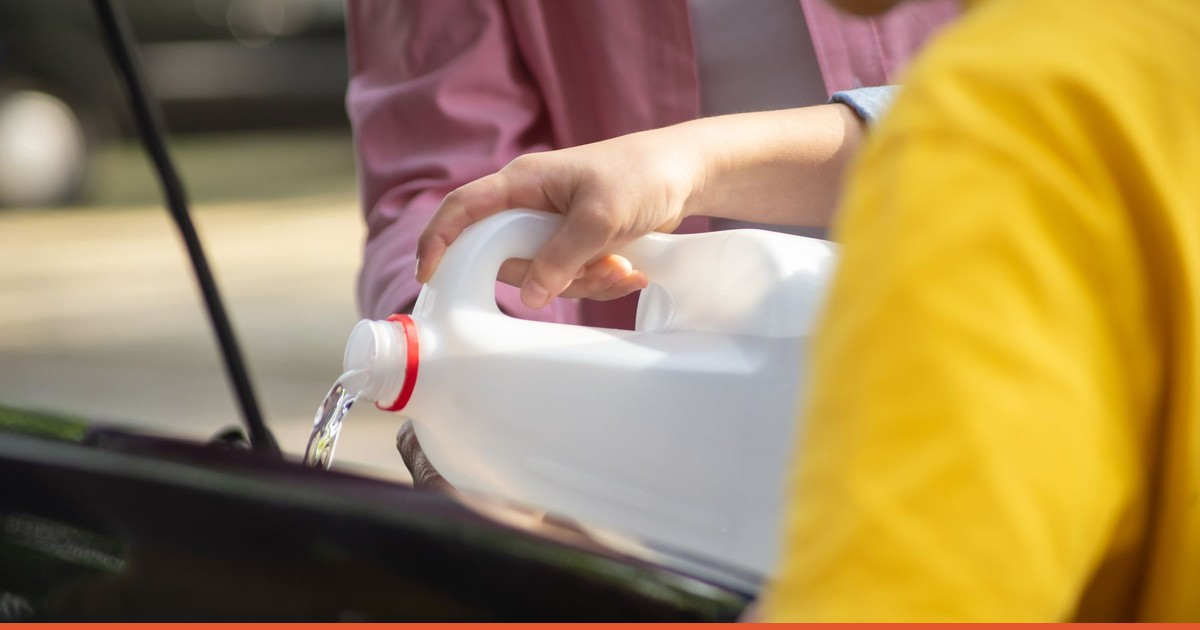
Most cooling and brake problems give a warning long before they leave you stranded. The warning is a reservoir that is a little lower this month than last month, and nobody sees it because nobody opens the hood until a light comes on.
A monthly fluid check takes ten minutes, costs nothing and needs no tools to start. Do it on the first weekend of the month, ideally before the morning drive while the engine is cold, and keep a note of what you find.
Disclosure: GarageWise is reader-supported. As an Amazon Associate we earn from qualifying purchases, at no extra cost to you.
Before you open the hood
- Park on level ground. A car parked on a slope gives a false reading on every reservoir.
- Check with the engine cold. AAA’s advice is to check coolant with the engine cold and not running. A hot cooling system is under pressure.
- Keep your hands clear of the fan. On many cars the electric cooling fan can start on its own after the engine is switched off.
- Have the owner’s manual open. It shows where each reservoir is and which fluid it takes, and that matters more than any brand on a shelf.
The monthly checklist
1. Coolant level in the expansion tank
Find the translucent plastic tank connected to the radiator by a small hose. It has two marks, often labelled MIN and MAX or COLD and HOT. With the engine cold, the level should sit at or just above the cold mark.
If it is low, open the tank cap only when the engine is cold, and top up to the cold line, no higher. Use the coolant type your manual specifies. Coolants are not all the same chemistry, and mixing types to save a trip to the store is a poor trade.
A small drop over months can be normal. A tank that needs topping up every few weeks is not. Look for crusty residue around hose clamps, a wet patch under the front of the car, or a sweet smell after a drive, then have the system pressure tested.
2. Coolant strength before winter
Level tells you how much coolant you have, not how well it protects. Once a year, before the first hard freeze, test its strength. This takes one inexpensive tool.
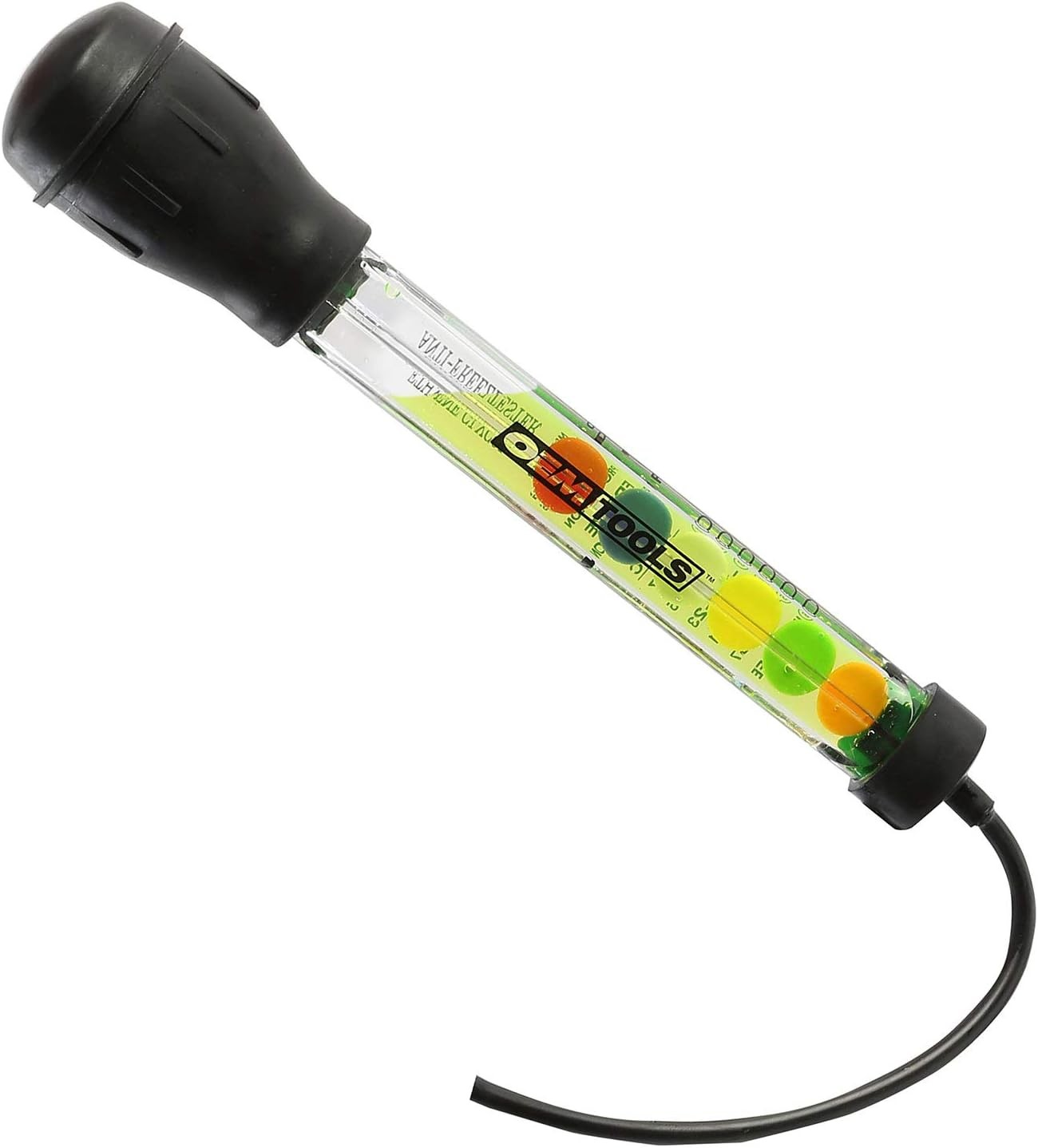
The OEMTOOLS tester is a disc-type hydrometer. You draw coolant into the clear tube and count the floating discs against the chart on the body. Five floating discs means ideal protection, and a sixth disc warns of over-concentration, which is a problem of its own because too little water cools poorly.
OEMTOOLS says it reads accurately hot or cold, and the clear body lets you spot rust or debris in the sample. It is designed for ethylene glycol coolant, which is the common type, so check your coolant’s label before relying on it.
Not sure your coolant will handle January? A float tester gives you a straight answer in thirty seconds.
See the Antifreeze Tester →3. Brake fluid level and colour
The brake fluid reservoir sits on top of the master cylinder, usually on the driver’s side near the firewall. Wipe the cap before you open anything, because dirt in brake fluid is the last thing you want.
Haynes points out that brake fluid level drops slowly as the pads wear, which is normal as long as it stays above the minimum mark. A drop from one month to the next, or a level near or below the lower mark, is different. AAA’s advice is to have the brakes checked for wear or leaks as soon as possible.
Do not just top up a falling reservoir and move on. If you do add fluid, use the DOT rating printed on the cap, keep the bottle sealed between uses, and wipe up any drips straight away, since brake fluid damages paint.
Colour is a useful clue too. Fresh fluid is usually light amber; fluid that has turned dark has absorbed moisture over time, which is why most makers set a replacement interval. Your manual has the number.
Topping up brake fluid? Buy the exact DOT rating on your reservoir cap, in a small sealed bottle.
Shop DOT 3 Brake Fluid →4. Washer fluid
This is the one you will top up most often, and the one people get wrong. Fill the washer reservoir right to the top. Haynes warns against putting engine coolant in the washer tank, and plain water is a bad idea in any climate that freezes.
Switch to a winter de-icer fluid in the fall. AAA suggests a bug-removing fluid in summer and a fluid with antifreeze properties in winter. A frozen washer line on a salty highway is genuinely dangerous.
First frost on the way? Swap to a de-icing washer fluid before you need it.
Shop Winter Washer Fluid →5. Hoses and caps while you are there
With the hood up, squeeze the upper radiator hose (engine cold). It should feel firm, not soft or crunchy. Look for cracks, bulges and wet spots around clamps. Make sure every reservoir cap is seated, because a loose coolant cap lets the system lose pressure.
When you do need to add a lot of coolant
Topping up a tank by a few ounces needs nothing more than a steady hand. Refilling after a hose replacement or a drain is different: air gets trapped in the system, and trapped air causes overheating and a heater that blows cold.
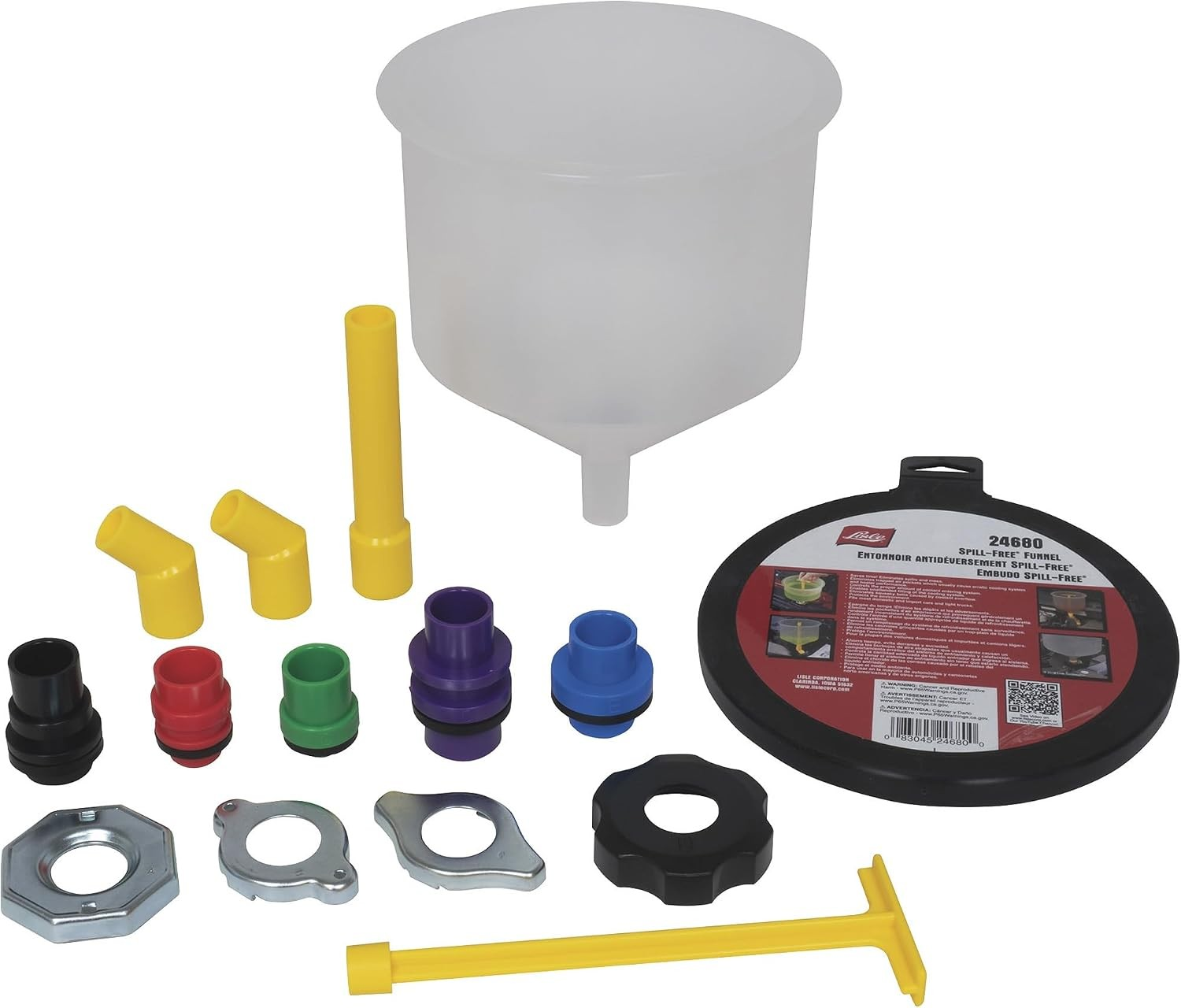
The Lisle 24680 Spill-Free Funnel locks onto the radiator or tank neck with one of its adapters, so it sits higher than the system. As the engine warms and the thermostat opens, air bubbles up through the funnel instead of staying trapped. Lisle says the adapters fit most domestic and import cars and light trucks, with a straight extension and a 45-degree elbow for awkward necks.
Lisle also says it controls how much coolant enters the system and lets you fill it without standing over it, and the clear funnel shows the level from across the garage. It is a tool you use a few times in the life of a car, and each time it saves a mess and an overheating scare.
Replacing a radiator hose this year? A spill-free funnel makes bleeding the air out far less of a fight.
Check the Lisle Funnel Price →Keep a simple log
Write the date, mileage and what you added on a card in the glovebox or a note on your phone. Three months of entries will tell you more than any single look under the hood. A fluid that never moves is fine. A fluid that drops a little every month is a leak you have caught early, which is the whole point of checking.
More GarageWise guides
- Battery Chargers and Maintainers: Who Actually Needs One
- Best Portable Tire Inflators for Your Car
- How to Rotate Your Tires in the Driveway
- Best OBD2 Scanners for Home Mechanics
- How to Wash Your Car at Home Without Scratching the Paint
- Road Trip Prep: What to Check Before a Long Drive