

The shop wants you back every oil change to rotate your tires, and it is one of the easiest jobs to do yourself. All it takes is a flat driveway, an hour, and a few tools you will use again for brakes, suspension work and seasonal tire swaps.
Rotating matters because tires do not wear evenly. On a front-wheel-drive car the front pair steers, brakes and pulls the car along, so it wears faster. Moving the tires around regularly spreads that wear across all four, so they last longer and the car feels the same from one set to the next.
Disclosure: GarageWise is reader-supported. As an Amazon Associate we earn from qualifying purchases, at no extra cost to you.
How often, and which pattern
The Tire Industry Association suggests rotating every 5,000 to 7,000 miles, and Bridgestone gives a similar 5,000 to 8,000 miles or every six months. Your owner’s manual has the final word, so check it first. Many people simply rotate at every other oil change.
The pattern depends on your drivetrain and tires. The rule of thumb is to cross the tires on the axle that is not driven:
- Front-wheel drive (forward cross): fronts go straight back; rears cross to the opposite side at the front.
- Rear-wheel drive and most 4WD/AWD (rearward cross): rears go straight forward; fronts cross to the opposite side at the rear.
- Directional tires: look for an arrow on the sidewall. These swap front to back on the same side only.
- Staggered sizes (wider tires at the rear): they cannot move between axles at all. Only side-to-side swaps are possible, and only if the tires are not directional.
If you have a full-size matching spare, some manufacturers include it in a five-tire pattern. A compact temporary spare stays in the trunk.
What you need
- A floor jack rated for your vehicle
- Two jack stands (four if you want to lift a whole side or the whole car at once)
- Wheel chocks
- A breaker bar and the right lug nut socket
- A torque wrench
- A tire pressure gauge, a piece of chalk, and gloves
The jack, stands and torque wrench are the parts worth spending on. Everything below is a tool we would happily recommend to a friend who is setting up a driveway kit for the first time.
| Tool | Why you need it | |
|---|---|---|
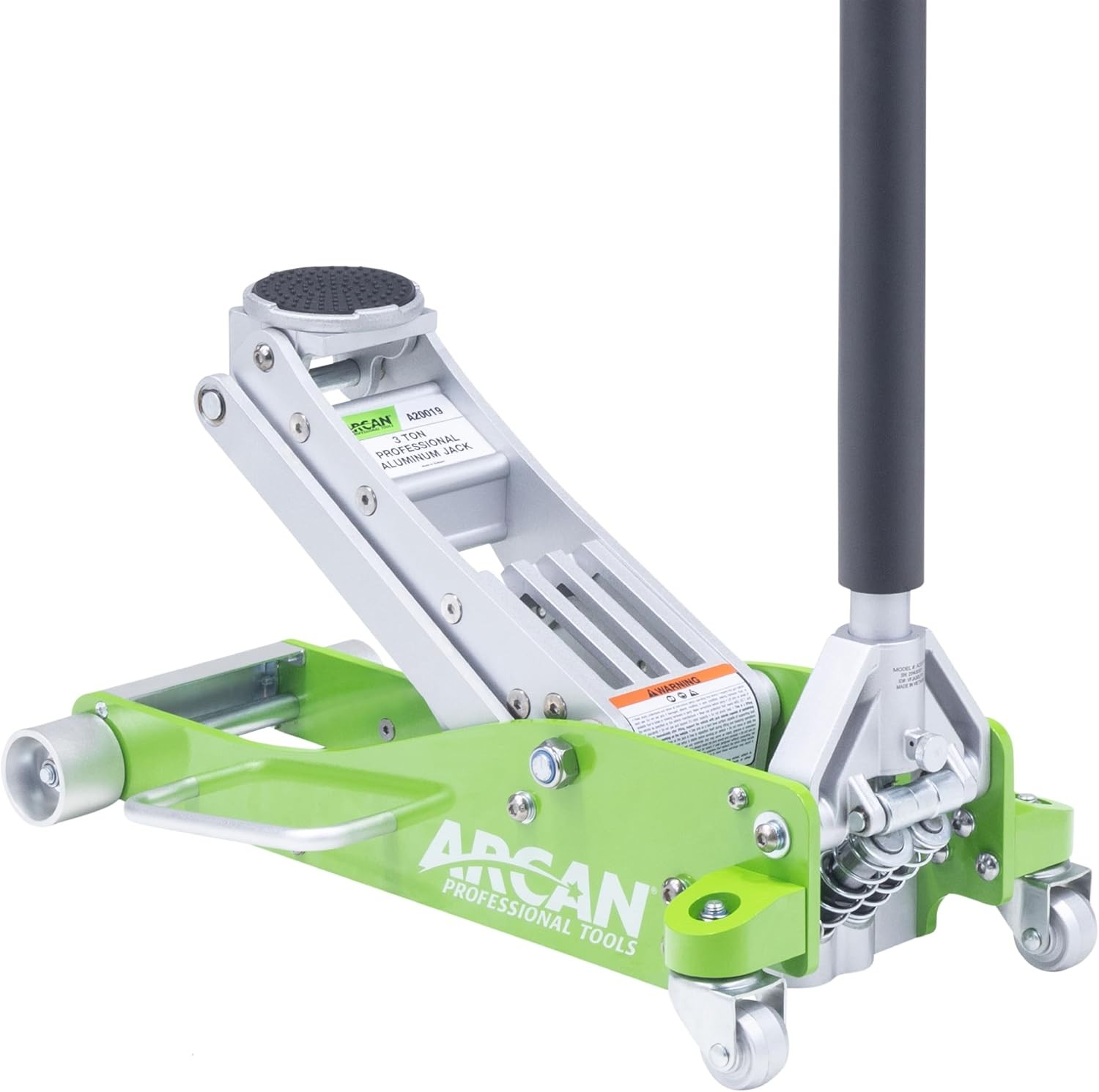 ARCAN A20019 floor jack | Lifts the car at the jacking point | Check Price |
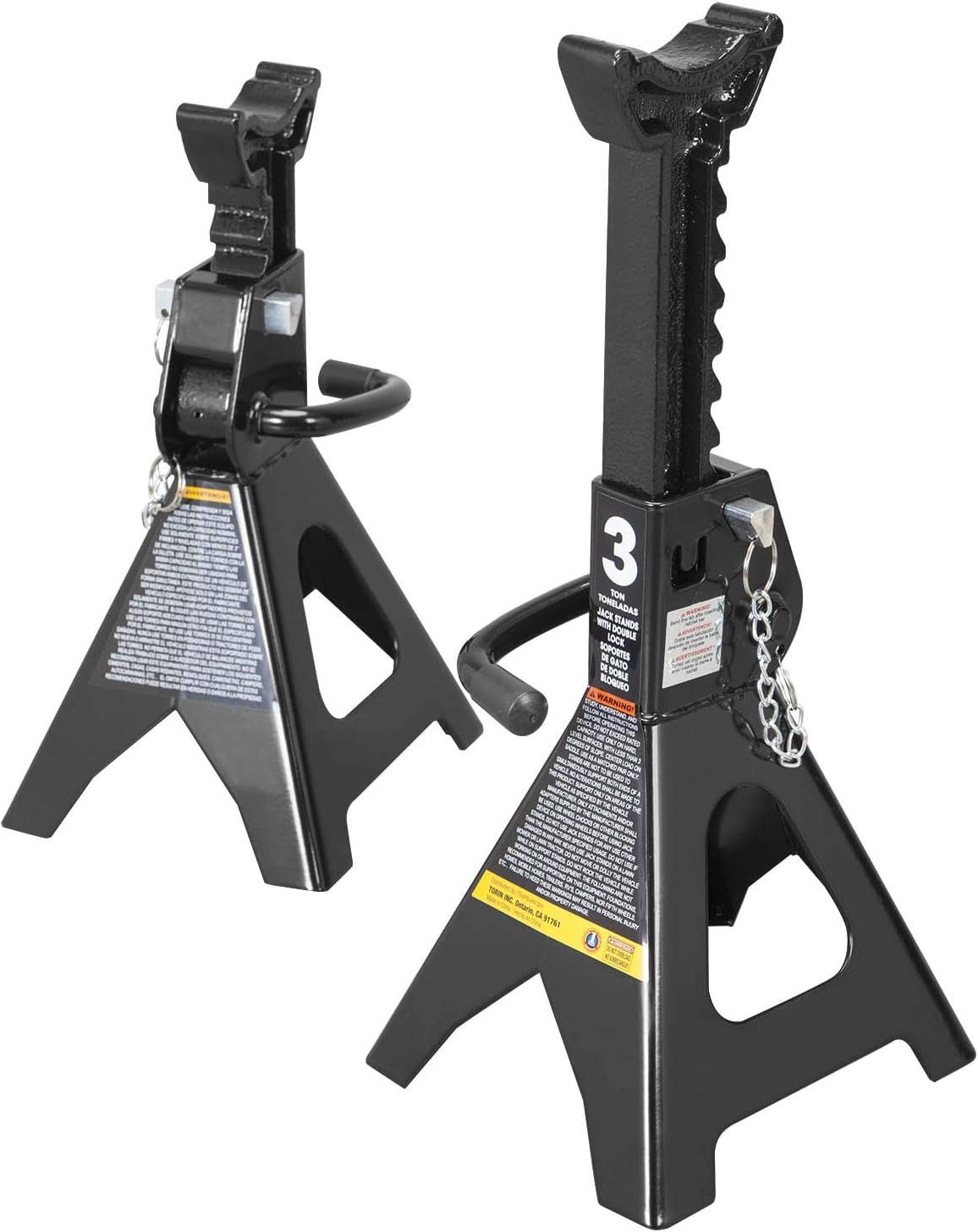 Torin AT43002AB jack stands | Holds the car while the wheels are off | Check Price |
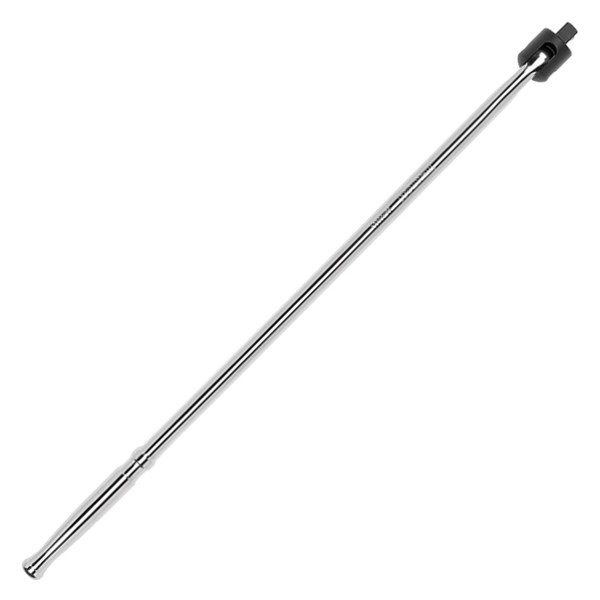 TEKTON SBH00224 breaker bar | Breaks loose tight lug nuts | Check Price |
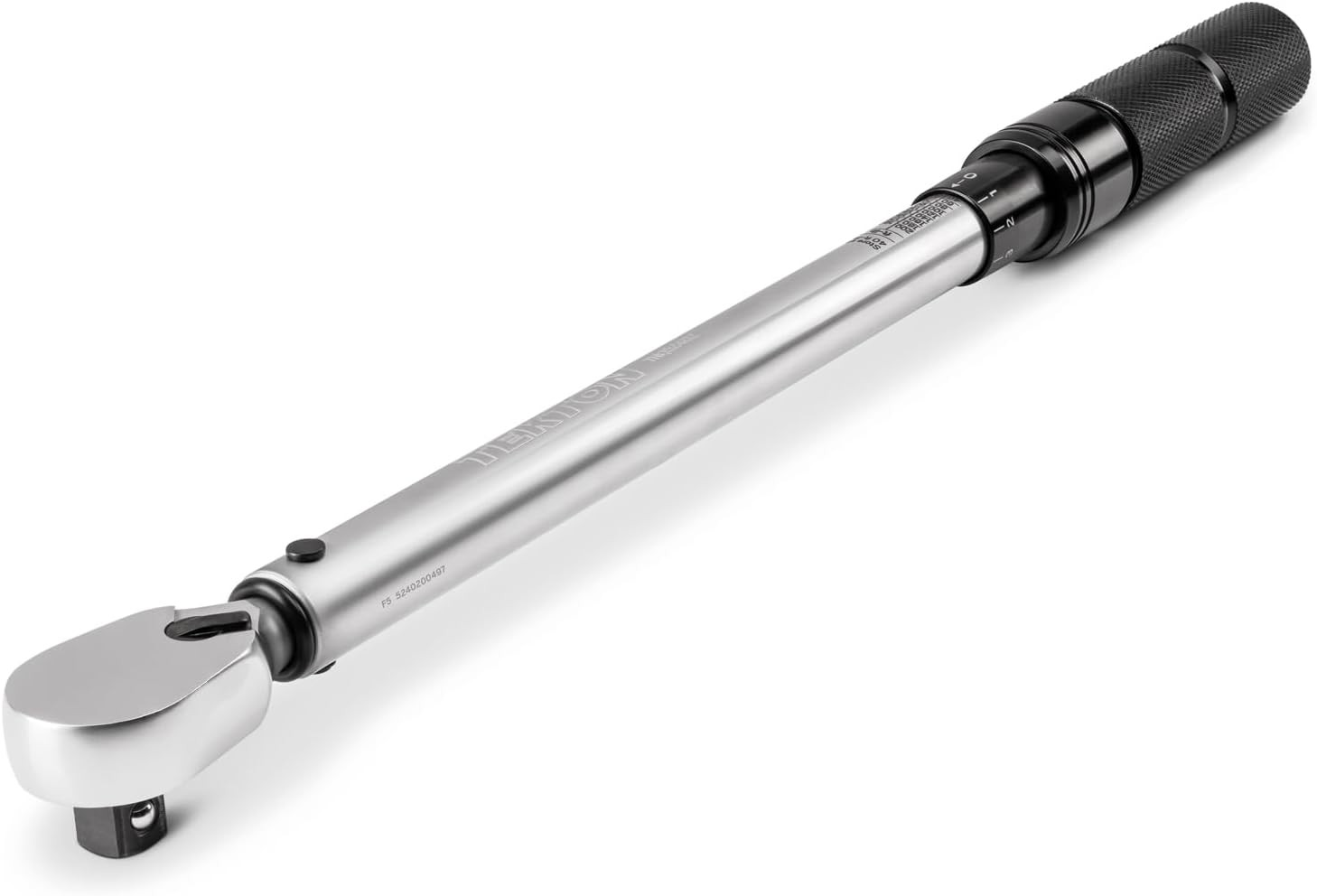 TEKTON TRQ52402 torque wrench | Tightens lug nuts to spec | Check Price |
Step by step
1. Park, chock and mark
Park on flat, solid concrete or asphalt, not gravel or a slope. Put the car in Park (or in gear for a manual), set the parking brake, and chock a wheel on the end you are not lifting. Chalk the position on each tire before it comes off: LF, RF, LR, RR. It is surprisingly easy to lose track once two wheels are leaning against the garage door.
2. Break the lug nuts loose on the ground
With the tires still on the ground, crack each lug nut loose about half a turn. The ground stops the wheel spinning, which it will happily do once the car is in the air.
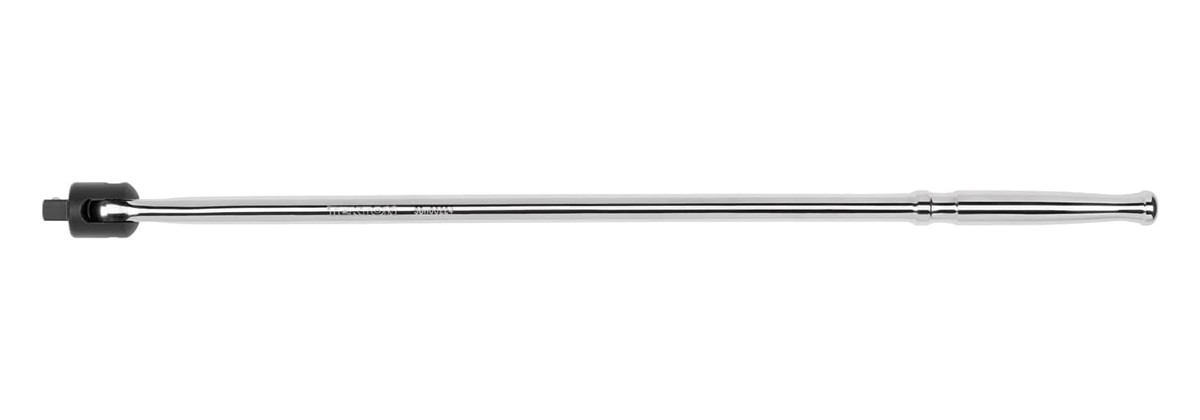
This is where a breaker bar earns its place. The TEKTON SBH00224 is a 1/2-inch drive bar 24 inches long with a head that pivots through 230 degrees and holds its angle thanks to an internal spring. Twenty-four inches of leverage turns a nut that was zipped on by an impact gun into a steady push instead of a jump on the tire iron.
Never use a torque wrench to break nuts loose. It is a measuring tool, and loosening with it is how they lose calibration.
Lug nuts put on by a shop impact gun? A long breaker bar takes the drama out of the first turn.
Check the Breaker Bar Price →3. Lift and support on stands
Find the jacking points in the owner’s manual. Most cars have reinforced pinch welds behind the front wheels and ahead of the rears, and many have central jacking points on the front subframe and rear axle that let you lift two wheels at once.
The ARCAN A20019 is a 3-ton aluminum floor jack with a minimum height of 3.75 inches, low enough for most sedans, and a quick-rise feature that brings the saddle up to the car quickly. Aluminum keeps it light enough to carry out to the driveway, and it has bypass and overload valves to stop over-extension.
Still using the scissor jack from the trunk? A low-profile floor jack is faster, steadier and lifts at the subframe.
See the ARCAN Jack on Amazon →Once the car is up, set a jack stand under a solid point, such as the pinch weld with a slotted pad or the frame rail. Lower the jack until the car rests on the stand, then leave the jack lightly touching as a backup. Push firmly on the car before you take a wheel off. If anything shifts, lift and reset.
The Torin AT43002AB stands are a 3-ton pair with a ratchet bar that adjusts from 11-1/4 to 16-3/4 inches, a wide pyramid base, and a removable locking pin that backs up the ratchet. That double lock is exactly what you want under a car you are about to remove wheels from.
Lifting without stands is how people get hurt. A double-locking pair costs less than one shop visit.
View the Jack Stands →Leave the chocks in place on the opposite axle. If you lift the whole car at once, use four stands on level ground.
4. Move the wheels
Remove the lug nuts, pull the wheels, and move them to their new positions following your pattern. Before each wheel goes back on, take a minute to look at it: uneven wear on one edge points to alignment, cupping points to worn suspension, and a nail is a lot easier to spot now than at the side of the highway.
Thread every lug nut on by hand first, then snug them in a star pattern with the socket. Do not use the breaker bar to tighten them.
5. Lower and torque
Lift the car slightly, remove the stands, and lower it to the ground. Now torque the lug nuts to the figure in your owner’s manual (many cars are somewhere around 80 to 100 ft-lb, but check yours), again in a star pattern, in two passes.
The TEKTON TRQ52402 is a 1/2-inch drive click wrench that covers 40 to 200 ft-lb, which takes in the lug nut range for nearly every car and light truck. TEKTON quotes ±3% accuracy in both directions and ships each wrench with a serialized calibration certificate.
Even torque matters more than people think. Over-tightened or unevenly tightened lug nuts can distort brake rotors and stretch studs, which is a common cause of a pulsing brake pedal after a tire shop visit.
Stop guessing at “good and tight”. A click torque wrench makes every lug nut the same, every time.
Check the Torque Wrench →6. Finish up
- Set the tire pressures to the numbers on the door-jamb sticker, with the tires cold. Front and rear are often different, which matters now that the tires have moved.
- Some cars need the TPMS relearned after a rotation. Your manual will say.
- Re-check the lug nut torque after 50 to 100 miles, especially on alloy wheels.
- Write the mileage down somewhere you will find it, such as on the oil change sticker or in your phone.
Need chocks? A pair of rubber wheel chocks costs very little and stays in the trunk.
How long it takes
The first time, plan on an hour while you find the jacking points and figure out the pattern. After that it is a 30 to 40 minute job, and the same tools carry straight over to brake pads, winter tire swaps and suspension work.
The same jack and stands handle your next service: Changing Your Own Oil: Every Tool You Need.
More GarageWise guides
- Mechanic Creepers and Shop Stools for Under-Car Work
- Choosing an Air Compressor for a Home Garage
- Battery Chargers and Maintainers: Who Actually Needs One
- How to Wash Your Car at Home Without Scratching the Paint
For setting pressures after the rotation, see Best Portable Tire Inflators for Your Car.