
It is 7 a.m., it is 15 degrees, and the car makes that slow, sad clicking sound. What happens next depends entirely on what is in your trunk. With jumper cables, you need a second car and a willing driver. With a charged jump starter, you pop the hood and you are on your way in a couple of minutes.
That makes the portable pack sound like the obvious winner, and for a lot of drivers it is. But cables still have real advantages, and the best answer for some people is to carry both. Here is how they compare, round by round.
Disclosure: GarageWise is reader-supported. As an Amazon Associate we earn from qualifying purchases, at no extra cost to you.
The two contenders
| What it is | Needs a second car? | Needs charging? | ||
|---|---|---|---|---|
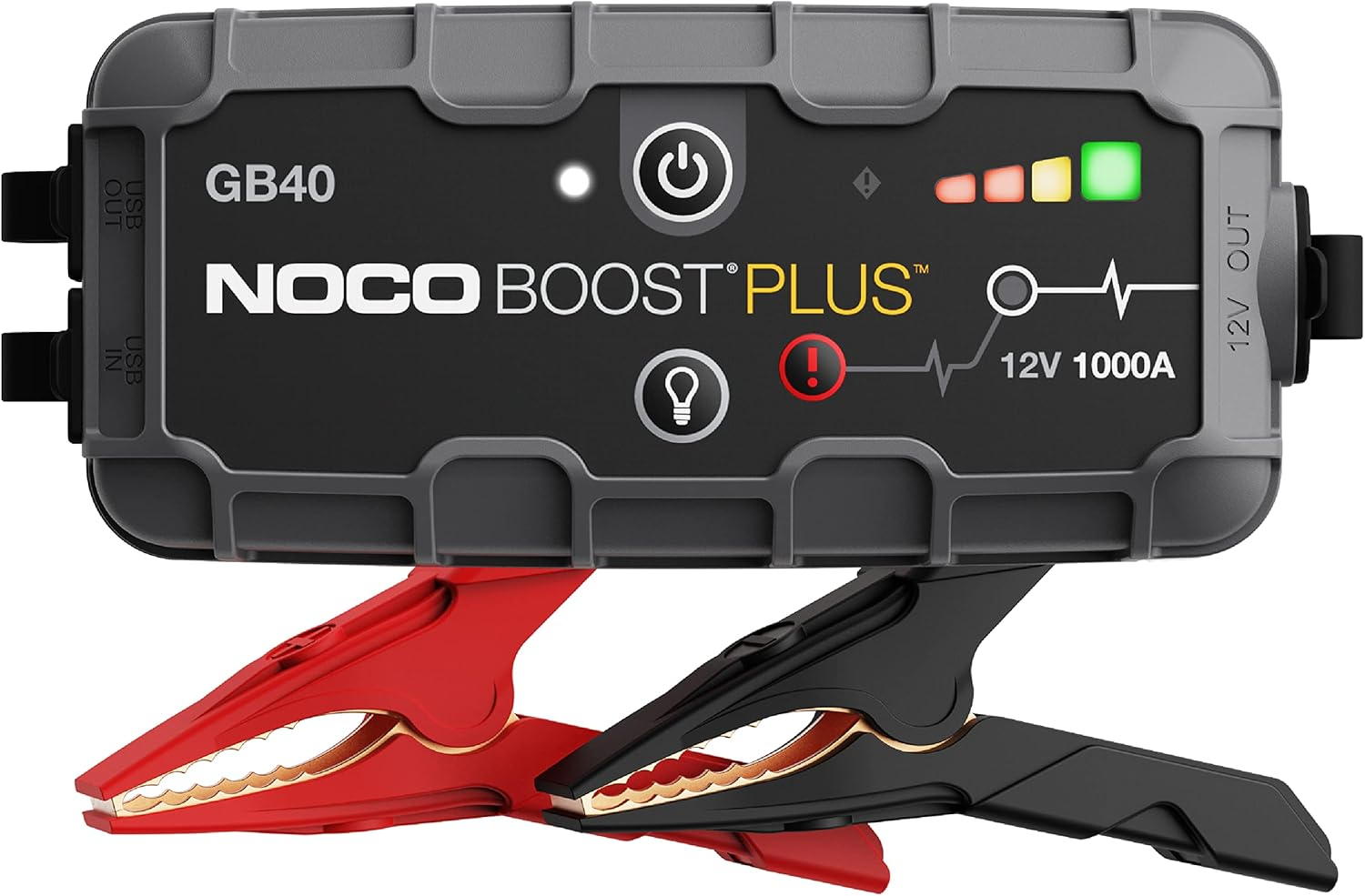 NOCO Boost Plus GB40 | Portable lithium jump starter, 1000 A | No | Yes, every few months | Check Price |
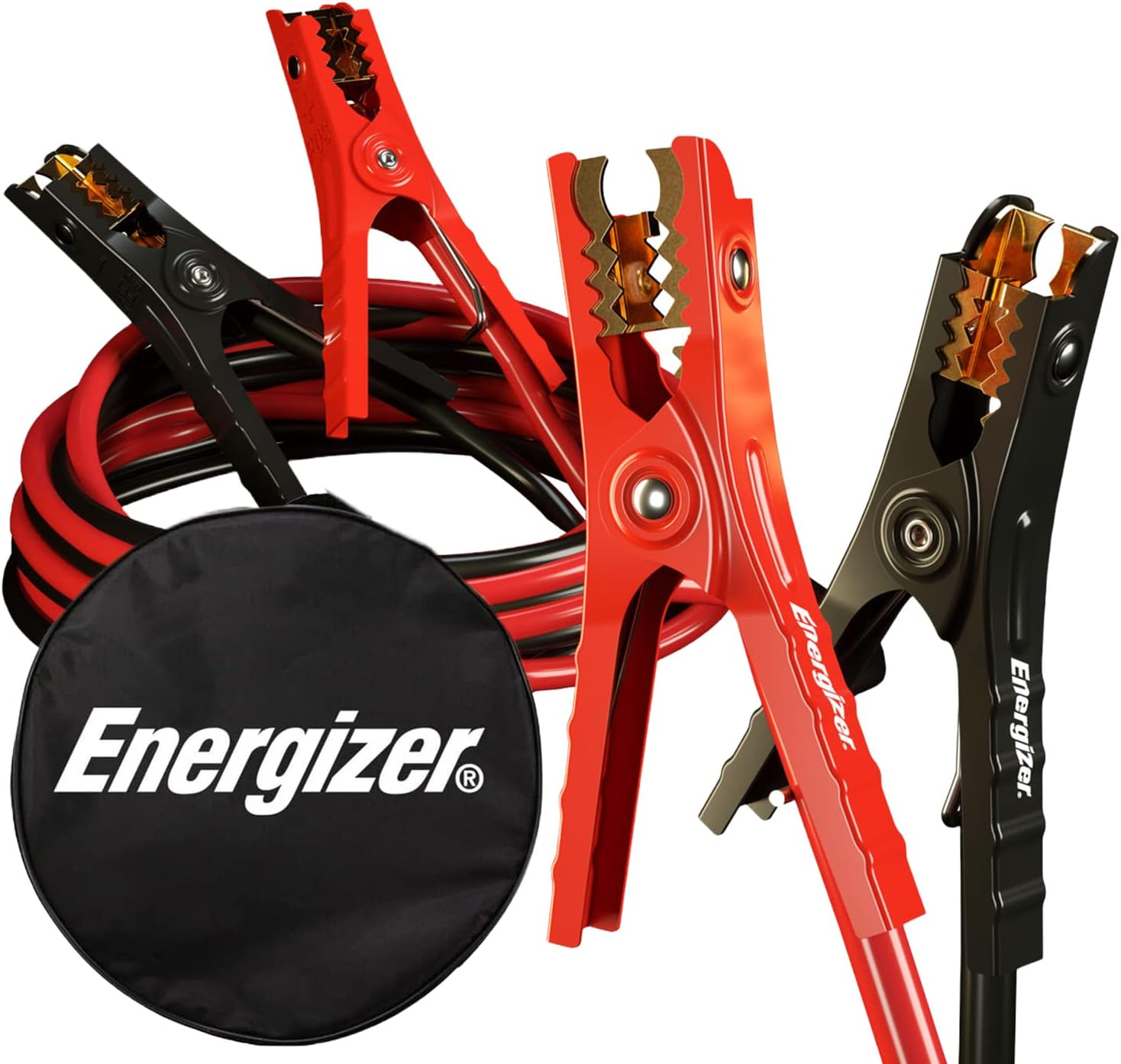 Energizer 4-gauge, 20 ft | Booster cables with carry bag | Yes | Never | Check Price |
The NOCO Boost Plus GB40 is the jump starter we keep coming back to. NOCO rates it at 1000 amps for gasoline engines up to 6.0 liters and diesels up to 3.0 liters, which covers most cars, small SUVs and many pickups. NOCO lists it at $99.95 on its own site.
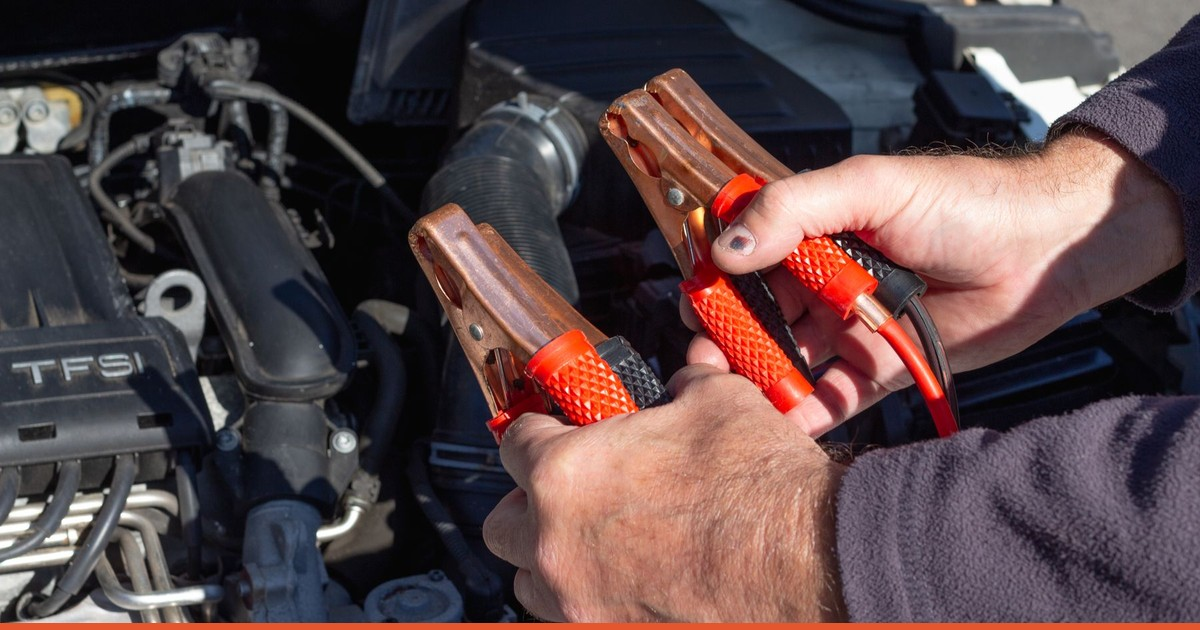
In the other corner, a set of Energizer 4-gauge, 20-foot jumper cables, which were about $30 on Amazon when we checked. Four gauge is thicker than the 6-gauge minimum AAA recommends, and 20 feet is long enough to reach between two cars parked nose to tail, not only nose to nose.
Round 1: Getting you going when you are alone
This is the round that decides it for most people. Cables only work if there is another running vehicle that can park close to yours. In a parking garage, a narrow driveway, a dark rural road or an office lot at 6 p.m., that can be a long wait.
A jump starter needs nobody. Clamp it on, switch it on, start the car. If you commute alone, drive late at night or park somewhere it would be awkward to get another car alongside, this round is not close.
Winner: jump starter.
Round 2: Will it actually work when you need it?
Here the cables fight back. Cables have no battery, so they work the same in year ten as in year one, as long as the donor car runs. A jump starter is only as good as its last charge. Midtronics, which makes battery testing equipment, recommends recharging a stored pack every three to six months. A pack that has been forgotten in the trunk since last winter may be flat on the one morning you need it.
Lithium packs also dislike extreme heat and cold, so a black car parked in the summer sun is a tough home for one. Read the storage temperature range in the manual and bring the pack indoors to charge.
Winner: jumper cables, unless you are disciplined about charging.
Round 3: Safety and mistakes
Jumping a car with cables is safe when you follow the order, and risky when you do not. AAA’s sequence is red to the dead battery’s positive terminal, red to the good battery’s positive, black to the good battery’s negative, and the last black clamp to a clean, unpainted metal point on the dead car’s engine, away from the battery. Reverse that order to disconnect. Get the clamps crossed and you can produce sparks or damage electronics in either car.
Good jump starters remove most of that risk. Packs like the GB40 have spark-proof clamps and reverse-polarity protection, so they will not send current if you get the clamps the wrong way round. That makes the pack a much better choice for a new driver or anyone who does not jump cars often.
Two things apply to both: wear eye protection and gloves, and do not jump a battery that is cracked, bulging or smells of rotten eggs. Replace it instead.
Winner: jump starter.
Round 4: Price
Decent cables cost a fraction of a good jump starter. The GB40 at about $100 is roughly three times the price of the Energizer set, and cheaper packs exist but often overstate their amp ratings. If the budget is tight, a good set of cables and a phone number for roadside assistance is a reasonable setup.
Winner: jumper cables.
Round 5: What else it can do
Cables do one thing. Most jump starters also work as a USB power bank for a phone and have a built-in flashlight, which is genuinely useful when you are stuck on the shoulder at night with a dying phone. Cables do give you one extra option, though: you can use them to help someone else whose car will not start, without draining your own pack.
Winner: jump starter, narrowly.
A note on hybrids and EVs
Hybrids and electric cars still have a regular 12-volt battery that runs the electronics, and when it dies the car will not wake up. AAA warns that some hybrids and EVs can be damaged by jump-starting, so check your owner’s manual before using either method, and never use an EV or hybrid as the donor car unless the manual says it is allowed. Neither a pack nor cables can do anything for an EV’s high-voltage battery.
The verdict
For most drivers, the jump starter belongs in the trunk. It wins the rounds that matter most at 7 a.m. in a dark parking lot: it works without help and it protects you from clamp mistakes. Put a reminder in your phone to charge it every few months, at the same time you check your tire pressure.
Want to be able to start your own car, anywhere? The GB40 covers most engines up to 6 liters and fits in a glovebox or under a seat.
Check the NOCO GB40 price →Cables make sense as the main option if you rarely drive alone, you know you will forget to charge a pack, or the budget is tight. They are also a smart second item for a family car or anyone with a long rural commute, because they never run flat.
Prefer something that never needs charging? A thick, long set of cables stays ready for years in the trunk.
See the Energizer 20 ft cables →After the jump
Whichever you use, getting the car started is only half the job. A jump does not recharge the battery. AAA suggests driving for 20 to 30 minutes afterward, and having the battery tested if it is more than three years old. A battery that needed a jump on the first cold morning of the year will usually need another one soon.
More GarageWise guides
- Battery Chargers and Maintainers: Who Actually Needs One
- Using a Multimeter to Track Down Car Electrical Problems
- Road Trip Prep: What to Check Before a Long Drive
- Storing a Car for Winter: Battery, Fuel and Tires