Reading Time: 7minutesHow to tell wiper blades are worn, how often to replace them, beam vs conventional vs winter blades, sizing, a safe swap and winter washer fluid tips.
Wipers working hard on a wet road. (Photo: Lucas Pezeta, Pexels)
Reading Time: 7minutes
Most people notice their wipers on the worst possible day: the first hard rain in months, at night, on the highway, when the blades leave a gray smear right across the driver’s line of sight. By then the rubber has usually been dying quietly for a long time.
Wipers are cheap, quick to change and easy to forget. This checklist covers how to tell when a pair is done, which type to buy next, and the small winter habits that make a new set last.
Disclosure: GarageWise is reader-supported. As an Amazon Associate we earn from qualifying purchases, at no extra cost to you.
There is no single number, but the sources agree on a range. AAA and Pep Boys both say every 6 to 12 months. DENSO, which makes wiper blades, says at least once a year and sooner if performance drops. O’Reilly suggests every six months, ideally before spring and again before winter, and to replace them in pairs.
Jalopnik makes a fair point about why the shorter end of that range is common advice: many owner’s manuals say 12 months, but plenty of drivers stretch it far past that. If you cannot remember when you last changed them, it has probably been too long. A simple habit is to swap them when the clocks change in the fall, so you start the dark, wet months with fresh rubber.
2. Inspect the rubber edge, not just the wipe
Worn blades usually announce themselves. The common signs, listed by AAA, O’Reilly, DENSO and Chevrolet among others, are:
Streaking or smearing that leaves lines or a haze across the glass
Chattering, squeaking or scraping as the blade drags rather than glides
Skipping, where the blade hops and leaves untouched patches
Cracks, splits or tears in the rubber, or rubber that looks dry and flaky
A bent frame or a blade that no longer sits flat on the glass
DENSO’s inspection takes a minute. Lift each blade, run a finger along the edge to feel for nicks, cracks or a rounded profile, flex the rubber to check it is still supple, and look at whether the blade sits evenly along the glass. Then run the washers and watch a few passes. Jalopnik adds one more check: make sure the blade is firmly attached to the arm. A chunk missing from the edge means the blade is well past due.
3. Figure out what wore out the last pair
Rubber does not just wear from wiping. Jalopnik and DENSO both point to sun, ozone and temperature swings, which harden the rubber until it cracks. Grit on the glass cuts into the edge with every pass, and ice can tear a frozen edge when the wipers are switched on. AAA notes that rubber hardened by extreme temperatures is a common cause of skipping.
This tells you what to change. If you park outside in a hot climate, expect shorter blade life and look for rubber that resists heat and ozone. If you get ice, a blade without an exposed frame will stay cleaner. If the glass is always dusty, clean it before the wipers dry-scrape it.
4. Choose a blade type that suits your weather
There are three main designs on the shelf, plus winter blades:
Type
How it works
Good for
Watch out for
Conventional (frame)
A metal frame presses the rubber down at several points
Mild climates, tight budgets
Frame can clog with ice and lift at speed
Beam (flat)
A curved spring steel strip inside the rubber spreads pressure evenly
Most drivers, snow and highway speed
Costs more up front
Hybrid
A frame covered by a plastic shell
A middle ground on price and weather
Still has hinges under the cover
Winter
A beam or booted design built to shed snow and ice
Places with regular snow
Not needed in mild winters
Chevrolet’s own maintenance page says conventional blades suit mild to moderate climates and are typically replaced about every six months, while beam blades cost more but can last about twice as long and have no frame for ice to pack into. Pep Boys adds that the exposed frame on a conventional blade is more prone to ice buildup and wind lift. For most people, a good beam blade is the sensible default. Here are two we would put on our own cars.
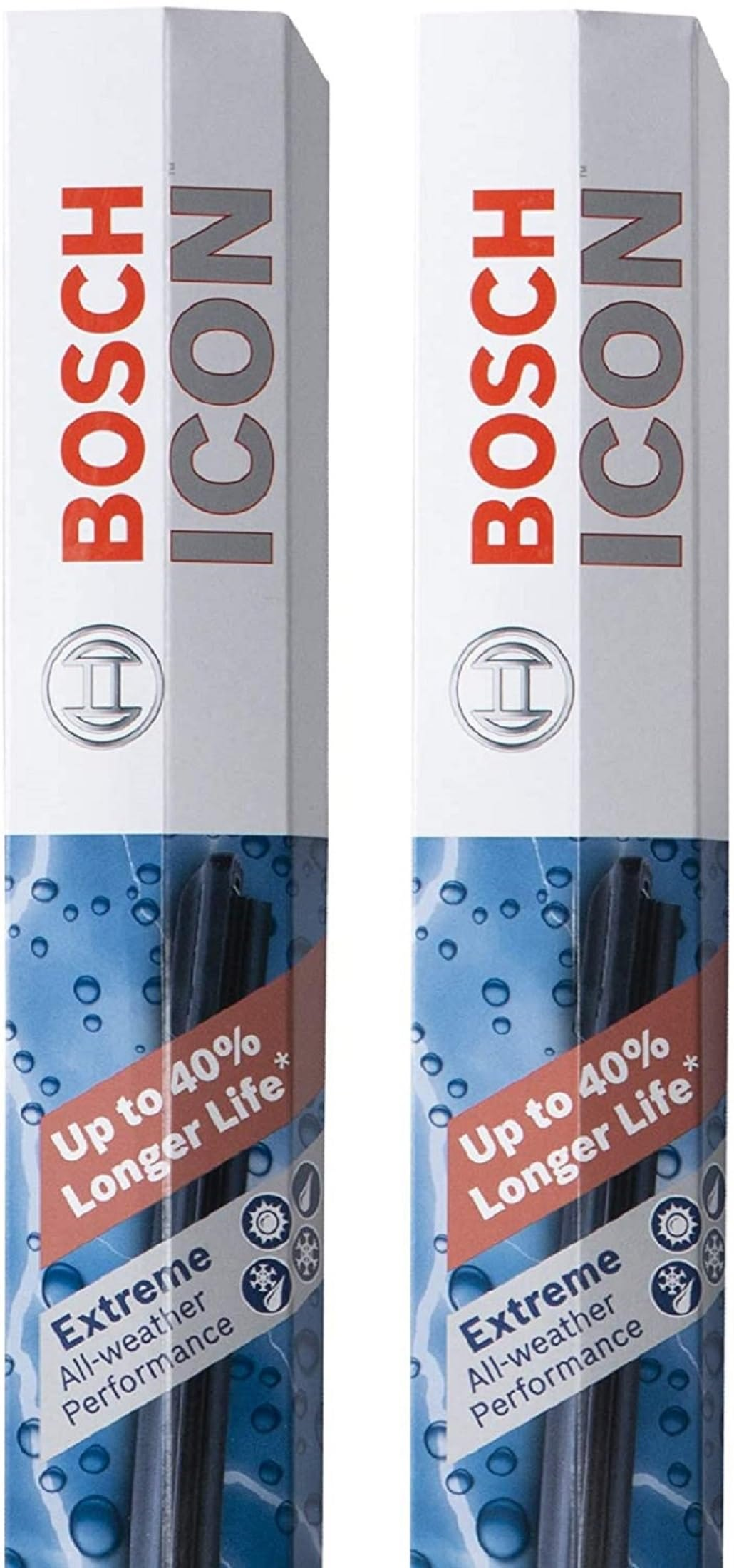
Bosch ICON
Bosch ICON beam blades, sold as driver and passenger pairs
The Bosch ICON is the beam blade a lot of parts-counter staff reach for. Bosch says its dual rubber resists heat and ozone and lasts up to 40% longer than other premium wiper blades. That is Bosch’s own comparison, but the heat and ozone resistance is exactly what matters on a car that lives outside.
It uses Bosch’s tension spring arcing design to follow the curve of each side of the windshield, plus a built-in asymmetric spoiler to keep the blade pressed down at highway speed. The pairs on Amazon are sold as driver and passenger combinations for specific vehicles, which saves guessing at two different lengths.
One limit to know before you order: the ICON comes with a hook adapter for 9×3 mm and 9×4 mm hook arms only. Bosch lists it as not compatible with side lock, pinch tab or top lock arms. Use the fit checker on the listing with your year, make and model.
Done replacing cheap blades every spring? The ICON is the pair to try if your car sits in the sun and your current blades harden and chatter within months.
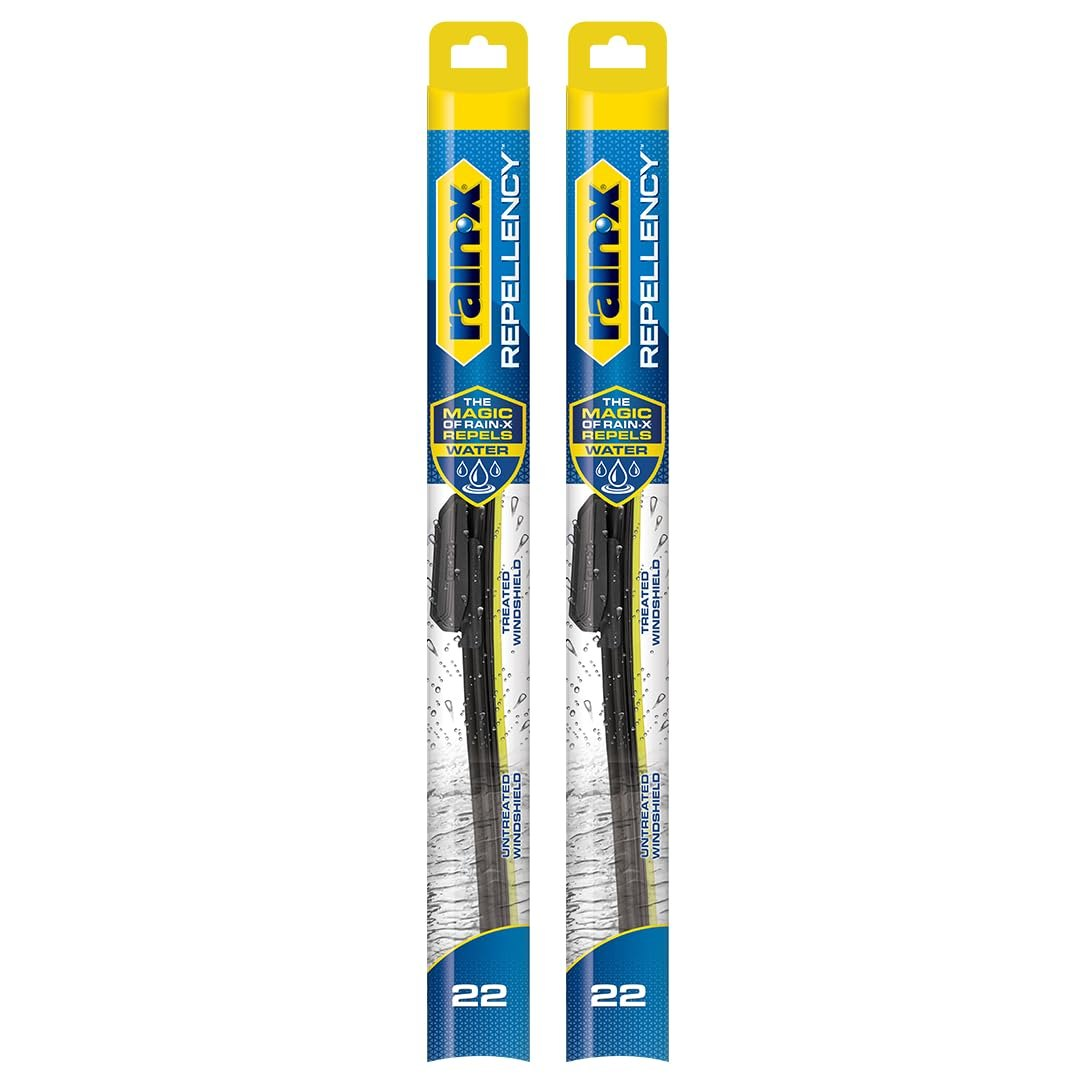
The Rain-X Repellency blade is a beam design with a twist: it lays down Rain-X water repellent on the glass as it wipes, so rain, sleet and snow bead up and run off. If you already like the way treated glass looks in a storm, this keeps it topped up without a separate bottle.
Rain-X says its universal adapter fits 96% of vehicles, and there is a QR code on the back that links to an installation video. One detail is easy to miss: there is a yellow cover on the squeegee that needs to come off after you install the blade. The 22 in. pair was $32.76 when we checked, and the listing covers dozens of length combinations.
Want the rain to slide off on its own? Repellency blades pair a beam wiper with Rain-X treatment, which makes a real difference at highway speed in heavy rain.
If your winters bring regular snow and freezing rain, a dedicated winter blade is worth the swap in November. Pep Boys and Chevrolet both recommend winter or beam blades for cold climates, because there is nowhere for ice to collect.
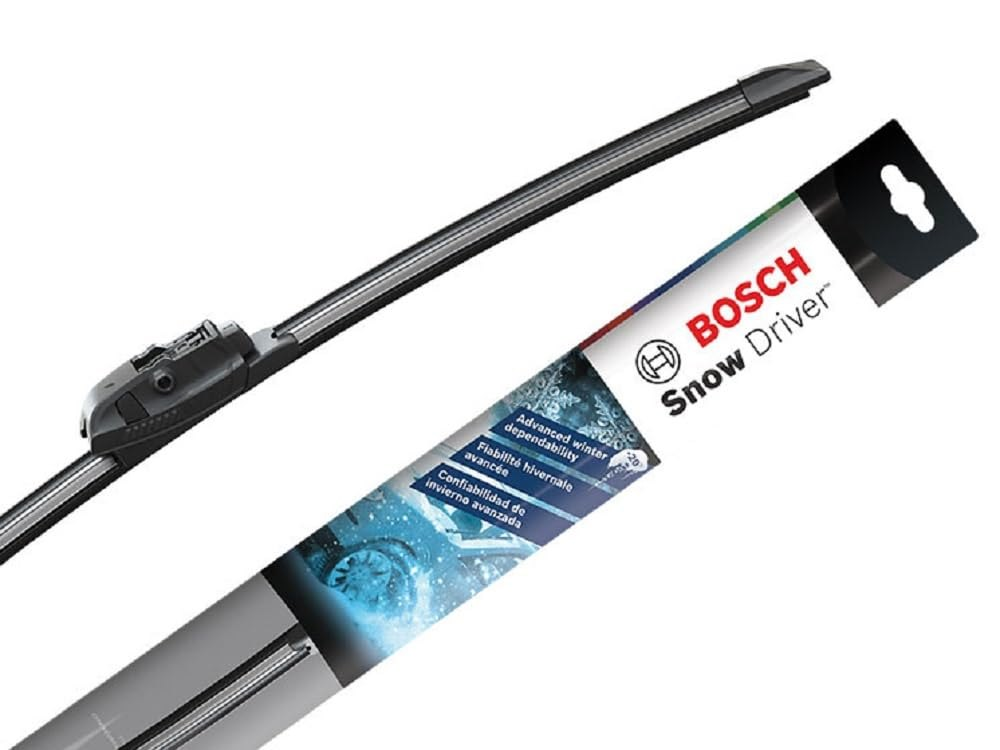
The Bosch Snow Driver is a beam blade with a grooved spoiler designed to resist snow and ice buildup. Bosch says its rubber is tested to perform at -20 degrees. It uses a Click-On adapter that fits a long list of arm types, including hook, pinch tab, small pin, side lock and several top lock styles, which makes it easier to fit than the ICON on some European cars. Swap back to your regular blades in spring so the winter set lasts more than one season.
Live where the plows run all winter? A Snow Driver set keeps ice from packing into the blade and stays flexible on the coldest mornings.
Driver and passenger blades are often different lengths, and the rear wiper is different again. The owner’s manual lists the sizes, and every major brand has a lookup by vehicle. AAA’s simplest tip works too: measure the blades you are taking off.
Length is only half of it. DENSO lists several ways blades attach to the arm, including U-hook, push button, side pin, bayonet and pinch tab. A blade that is the right length but the wrong connector will not fit, and one that is too long can hit the windshield trim or the other blade.
7. Swap them carefully
Changing blades takes a few minutes, and AAA’s method avoids the one expensive mistake:
Fold a towel and lay it on the windshield under the arm
Lift the arm away from the glass
Press or lift the release tab and slide the old blade off the hook
Click the new blade into place and make sure the release is locked
Lower the arm gently onto the glass and test with the washers
The towel is there because a bare wiper arm is spring-loaded. If it snaps back against the glass without a blade on it, it can chip or crack the windshield.
8. Fill up with winter washer fluid
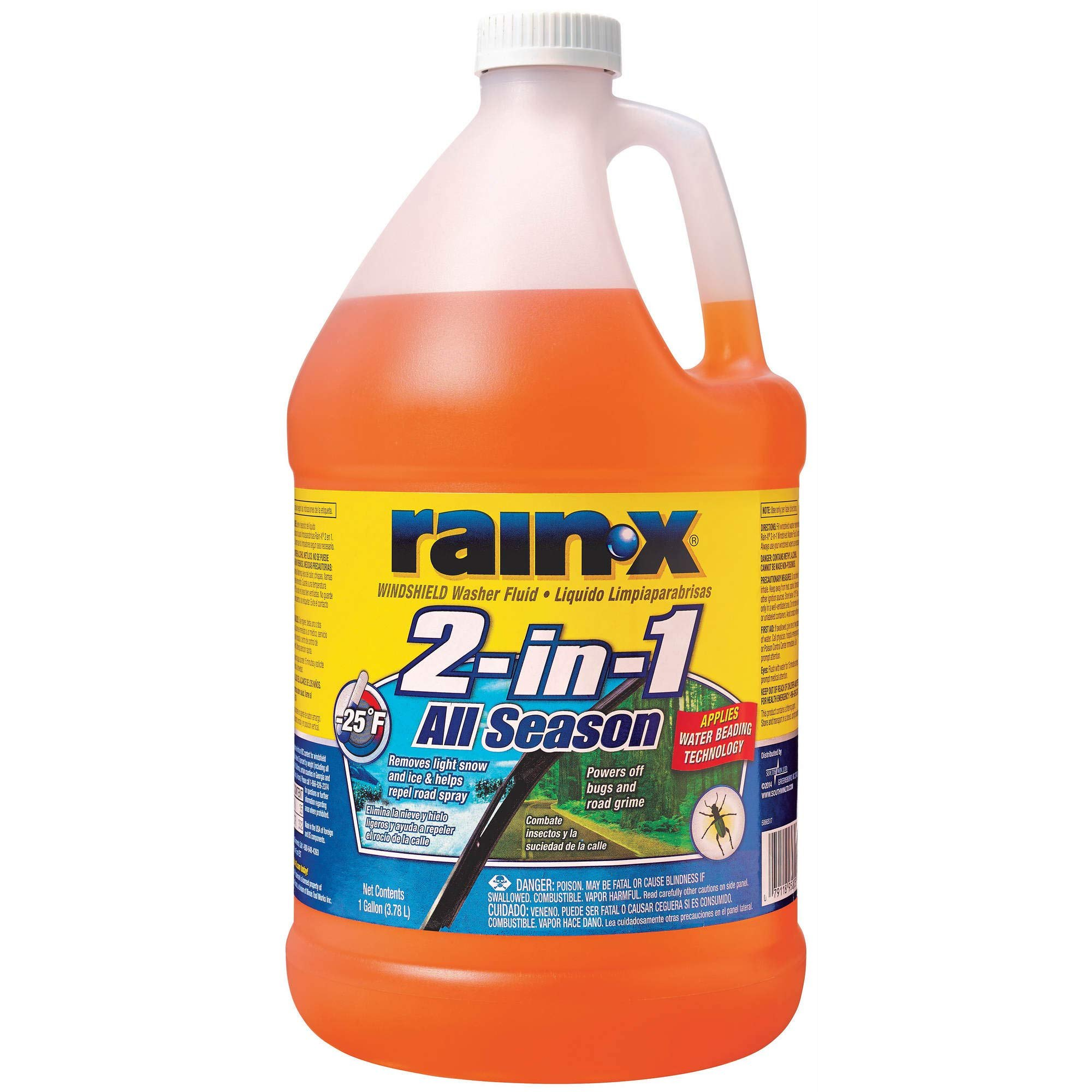
Rain-X 2-in-1 All Season washer fluid
Plain summer washer fluid, or water, can freeze in the reservoir and lines. AAA clubs and Kelley Blue Book all recommend a winter-rated fluid with de-icing agents once the temperature starts dropping below freezing.
Rain-X 2-in-1 All Season is listed for use down to -25°F and is easy to find. Keep a spare gallon in the trunk in winter, because you will go through it fast on salty roads, and running the wipers dry on salt-crusted glass is hard on the rubber.
About to run the reservoir dry? A gallon of winter-rated fluid in the trunk is one of the cheapest things you can do for winter visibility.