
The first properly cold morning has a way of finding every weak spot in a car at once. The battery that was fine in October cranks slowly, the tire pressure light comes on, the washer fluid turns to slush and the scraper is nowhere to be found.
This is the checklist for a car you keep driving through winter. (Parking one until spring is a different job, covered in our winter storage guide.) AAA’s Auto Club Group suggests getting it done before temperatures consistently fall below 40°F, which for much of the country means right about now.
Disclosure: GarageWise is reader-supported. As an Amazon Associate we earn from qualifying purchases, at no extra cost to you.
The checklist
- Get the battery tested
- Check the coolant strength
- Reset tire pressure for the cold
- Check tread, and decide on winter tires
- Fit good wipers and winter washer fluid
- Walk around and check every light
- Have the brakes looked at
- Keep the tank at least half full
- Pack a winter emergency kit
- Clear the whole car before every snowy drive
1. Get the battery tested
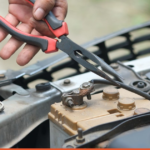
Cold slows the chemical reactions that let a battery deliver power, as AAA puts it, which is why a battery that was struggling in the fall often dies on the first frosty morning. AAA suggests a professional test once a battery is three years old, and again if you needed a jump at any point since last winter. Most parts stores will test it for free.
Warning signs AAA lists are slow cranking, clicking when you turn the key, dim headlights at start-up, corrosion on the terminals, and a cracked or bulging case.
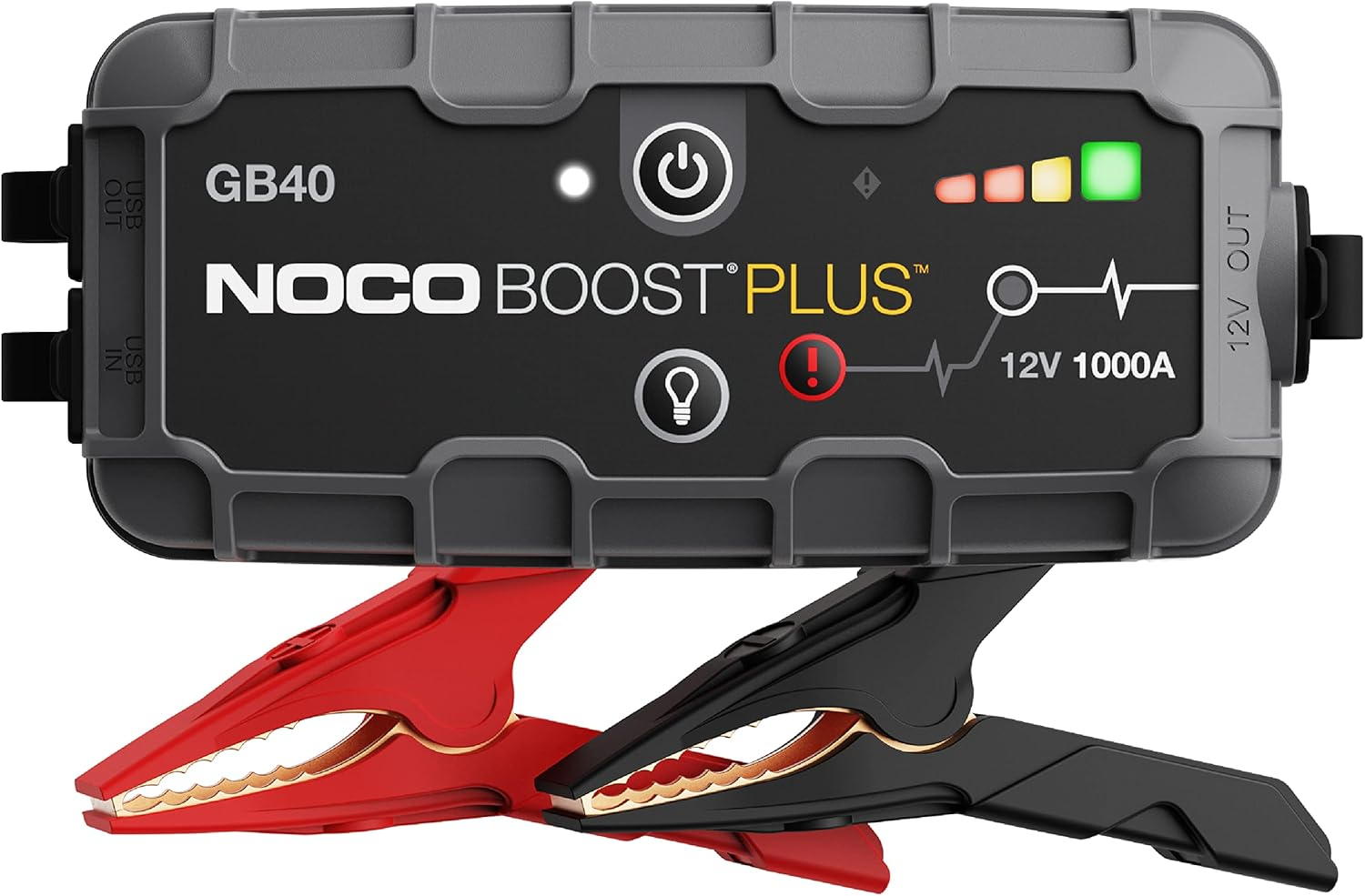
Even a healthy battery can surprise you, so this is the time to put a jump starter in the car. The NOCO Boost Plus GB40 is the one we keep recommending. NOCO rates it at 1000 amps for gas engines up to 6.0 liters and diesels up to 3.0 liters, and it has spark-proof clamps with reverse-polarity protection. Unlike cables, it does not need a second car. Charge it every few months, because a flat jump pack is no help.
Dead battery in a dark parking lot? A GB40 in the glovebox means starting your own car instead of waiting for help in the cold.
Check the NOCO GB40 price →2. Check the coolant strength
Coolant is a mix of water and antifreeze, and it is the mix that keeps the engine from freezing. AAA’s Via guide recommends a 50/50 ratio of coolant to water for below-zero temperatures. Too much water and it can freeze. Too much antifreeze and it does not cool as well.
With the engine cold and off, check the level in the overflow tank. Then test the strength, which AAA recommends doing every year with an inexpensive tester.
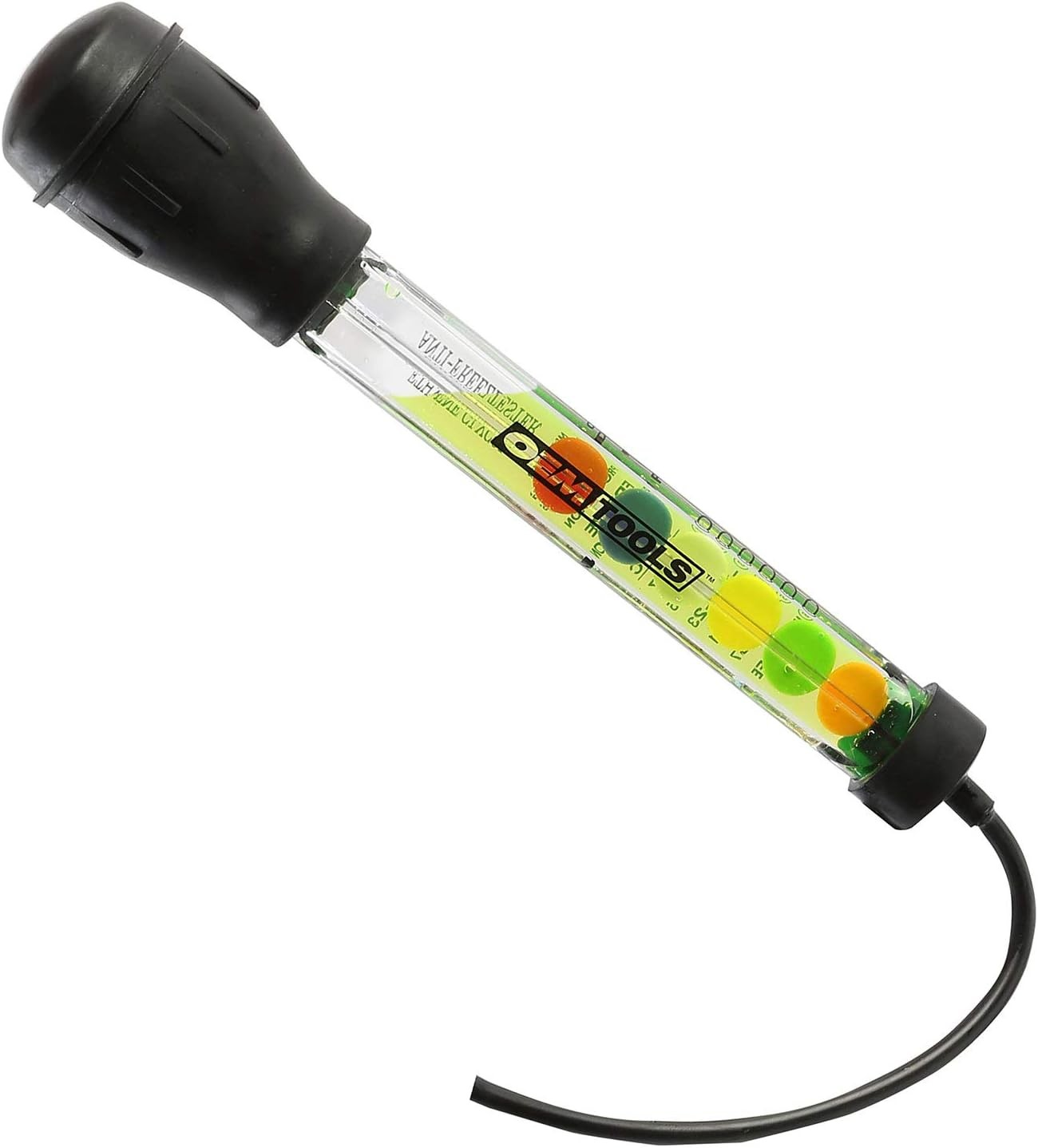
The OEMTOOLS antifreeze tester is the easy way to do it. Draw coolant into the tube and count the floating discs against the chart: five floating discs means ideal protection, and a sixth warns that the mix is too concentrated. It is made for ethylene glycol coolant, the common type, so check your coolant’s label first. Cloudy coolant or a level that keeps dropping is a reason to see a mechanic, not just top it up.
Not sure what is in your radiator? A disc tester tells you in a minute whether your coolant is ready for a deep freeze.
See the OEMTOOLS tester →3. Reset tire pressure for the cold
Tire pressure drops about 1 psi for every 10°F drop in temperature, which is why the warning light so often comes on during the first cold snap. Set your tires to the pressure on the driver’s door jamb sticker, not the number on the sidewall, which AAA points out is the maximum. Check them cold, before you drive, and include the spare.
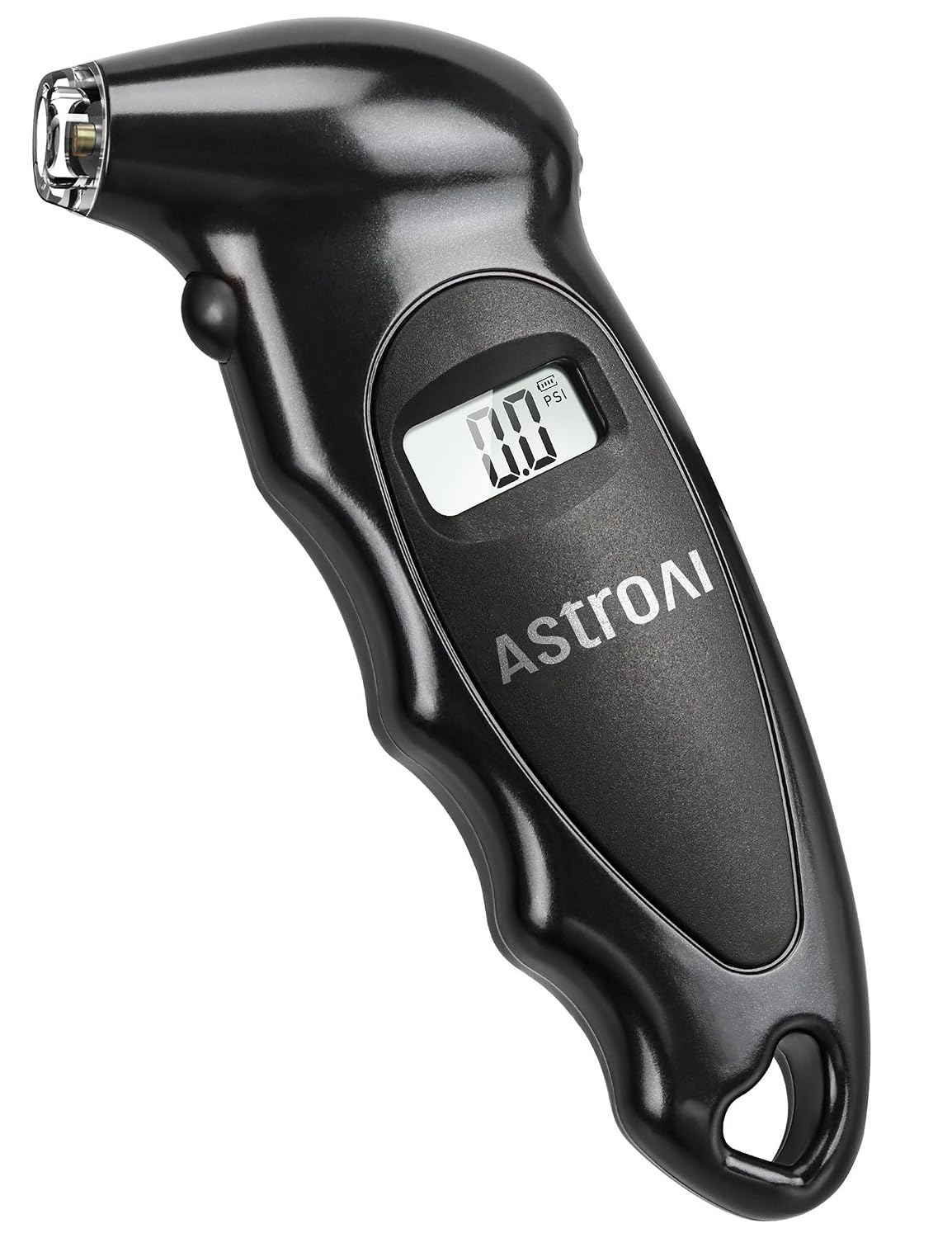
A cheap digital gauge in the door pocket makes this a 60-second job. The AstroAI digital gauge reads 0 to 200 psi on a backlit screen, which helps on a dark winter morning. AAA suggests checking at least monthly in winter, and some AAA clubs say weekly.
Pressure light on again? Keep a gauge in the car and you can check all four tires in the time it takes the windshield to defrost.
See the AstroAI gauge →4. Check tread, and decide on winter tires
AAA says traction in rain and snow drops off once tread wears below 4/32 of an inch. The quick check is a quarter: put it into a tread groove with Washington’s head upside down. If you can see all of his head, it is time for new tires. Uneven wear or cupping means the alignment or suspension should be checked too.
Kelley Blue Book notes that winter tires are designed for temperatures below 45°F and cites Goodyear’s rule of thumb of fitting them from Thanksgiving to Tax Day. All-season tires can manage occasional snow, but if you live somewhere that stays cold all winter, winter tires are the single biggest safety upgrade you can make.
5. Fit good wipers and winter washer fluid
Replace any wiper that streaks, chatters or skips, and consider a winter blade if you get regular snow. Our wiper blade guide covers when to replace them and which kind to buy.
Swap summer washer fluid for a winter blend with de-icing agents, such as Rain-X 2-in-1 All Season, and keep a spare jug in the trunk. AAA warns against using vinegar as a homemade de-icer because it can damage paint and rubber seals.
6. Walk around and check every light
It gets dark early, and road grime covers lenses fast. Have someone help you check the low and high beams, turn signals, hazard lights, brake lights and reverse lights. AAA notes headlights can dim by around 20% over five years, and condensation inside a housing can mean a leak. Cloudy lenses can often be fixed with a headlight restoration kit.
7. Have the brakes looked at
AAA points out that brakes often give little warning before they need work, and road salt adds rust to rotors that can transfer to the pads. If you hear grinding, feel the pedal change or the car pulls to one side, get them inspected before the roads ice over. Check the brake fluid level while you are under the hood.
8. Keep the tank at least half full
Kelley Blue Book and AAA both recommend never letting the tank drop below half in winter. It helps keep moisture from condensing in the tank and lines, and if you are ever stuck in traffic or a snowbank, the fuel is what keeps the heater running.
9. Pack a winter emergency kit
Pulling together the lists from AAA and Kelley Blue Book, this is what belongs in the trunk from November to March:
- A snow brush and ice scraper
- A small shovel
- Sand or cat litter for traction, or traction mats
- Jumper cables or a charged jump starter
- A flashlight with spare batteries
- Warm gloves, a hat and a blanket for everyone
- Water and long-life snacks
- A first-aid kit
- A phone charger
- Reflective triangles or flares
- A spare jug of winter washer fluid
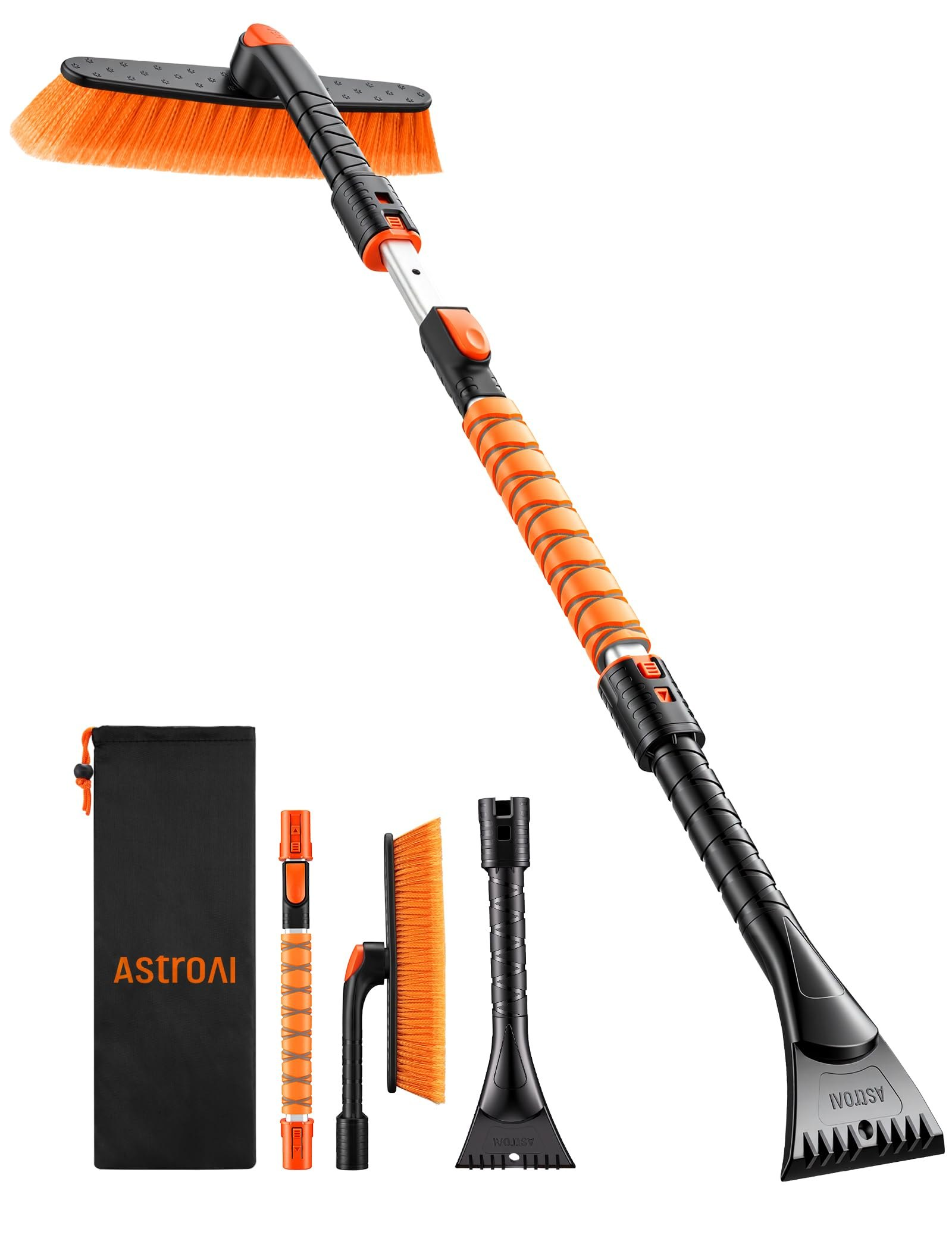
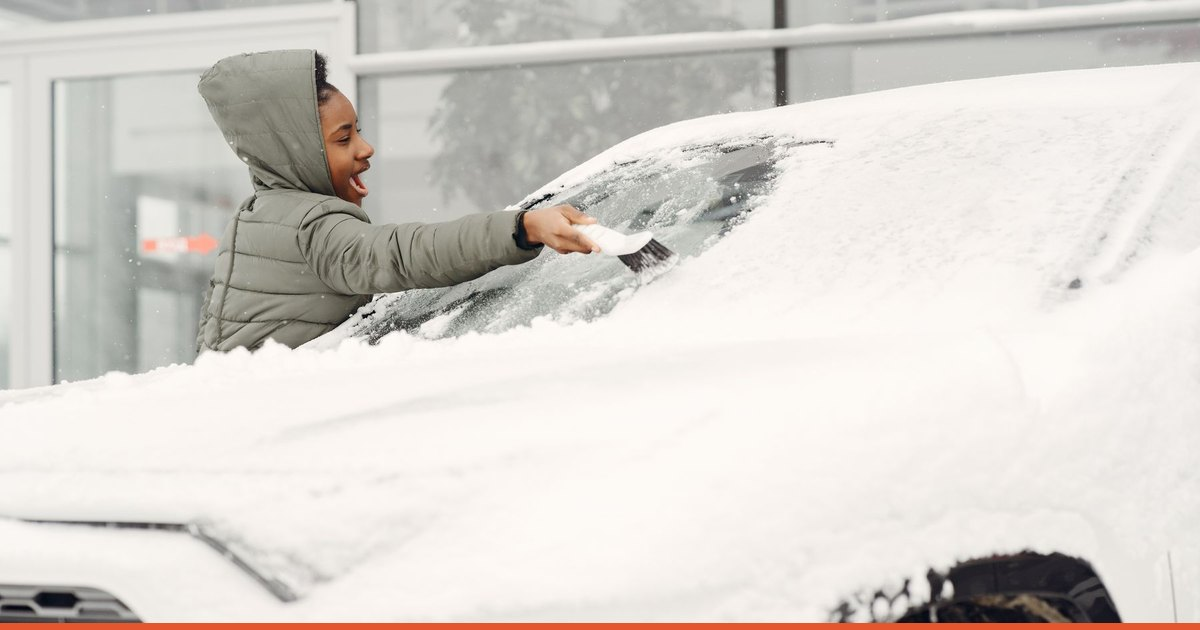
A proper snow brush makes the biggest daily difference. The AstroAI 46-inch snow brush extends from about 37 to 46 inches, so you can clear the roof and the far side of the windshield on an SUV without walking around the car. It has a 4.5 in. curved scraper with chippers on the other end, and the head pivots. Never pour hot water on icy glass to speed things up. AAA warns it can crack the windshield.
Still clearing the roof with your sleeve? An extendable brush reaches the middle of the roof on taller cars and stops the snow from sliding onto the windshield at the first stop.
Get the AstroAI snow brush →10. Clear the whole car before every snowy drive
Kelley Blue Book reminds drivers to clear snow off the hood, roof and trunk lid, not just a porthole on the windshield. Snow on the roof slides down when you brake and can fly off onto the car behind you.
Check the tailpipe too. AAA warns that a tailpipe blocked by snow can push carbon monoxide into the cabin, which is a real risk if you sit with the engine running to warm up after a plow has gone by.
And if you do get stuck, AAA’s advice is to stop spinning the wheels, clear snow from around all four tires, and rock gently between forward and reverse. Put sand, cat litter or even the floor mats under the drive wheels. If that does not work, or you are somewhere unsafe like a busy shoulder, stay inside the car with the heater on and the tailpipe clear, and call for help.