
Most drivers think about tire pressure twice a year: when the dashboard light comes on, and when a shop tech mentions it during an oil change. In between, the tires quietly lose air, and the car quietly gets a little worse at everything: braking, cornering, fuel economy and tread life.
Part of the problem is that tire pressure is surrounded by half-truths. Some of them sound sensible, a few are printed on tires, and one of them is sold at the dealership for real money. Here are the six we hear most, what is actually true, and the cheap tools that make the right habit easy.
Disclosure: GarageWise is reader-supported. As an Amazon Associate we earn from qualifying purchases, at no extra cost to you.
Myth 1: The number on the sidewall is the pressure to run
Look closely at any tire and you will find a pressure molded into the sidewall, often somewhere around 44 or 51 psi on a passenger tire. It looks official, so a lot of people fill to it.
That number is the maximum the tire is built to hold, not the pressure your car should run. Bridgestone calls this out directly: many people mistakenly treat the sidewall figure as the correct one. NHTSA is just as blunt. The right pressure is what the vehicle manufacturer lists, not what is printed on the tire.
Your number lives on the tire and loading information placard, usually on the driver’s door jamb or the B-pillar, sometimes in the glove box, and always in the owner’s manual. Front and rear can differ, and so can the spare. Running at the sidewall maximum makes the ride harsher and, according to Bridgestone, can make tires wear faster and cost you traction and braking.
Myth 2: You can tell by looking at it
Modern radial tires bulge at the bottom whether they are at 35 psi or 25 psi. A tire that is ten psi low can look completely normal parked in a driveway. NHTSA notes that underinflated tires are visually difficult to detect and recommends checking monthly with an accurate gauge.
The kick test, the squeeze test and the eyeball test all fail in the same way. The only reliable check is a gauge on the valve stem.
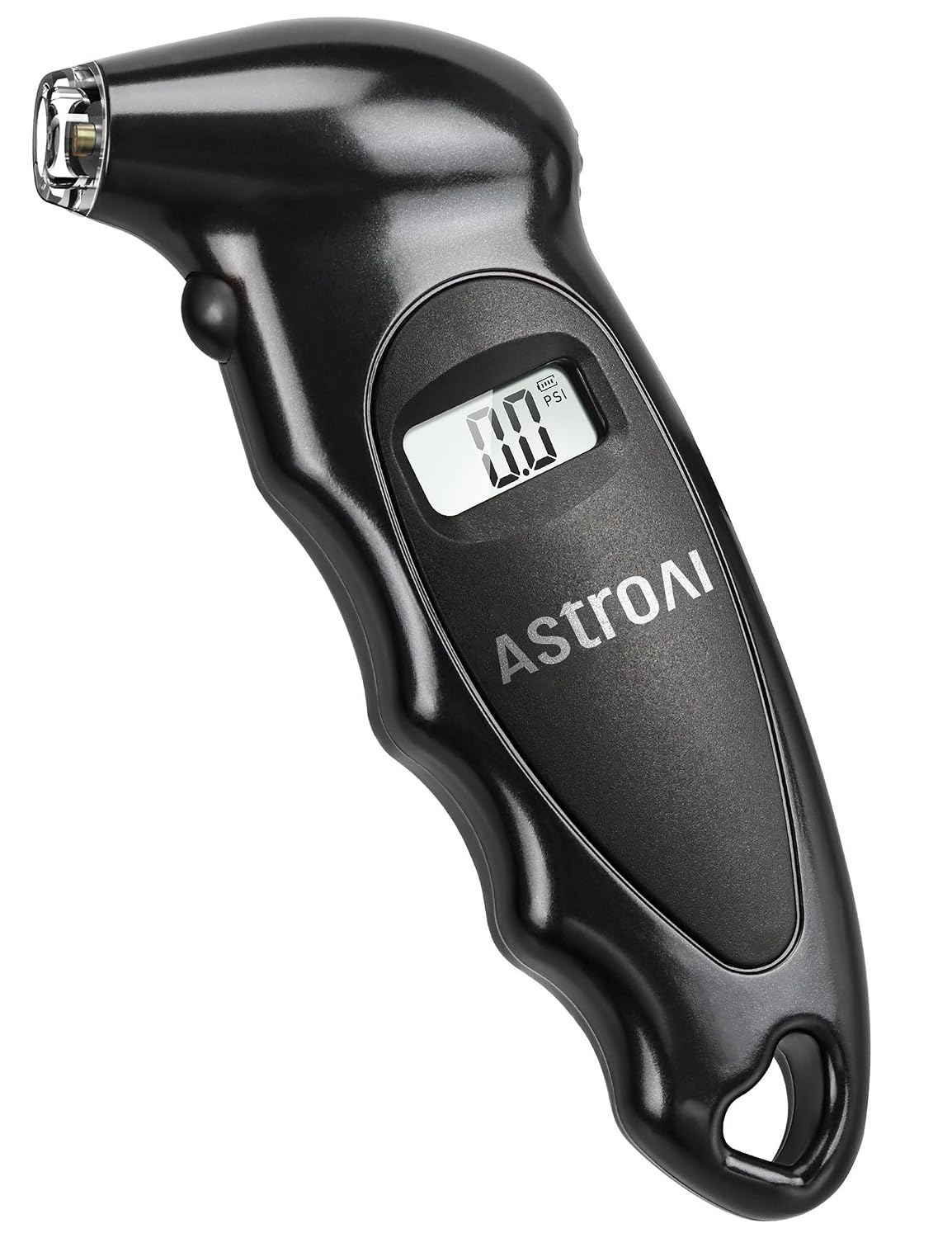
A digital gauge takes the squinting out of it. The AstroAI is about as simple as gauges get: press the button, push it onto the valve, read the backlit screen. AstroAI lists a 0 to 200 psi range, four units of measurement and auto shut-off, and it runs on AAA batteries. It was about $8 on Amazon when we last checked, so it costs less than a single tank of fuel wasted on soft tires.
Keep it in the glove box, not in a garage drawer. The gauge that is in the car is the one that gets used.
A gauge you will actually use. Small enough for the door pocket, readable at night, and cheaper than a car wash.
See the AstroAI Gauge on Amazon →Myth 3: The TPMS light will tell me when they are low
Every car sold in the US for well over a decade has a tire pressure monitoring system, and it is a genuinely useful safety net. It is just set much lower than most people assume.
The federal standard, FMVSS 138, requires the warning to come on when a tire drops to 25 percent below the manufacturer’s recommended cold pressure (or a fixed minimum, whichever is higher). On a car that calls for 36 psi, that is 27 psi before the light is required to show. You can drive for weeks on tires that are several psi low, paying for it at the pump and on the tread, with a perfectly dark dashboard.
NHTSA puts it plainly: the TPMS is not intended to be a substitute for regular tire maintenance. Treat the light as the smoke alarm, not the thermostat.
Myth 4: Nitrogen means you never have to check
Some dealers and tire shops sell nitrogen fills, sometimes bundled into a nitrogen package on a new car. The pitch is that nitrogen leaks out more slowly than air and keeps pressure more stable.
There is a grain of truth in it. Edmunds reports a Consumer Reports test where air-filled tires lost an average of 3.5 psi from a 30 psi start, while nitrogen-filled tires lost 2.2 psi. Nitrogen won, but by a little over one psi. Ordinary air is already about 78 percent nitrogen.
Edmunds found shops charging around $7 to $10 per tire for a nitrogen fill, with dealer packages running into the hundreds, and concluded it was not worth it. Nitrogen-filled tires still lose pressure, still change with the weather, and still need a monthly check. If your tires came with green valve caps, you can top them up with regular air. You lose a little nitrogen purity, not safety.
Myth 5: You can check them any time, anywhere
Pressure readings move with temperature, which is why the placard figure is a cold pressure. NHTSA and Bridgestone both define cold as tires that have not been driven for at least three hours. Check after a highway run and the reading will be higher than the true cold figure, so you might let air out of a tire that was fine.
The weather matters as much as the driving. Bridgestone’s rule of thumb is about one psi of change for every 10°F change in outside temperature, and tires also lose roughly one psi a month on their own. A car set correctly on a warm September afternoon can easily be four or five psi low on the first frosty morning in November, which is exactly when a lot of TPMS lights come on.
The easy fix is to check in the morning before you drive, or after the car has sat for a few hours, and to top up at home rather than at the gas station after a long drive. If you have to fill up away from home, add air to bring it to the placard figure plus the amount it rose while driving, then recheck cold the next morning.
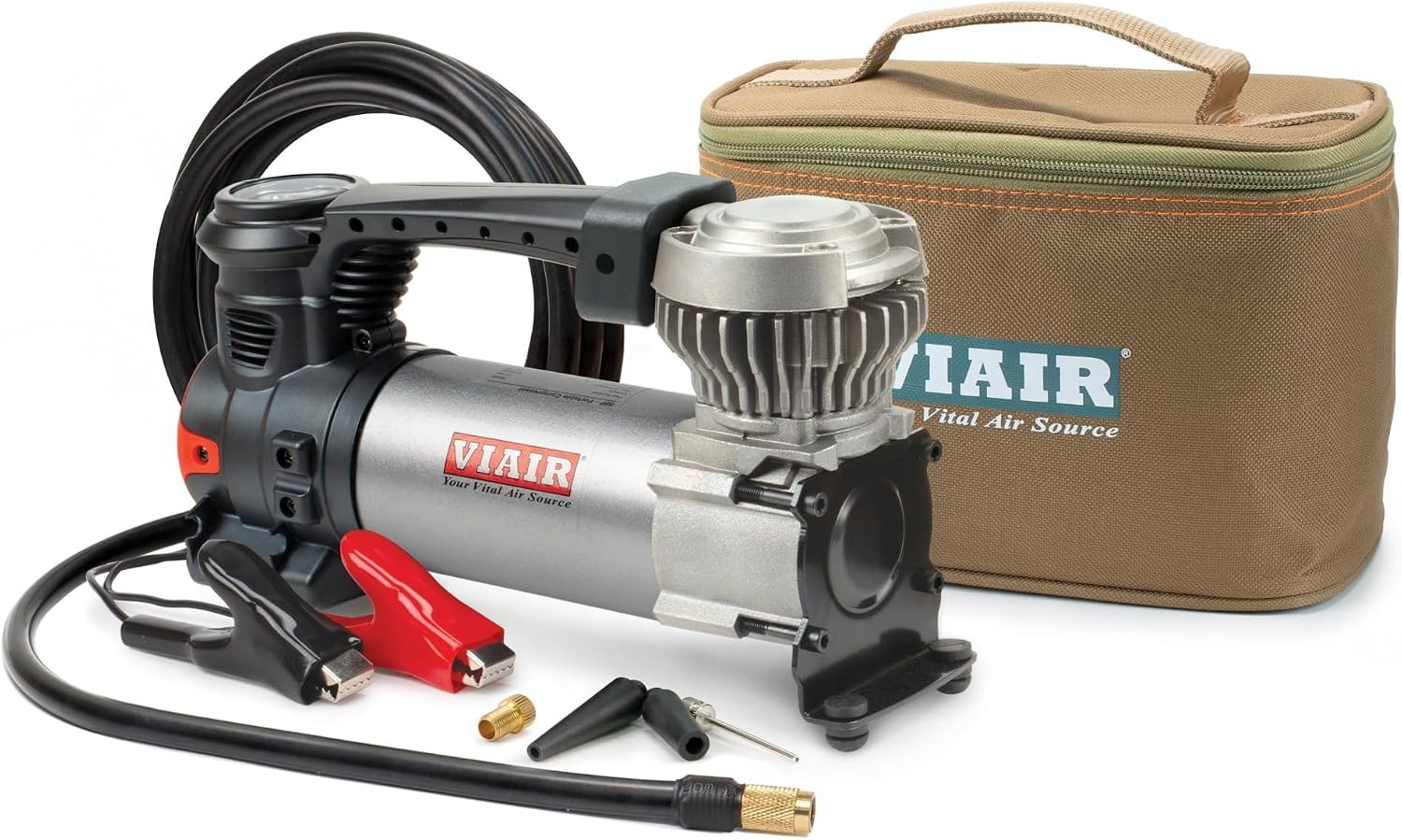
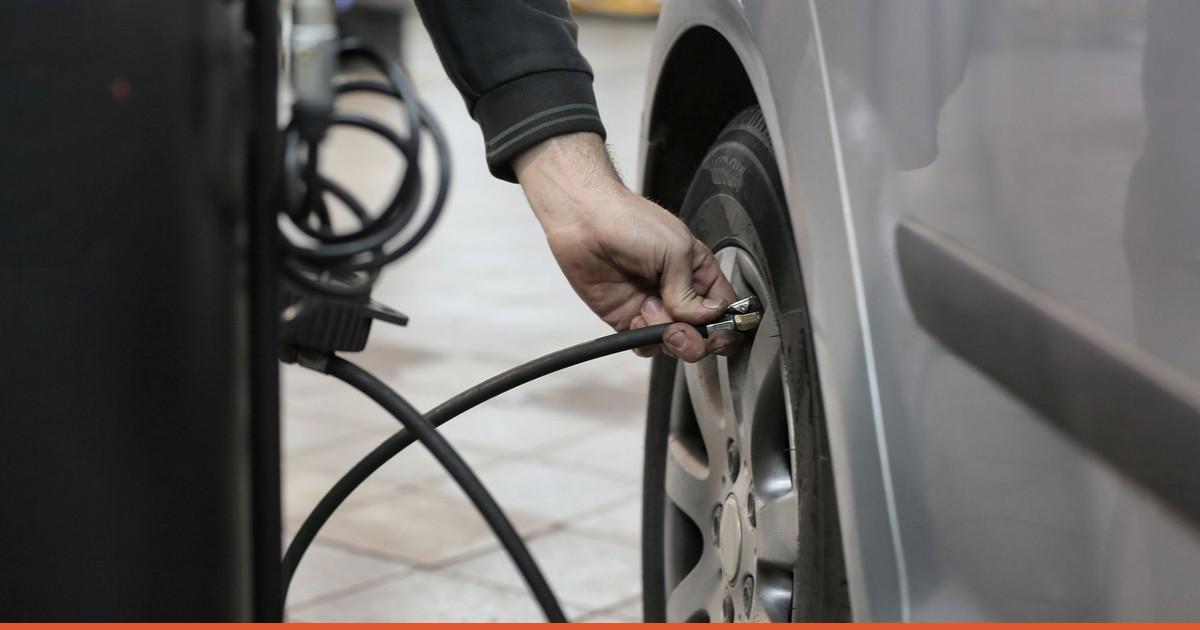
A home inflator makes cold checks practical. The VIAIR 88P clamps straight onto the car battery and VIAIR rates it at 120 psi maximum working pressure with a 25-minute duty cycle at 30 psi, which is plenty for four truck tires in a row. The kit has a 10-foot power cord, a 16-foot air hose, a twist-on brass chuck and a built-in gauge. There is no auto shut-off on the classic 88P, so you watch the needle and confirm with your own gauge.
Topping up in your driveway, not at a gas station? The 88P reaches every tire on a full-size truck from one spot.
Check the VIAIR 88P Price →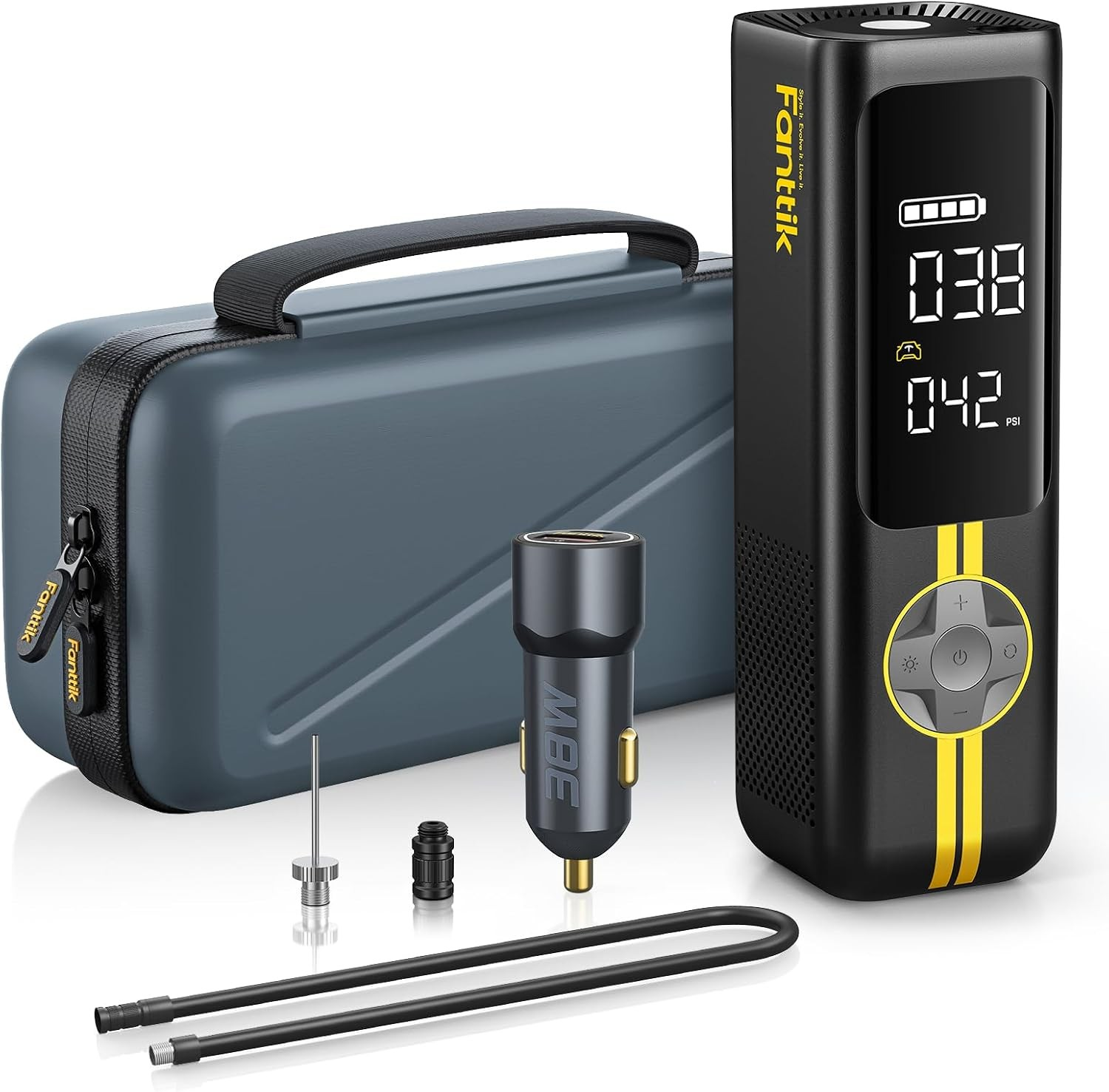
For a small car, a cordless pump is even less hassle. Fanttik lists the X8 APEX at 150 psi with preset modes for car, bike, motorcycle and ball, and Tom’s Guide measured it at 1.8 lb. It is slower than a 12V compressor on a fully flat tire, but for a two or three psi morning top-up it is hard to beat.
Lives in the glove box. Light enough to keep in the car for morning top-ups, with presets for car, bike and ball.
View the Fanttik X8 APEX →Myth 6: A few psi low does not really matter
This is the myth that actually costs money, because it is the one people act on. FuelEconomy.gov says underinflated tires can lower gas mileage by about 0.2 percent for every one psi drop in the average pressure of all four tires, and that keeping them properly inflated improves mileage by 0.6 percent on average and up to 3 percent in some cases. An Oak Ridge National Laboratory test for the Department of Energy found a 2 to 3 percent fuel penalty with all four tires at 75 percent of the recommended pressure.
Fuel is the smaller cost. NHTSA says properly inflated tires can extend the average life of a tire by 4,700 miles, and Bridgestone warns that improper inflation causes rapid or irregular wear and internal damage that can lead to sudden tire failure. A soft tire flexes more, runs hotter and wears its shoulders. On a set of tires that might cost several hundred dollars, a few thousand lost miles adds up quickly.
There is a safety side too. An underinflated tire is slower to respond in an emergency lane change and gives up grip earlier on wet roads. None of that shows up on a dashboard.
A five-minute monthly routine
- Pick a day you will remember, such as the first Saturday of the month, and check before the car has been driven.
- Read the placard on the driver’s door jamb and note front and rear figures.
- Check all four tires with your gauge, plus the spare if your car has one.
- Add air to the placard number, then recheck. Let a little out if you overshoot.
- Look over the tread and sidewalls for nails, cuts, bulges or uneven wear while you are down there.
- Recheck after any big temperature swing, and before a long trip or a heavy load.
If one tire keeps losing more than the others, have it looked at. A slow leak from a nail or a corroded bead is cheap to fix early and expensive if it lets go at speed. And when you are already down at wheel level with a gauge in hand, it is a good moment to plan your next tire rotation.
More GarageWise guides
- Best Portable Tire Inflators for Your Car
- How to Rotate Your Tires in the Driveway
- Teaching a New Driver Basic Car Care
- Road Trip Prep: What to Check Before a Long Drive