

Maybe it is a summer car that only comes out when the roads are dry. Maybe you are heading somewhere warm for three months, or the second car just is not needed until spring. Either way, a car that sits from November to March can come back with a flat battery, stale fuel, flat-spotted tires, a seized parking brake and a family of mice in the air filter box.
None of that is hard to prevent. Most of it takes an afternoon and a few inexpensive things. Here is the checklist we would follow, in roughly the order you would do it on the day you park the car.
Disclosure: GarageWise is reader-supported. As an Amazon Associate we earn from qualifying purchases, at no extra cost to you.
The winter storage checklist
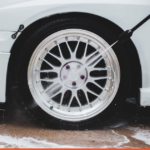
- Wash and dry the car, inside and out
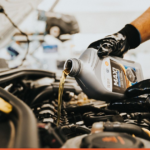
- Change the oil if it is anywhere near due
- Fill the tank and add fuel stabilizer
- Put the battery on a maintainer (or disconnect it)
- Set tire pressure and deal with flat spots
- Leave the parking brake off and chock the wheels
- Block the doors rodents use
- Cover it with something that breathes
- Call your insurer before you change coverage
- Plan the spring wake-up
1. Wash it, dry it, clean out the cabin
Road salt, bird droppings and tree sap do their slow damage whether the car moves or not, so wash it before it goes to sleep, including the wheel wells and underside if you have been driving on salted roads. A coat of wax adds a layer between the paint and whatever lands on the cover. Let it dry completely before you cover it so you are not sealing moisture in.
Then clean the cabin properly. Crumbs, wrappers and a forgotten granola bar are an open invitation to mice. Vacuum the floor and seats and take everything edible out, including the stuff in the door pockets.
2. Change the oil if it is close to due
Edmunds suggests an oil change before storing a car for more than about 30 days, because used oil carries contaminants that are better drained than left sitting in the engine for months. AAA’s advice is simpler: if a change is due, do it before storage rather than after. If you changed it a few hundred miles ago, skip this one.
3. Fill the tank and add a stabilizer
A full tank leaves less room for moist air, which means less condensation inside the tank over the winter. Both AAA and Edmunds recommend filling up and adding a fuel stabilizer before a long layup.
Gasoline starts to break down within months, especially ethanol blends. NAPA notes that untreated fuel can leave varnish in a carburetor within about six months. A stabilizer slows that down.
STA-BIL Storage is the one most parts stores stock. The maker says it keeps fuel fresh for up to 24 months, at 1 ounce for every 2.5 gallons of gas. Add it at the pump, then drive the car for a few miles (AAA suggests five to ten) so treated fuel reaches the lines and injectors, not just the tank. Edmunds is more conservative and talks about up to 12 months, which is still plenty for a winter.
Parking it for the season? A bottle of STA-BIL Storage treats a lot of gas, so one bottle usually covers a couple of winters.
Find STA-BIL Storage on Amazon →4. Keep the battery alive
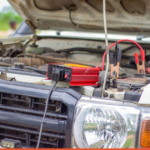
This is the single most common spring surprise. Modern cars draw a small current even when they are off, for the alarm, the clock and the computers, and over three or four months that is enough to flatten a healthy battery. A battery left deeply discharged in the cold can also be damaged for good.
You have two choices. You can disconnect the negative cable, which stops the drain but resets the radio, clock and seat memory and still lets the battery slowly self-discharge. Or you can leave it connected to a smart maintainer that holds it at full charge all winter. If the car is somewhere with an outlet, the maintainer is the better option.
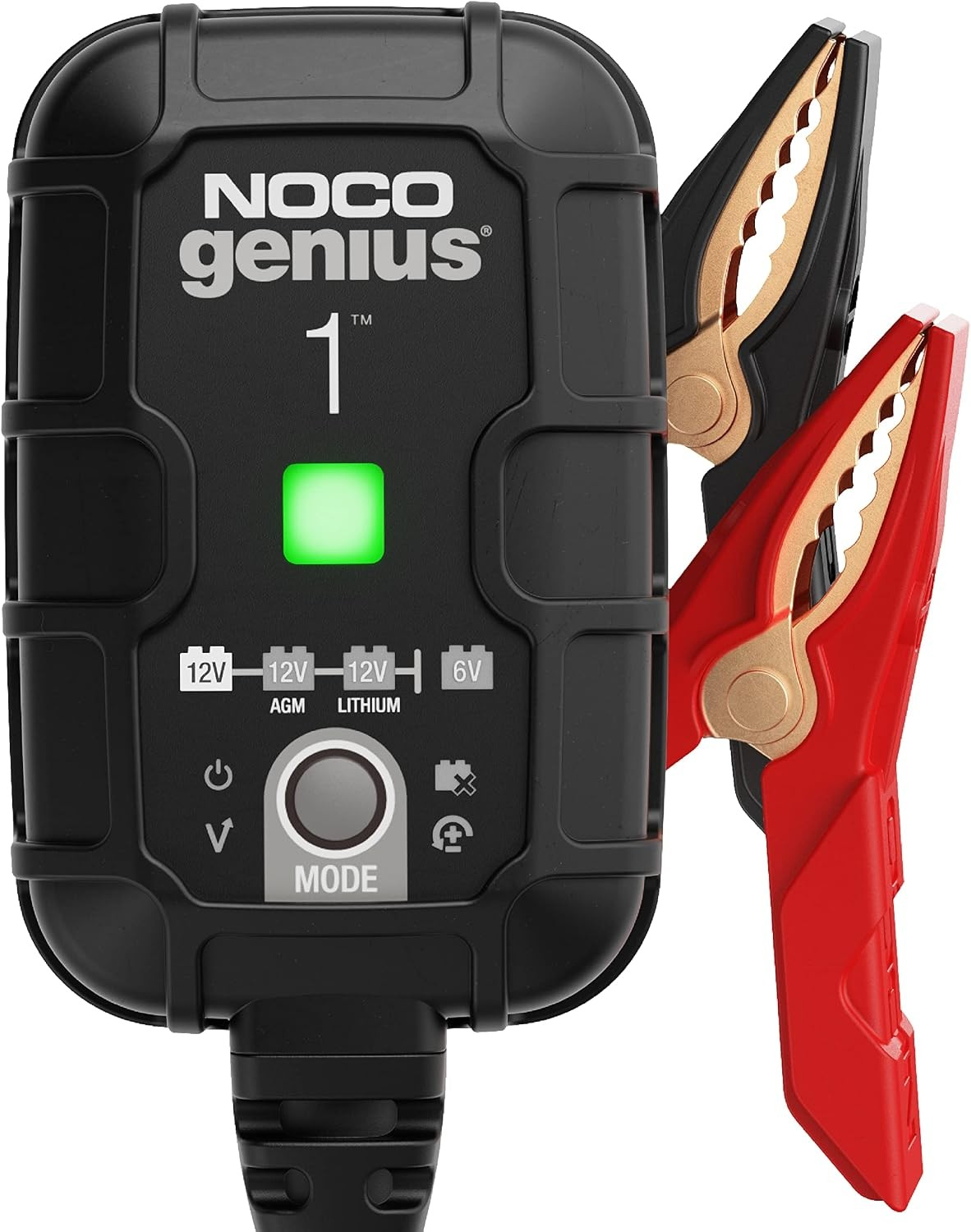
The NOCO GENIUS1 is the one we would buy for a car that only needs to be kept topped up. It puts out 1 amp at 6 or 12 volts, works with flooded, AGM, gel, EFB and lithium batteries, and NOCO lists it at $29.95. It is not quick at reviving a dead battery, but that is not the job here.
Want a full battery in April? Plug it in when you park the car and it switches to maintenance mode on its own.
See the NOCO GENIUS1 →
If the battery is already weak, or you want one charger that can also bring a flat truck battery back, step up to the NOCO GENIUS5. It delivers 5 amps at 6 or 12 volts and handles batteries up to 120 Ah, then drops to maintenance mode once the battery is full.
Battery already struggling? The GENIUS5 can recharge it first and then babysit it until spring.
Check the GENIUS5 price →Whichever you use, make sure the terminals are clean and tight before you connect it, and route the cable so the hood or a door is not crushing it.
5. Tires: pressure and flat spots
Tires resting in one spot for months can develop flat spots, especially in the cold. For storage up to about a month and a half, AAA suggests adding about 10 psi over the normal pressure, as long as you stay under the maximum printed on the sidewall. Write a note to yourself on the steering wheel so you remember to bring it back down before driving.
For a longer layup, Edmunds suggests putting the car on jack stands to take the weight off the tires. AAA’s Club Alliance has a simpler trick: park the tires on pieces of foam board. Either way, check the pressure again when the car comes out of storage, because tires lose some air over the winter.
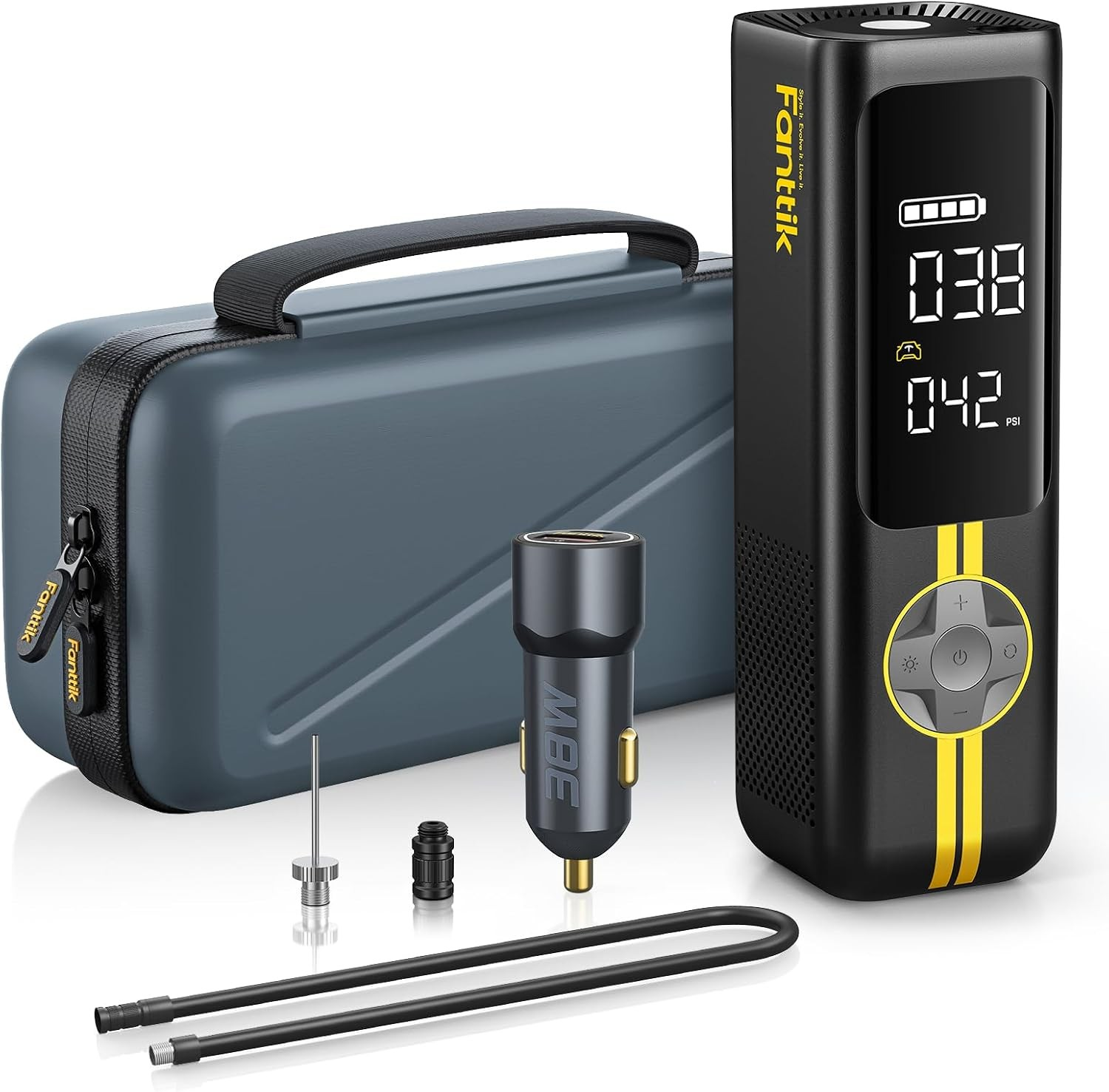
A cordless inflator makes both ends of this job easy. The Fanttik X8 APEX is rated to 150 PSI with preset modes for cars, bikes and more, and it doubles as a power bank with a built-in light. It is small enough to stay in the glovebox once the car is back on the road.
No compressor in the garage? A cordless inflator handles the fall top-up and the spring reset without an extension cord.
See the Fanttik X8 APEX →6. Parking brake off, wheel chocks on
All three of the guides we checked agree on this one. A parking brake left on for months can stick, with the pads rusted to the rotors or the cable seized. Put the car in park (or in gear for a manual), leave the parking brake off and put a pair of wheel chocks in front of and behind a tire. On a perfectly flat garage floor the chocks are cheap insurance; on any slope they are essential.
7. Keep the mice out
Rodents love a quiet, sheltered car. They nest in air filter boxes, chew wiring and leave a smell that is hard to get rid of. Stuff steel wool (copper wool lasts longer) into the tailpipe and air intake opening, and leave yourself a bright note on the dashboard so you take it out before starting the engine.
Dryer sheets and mothballs get recommended a lot, but AAA points out the evidence for them is weak. A clean cabin and blocked entry points matter more. In a shared or rural garage, traps around the car are worth setting too.
8. Cover it with something that breathes
Indoors, a cool, dark, dry space is ideal, and a soft cover keeps dust off. Outdoors, you need a weatherproof cover, but it must be breathable. A plain plastic tarp traps condensation against the paint, which is the opposite of what you want. AAA suggests a multi-layer breathable cover for storage longer than about six weeks, and a couple of moisture-absorbing desiccant packs inside the cabin.
Covers are sized to the car, so search by your body style and length rather than buying a generic one. A breathable car cover with elastic hems and tie-down straps stays put in wind.
9. Talk to your insurer
It is tempting to cancel coverage on a car that is not moving. Don’t. A stored car can still be stolen, flooded or damaged by a falling branch, and Edmunds warns that a gap in coverage can raise your rates later. Many insurers let you drop down to comprehensive-only for a stored vehicle. Ask before you change anything, and keep the registration current if your state requires it.
10. Should you start it every couple of weeks?
Opinions differ. Edmunds suggests starting the car every two weeks and running it for about 15 minutes if you are not using a maintainer. AAA’s Club Alliance says there is no need, and that brief idling mostly adds moisture and contaminants to the oil without ever getting the engine fully warm.
We side with AAA. If the battery is on a maintainer and the fuel is stabilized, leave it alone. A five-minute idle in a cold garage does more harm than good, and an engine running in an attached garage is a carbon monoxide risk.
Waking it up in spring
- Remove the steel wool from the tailpipe and intake, and the note from the dashboard
- Check under the hood and in the air filter box for nests or chewed wiring
- Disconnect the maintainer, or reconnect the battery
- Set the tires back to the pressure on the door jamb sticker
- Check the oil and coolant levels and look under the car for drips
- Pump the brakes a few times before you move, and drive gently for the first few miles
Expect the brakes to make some noise at first. A light layer of surface rust on the rotors is normal after a winter and clears after a few stops.
More GarageWise guides
- Battery Chargers and Maintainers: Who Actually Needs One
- Washing Your Car in Winter: Salt, Slush and the Undercarriage
- Best Portable Tire Inflators for Your Car
- Changing Your Own Oil: Every Tool You Need
- Road Trip Prep: What to Check Before a Long Drive