Clay Bar, Polish, Wax: The Order That Actually Matters
Reading Time: 7minutesWash, clay, polish, wax: why the order matters, the bag test that tells you if you need clay, and which steps you can safely skip on your car.
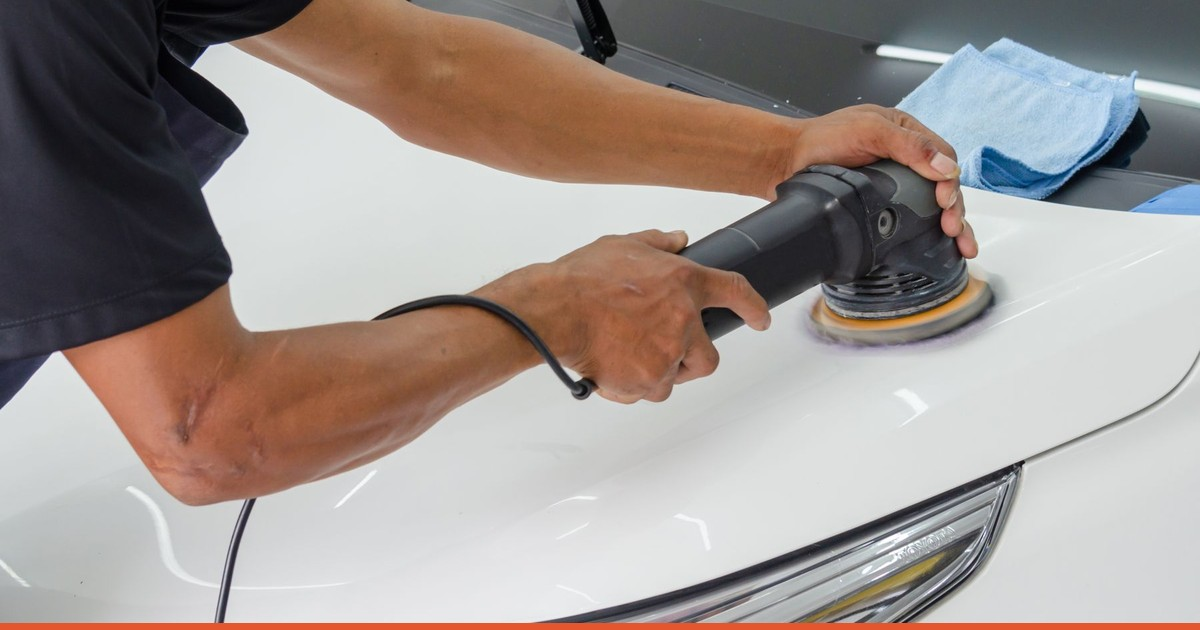
A dual-action polisher working polish into the paint after the car has been washed and clayed (Photo: Khunkorn Laowisit, Pexels)
Reading Time: 7minutes
You washed the car, it looks clean, and yet the paint feels like fine sandpaper when you run your hand over the hood. A month later the wax you put on is gone and the water has stopped beading. Nine times out of ten that is not a bad product. It is the right products done in the wrong order.
Paint care has a sequence because each step prepares the surface for the next one. Skip a step or swap two around and you end up sealing dirt under wax or polishing grit into the clear coat. Here is the order, why it works, and what you can safely leave out.
Disclosure: GarageWise is reader-supported. As an Amazon Associate we earn from qualifying purchases, at no extra cost to you.
Wash, clay, polish, wax. Meguiar’s has taught a version of this for years as its paint care cycle: clean the surface, remove what is bonded to it, refine the finish, then protect it. Everything below is just the reasoning behind that line.
Wash removes loose dirt so nothing gets dragged across the paint in later steps.
Clay pulls out contamination that washing leaves behind: overspray, rail dust, tree sap mist, tar.
Polish refines the clear coat, softening fine swirls and adding gloss.
Wax (or a sealant) goes on last, as a protective layer over a clean, smooth surface.
The logic runs one way. Wax is a coat on top, so anything underneath it gets locked in. Polish works by gently abrading or filling the surface, so it needs to be free of grit first. Clay needs lubricated, clean paint or it just smears road film around.
Do you even need to clay? The bag test
Wash and dry the car. Put a thin sandwich bag over your hand and lightly run your fingertips across the hood, roof and the lower part of the doors. The plastic exaggerates what is on the surface.
If it feels like glass, skip the clay and go straight to polish or wax. If you feel a gritty, bumpy texture, especially behind the wheels and on horizontal panels, that is bonded contamination, and clay is the step that fixes it. Most daily drivers that have never been clayed fail this test, usually on the hood and the rear bumper.
Step 1: Wash properly first
Everything starts with a careful wash: two buckets, a soft mitt, working top to bottom, in the shade. Rushing it defeats the purpose, because any grit left on the panel will be pushed around by the clay or the polish pad. We cover the full routine in our guide to washing your car without scratching the paint.
Dry the car fully before polishing or waxing. Clay is the exception: it can go on a damp car as long as you use plenty of lubricant.
Step 2: Clay bar decontamination
A clay bar is a soft, slightly sticky compound you glide across lubricated paint. It picks up the particles that are stuck to the clear coat without scratching, as long as the surface stays wet and the clay stays clean. Work a small section at a time, spray lubricant, glide the clay back and forth with light pressure, and wipe the area with a microfiber towel.
Fold the clay over itself every few passes to expose a clean face. If you drop it on the ground, throw it away. A dropped clay bar is full of grit and will scratch whatever it touches next.
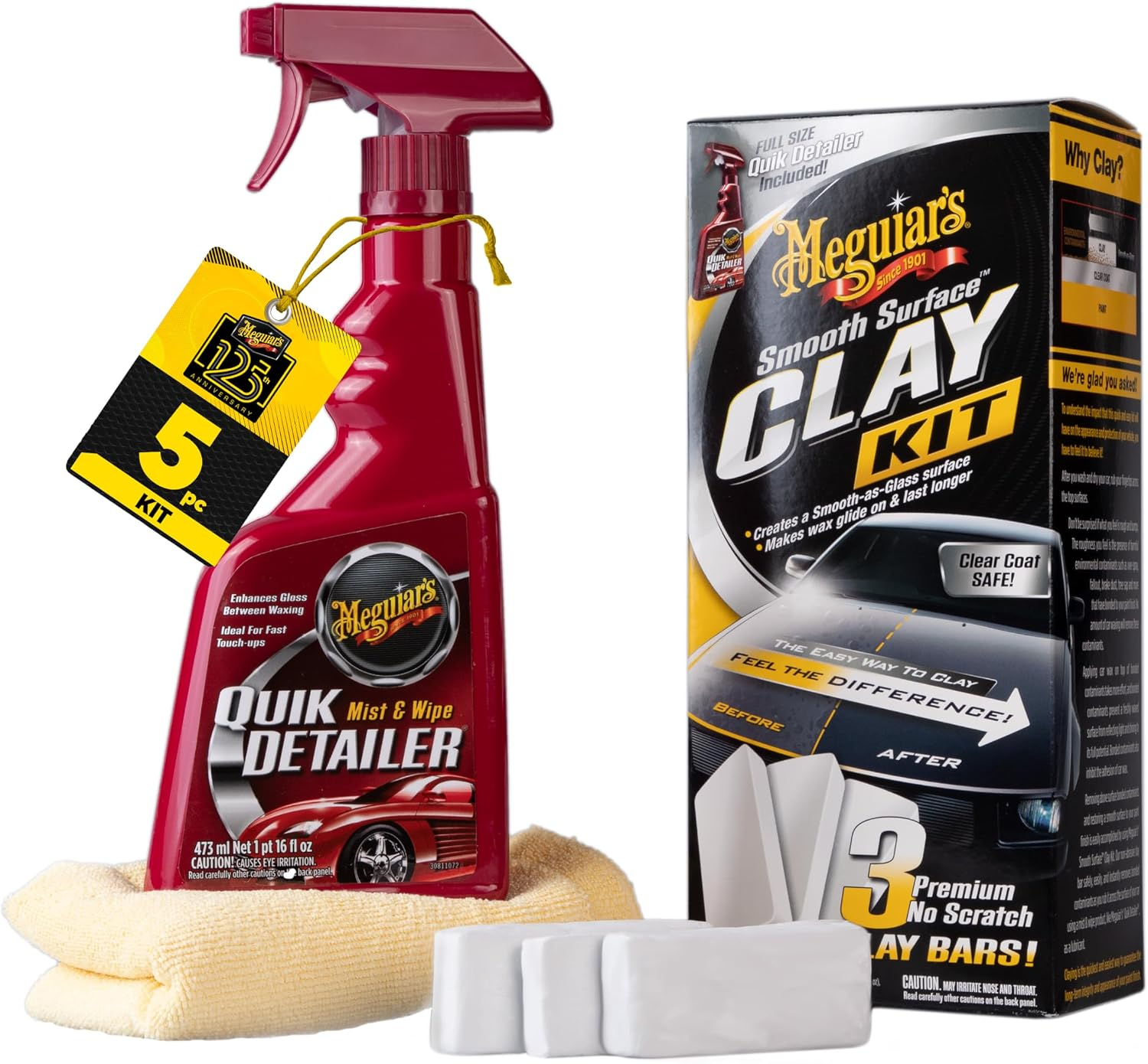
This is the kit we would hand someone claying for the first time. It comes with three 60 gram clay bars, a 16 oz bottle of Quik Detailer to use as lubricant, and a microfiber towel. Meguiar’s describes the clay as non-abrasive and safe on any paint finish, clear coats included.
Three small bars are a sensible format for a beginner. If you drop one, you have two more, and a 60 gram piece is easy to flatten into a pad that fits your palm.
Paint feels rough after washing? One clay session usually fixes it, and this kit has everything you need for the first car.
More clay for bigger vehicles: Mothers California Gold 07240
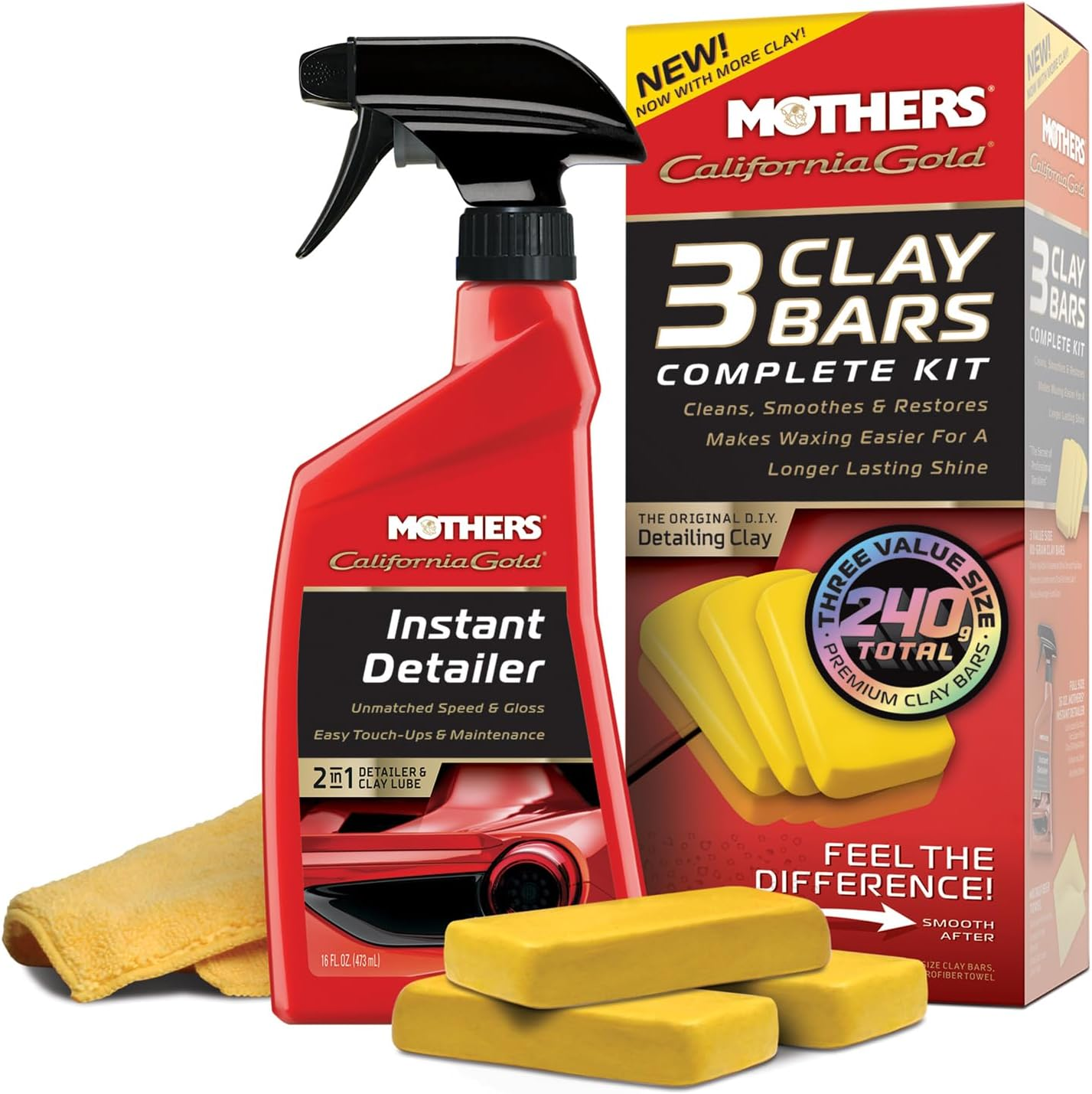
Mothers California Gold Clay Bar System
The Mothers system follows the same idea with bigger bars: three 80 gram clay bars, a 16 oz bottle of Instant Detailer as lubricant, and a microfiber towel. Mothers says it lifts overspray, industrial fallout, brake dust, tree sap and acid rain residue, and that it can be used on paint, chrome, glass and smooth plastics.
If you have a truck or an SUV, or two cars to do, the extra clay per bar is welcome. Either kit does the job; buy whichever is easier to get, and buy more lubricant than you think you need.
Doing a truck or two cars? Bigger bars mean fewer trips back to a fresh piece halfway through the job.
Clay leaves the paint smooth, but it does nothing for swirls, hazing or dullness. That is polish’s job. A polish refines the top of the clear coat so it reflects light evenly again. It is not the same as a compound, which cuts much harder and is meant for heavier defects.
For most home detailers, the sensible move is the gentlest product that gets the result. Try it on one panel first. If the swirls are still obvious after a careful pass, that panel may need a compound or a professional, and that is better to learn on one door than on the whole car.
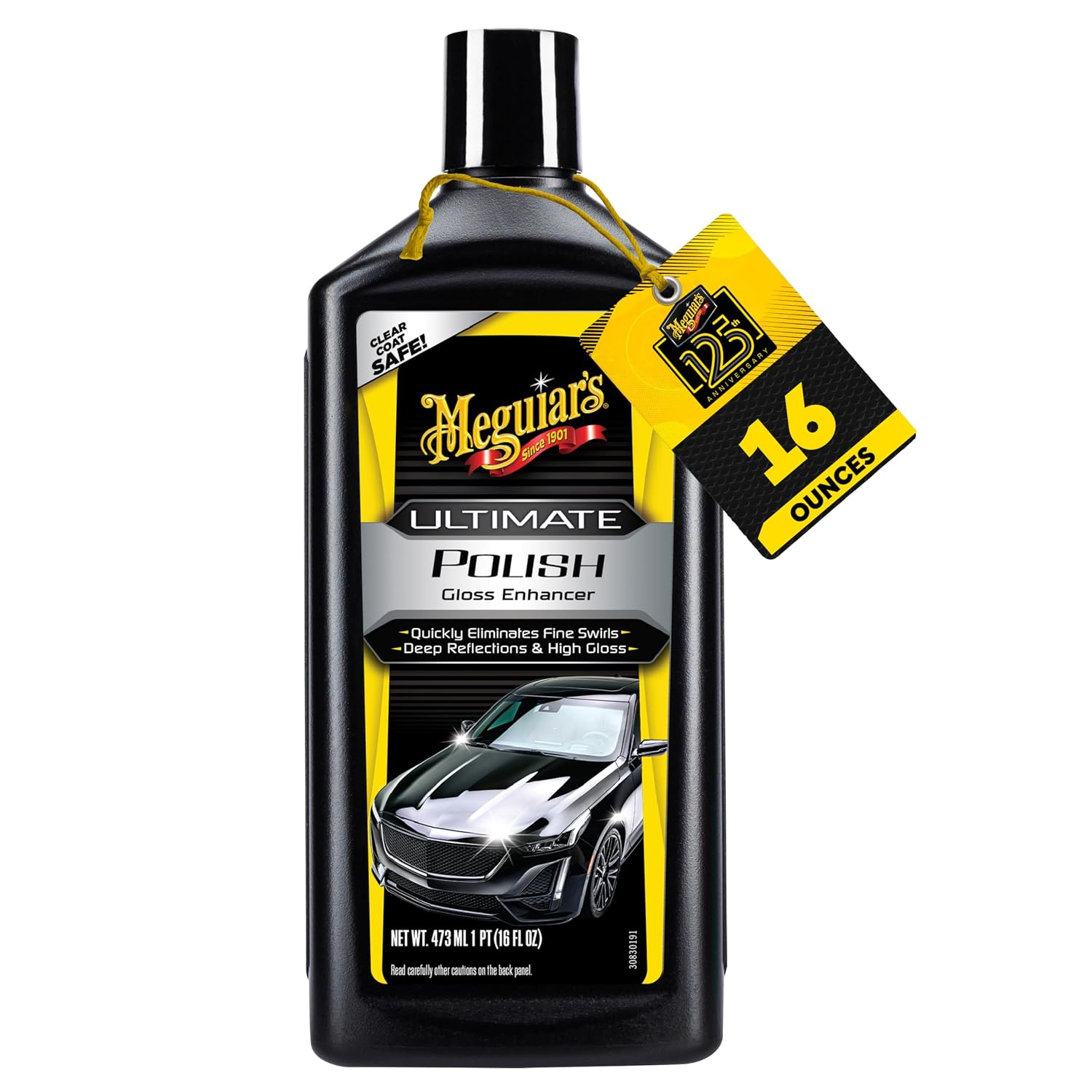
Meguiar’s calls Ultimate Polish a pre-waxing glaze. It is designed to remove fine swirls and towel marks, and it uses conditioning oils to deepen gloss, which shows most on dark paint. Meguiar’s says it is safe on all glossy paints, including clear coats.
It works by hand with a foam applicator or with a dual action polisher. By hand, use small overlapping circles and moderate pressure, one panel at a time, and buff off before it dries hard. Do not expect it to erase deep scratches. That is not what it is for.
Dark car looking flat and swirly? A glaze-style polish is the low-risk way to put the depth back before waxing.
Wax goes on last because its whole job is to sit on top. Put it on clean, smooth, polished paint and it bonds better and lasts longer. Put it on contaminated paint and you are mostly waxing the contamination.
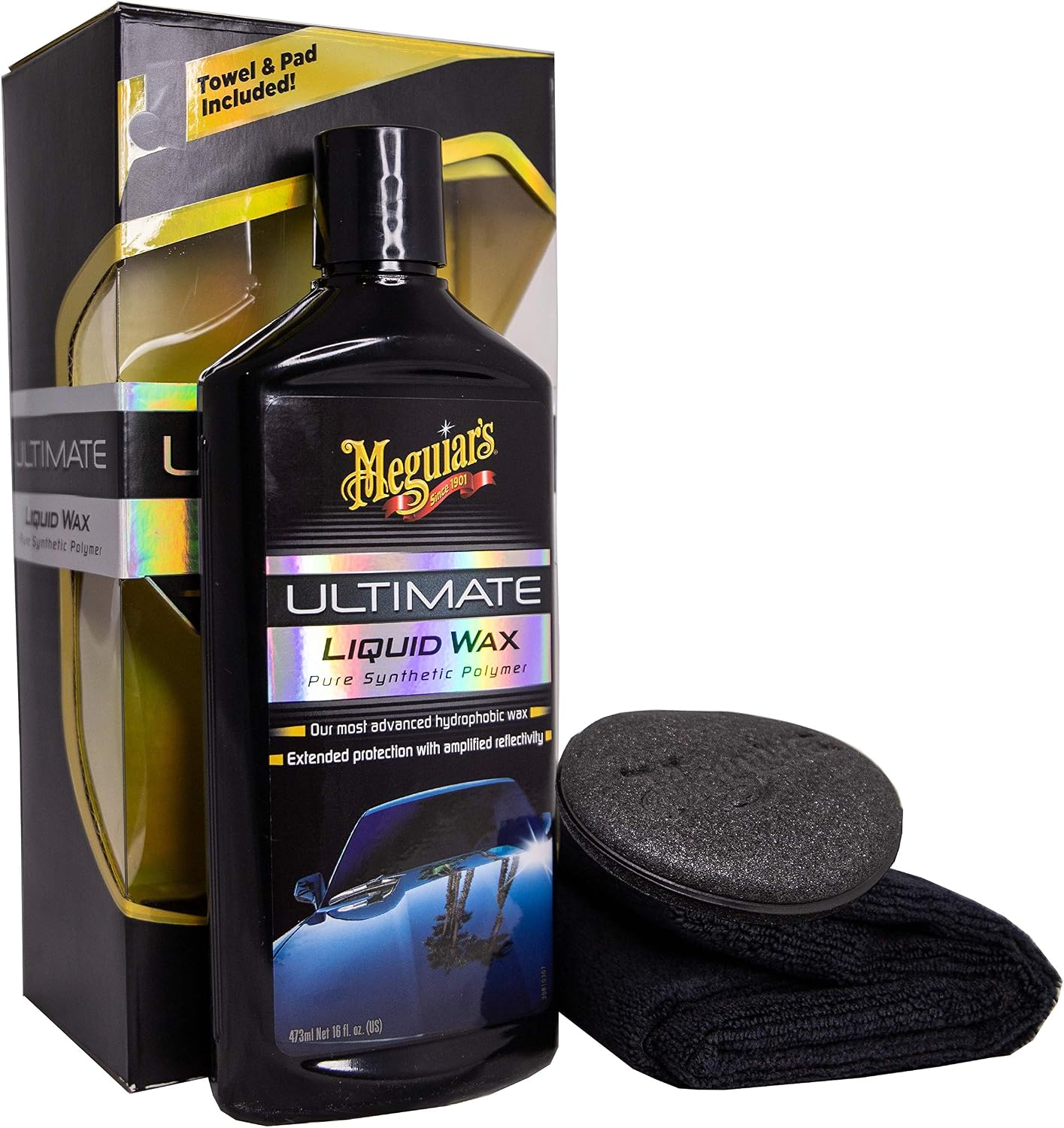
Traditional carnauba waxes give a warm glow but usually wear off sooner. Synthetic waxes and sealants are built on polymers and generally aim for longer protection. For most drivers who wax a few times a year, a synthetic liquid is the easiest choice.
Meguiar’s says the formula is designed to wipe on and off easily, even in full sun, and not to stain unpainted trim white, which is a common annoyance with older waxes. The polymers are meant to crosslink into a durable protective layer, and its hydrophobic finish is what makes water bead and roll off.
Apply a thin coat. A heavy layer is harder to remove and does not protect any better. It can go on by hand or with a dual action polisher at a low speed.
Want the beading back for months, not weeks? A thin coat of synthetic wax over clean paint is the step that makes the rest last.
Paint passes the bag test: wash, then wax. Clay is not needed this time.
Rough paint but few swirls: wash, clay, wax. Polish is optional.
Swirls and dullness on a dark car: the full sequence is worth the afternoon.
Wax still beading strongly: just wash. Do not stack another coat on top for no reason.
Whatever you skip, never change the order of what you keep. Clay after wax strips much of the wax you just applied. Polish after wax removes it. Wax over dirt seals in dirt.
Plan a full session for a mild, dry day in the shade. Clay and polish on a hot panel is miserable work, and products flash dry before you can buff them. Give yourself a whole afternoon the first time. It gets faster once you know the routine and your car.