
Sooner or later every home mechanic needs to get under the car: an oil change, a look at a rattling exhaust, a leak you are trying to trace. There are two ways most people do it at home. Drive the car up a pair of ramps, or lift it with a floor jack and set it down on jack stands.
Both are safe when they are used properly, and both have hurt people who cut corners. The real question is which one is safer for the job you are doing, on the floor you have, with the car you drive. Here is how they compare, round by round.
Disclosure: GarageWise is reader-supported. As an Amazon Associate we earn from qualifying purchases, at no extra cost to you.
The two setups
| How it lifts | Wheels off? | ||
|---|---|---|---|
 Black Widow two-piece ramps | Drive up, 6.5 in. lift | No | Check Price |
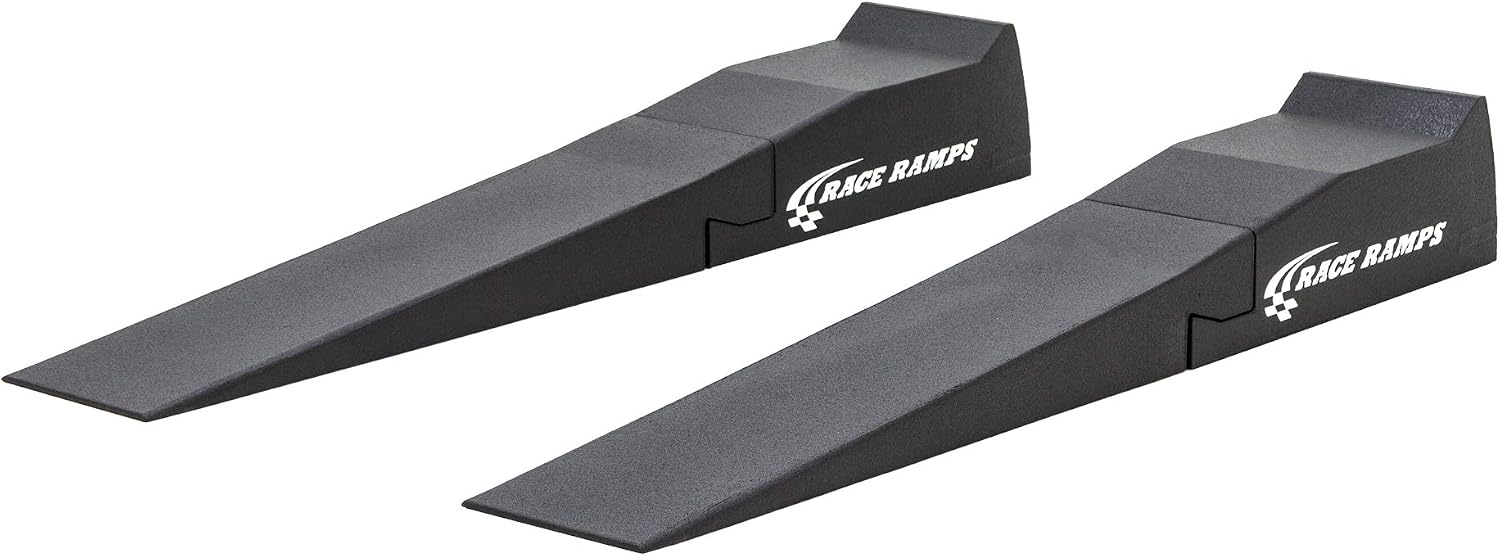 Race Ramps two-piece, low cars | Drive up, 8 in. lift | No | Check Price |
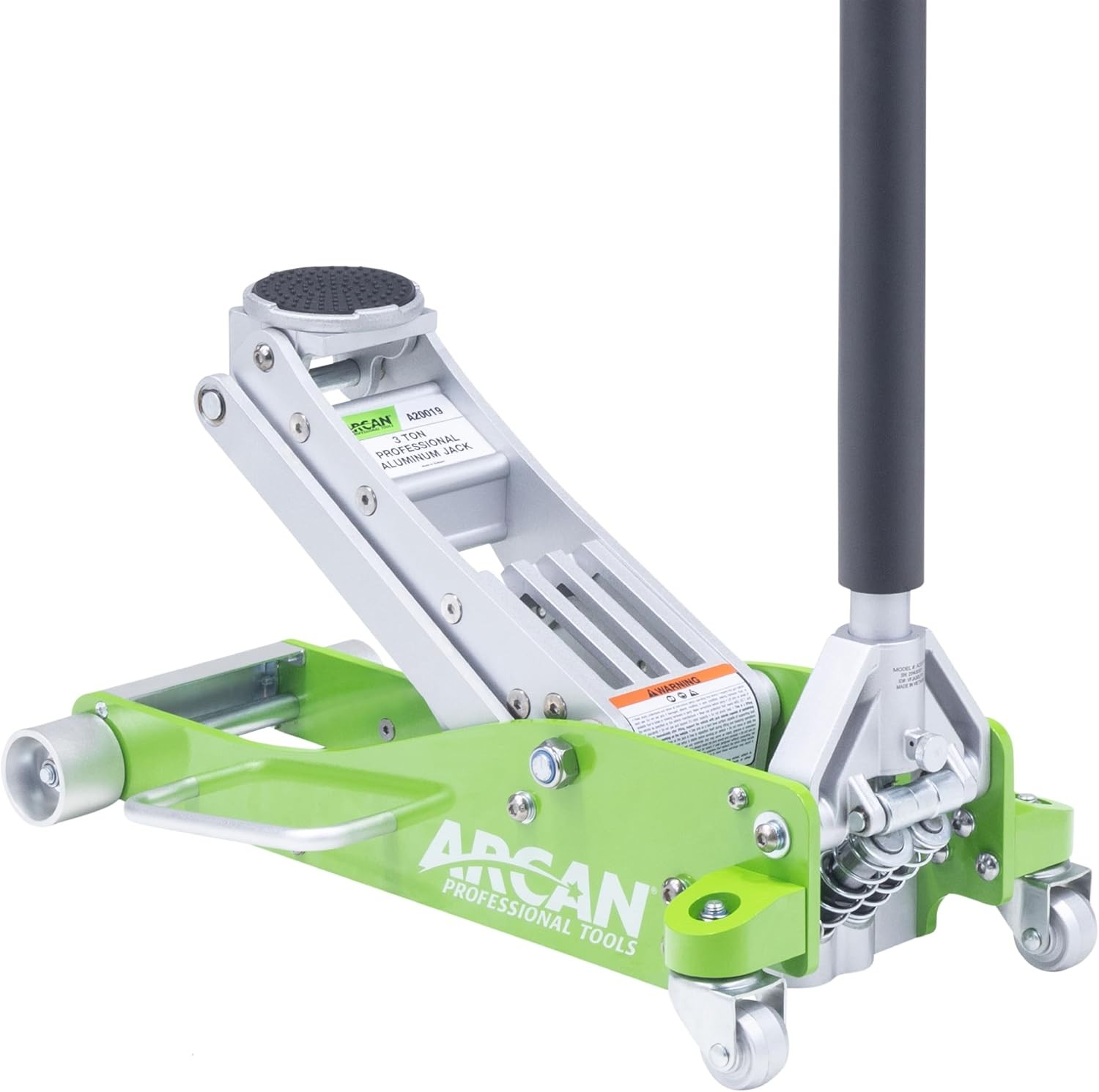 ARCAN A20019 floor jack | Jack at lift point | Yes, with stands | Check Price |
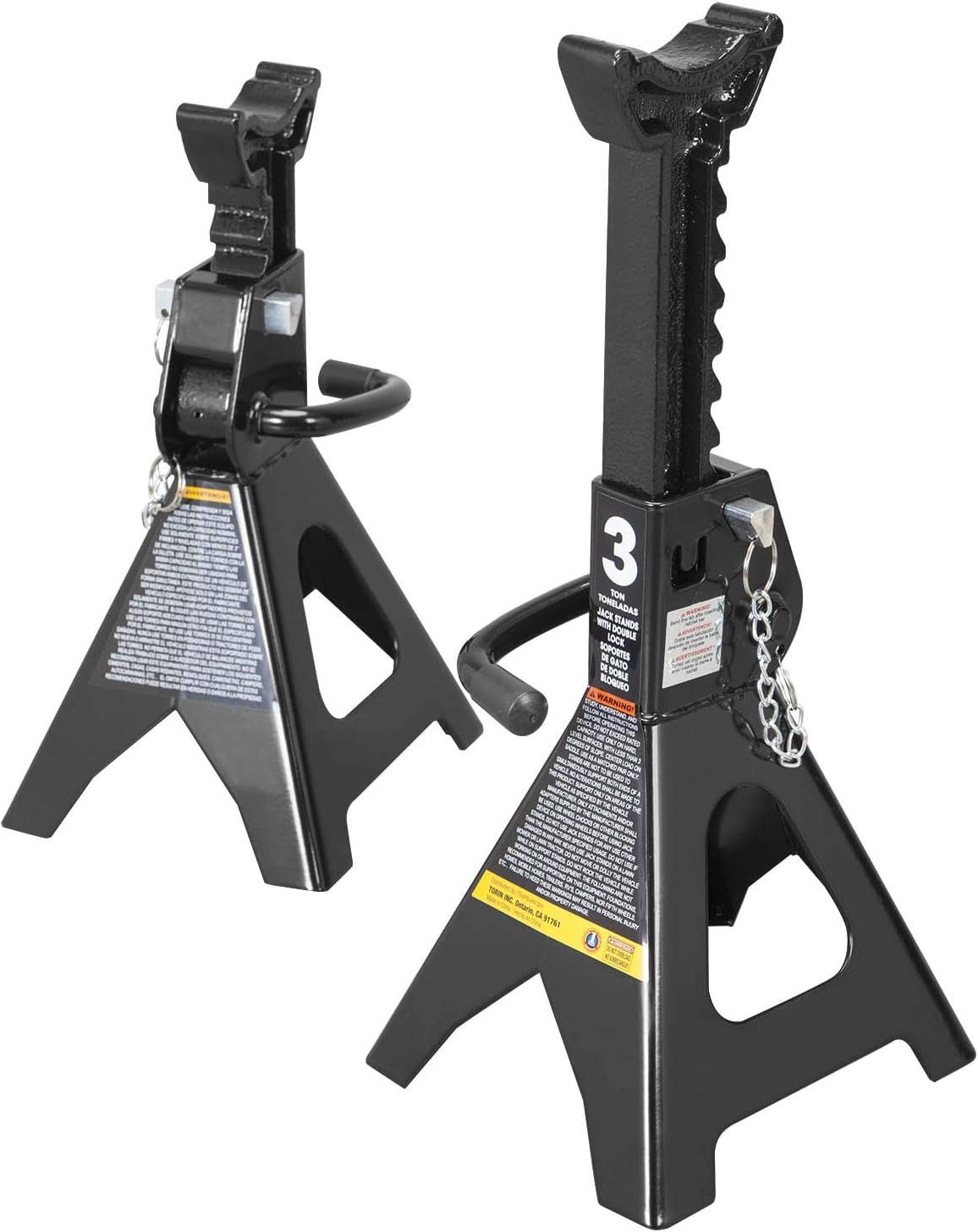 Torin AT43002AB stands | Hold the car, 11-1/4 to 16-3/4 in. | Yes | Check Price |
Round 1: How steady is the car once it is up?
Ramps win this one. Once the car is sitting on them, the tires rest on a wide platform instead of a small saddle under a pinch weld or frame rail. NAPA describes ramps as large, solid points of contact that are unlikely to fail, and Jalopnik makes the same point: the bigger support surface is a big part of why ramps can be the safer choice.
Jack stands are only as stable as their placement. They need to sit squarely under the frame or the support points your owner’s manual shows, on level pavement, with the ratchet fully engaged. The Drive warns that jacking points on older cars can be rusted enough to give way. Done right, stands are very solid. Done carelessly, they are where the horror stories come from.
Winner: ramps.
Round 2: The risky moment, getting it up
Each method has one tense minute. With ramps it is the drive-up. You are easing a car onto a narrow track you cannot see from the seat, and too much throttle can push a ramp forward or carry the tire over the stop. The Drive says a spotter is a must, and Haynes suggests a helper so the car goes up straight.
With a jack, it is the time between lifting and getting the stands set. The rule from NAPA is short: the jack is for lifting, the stand is for holding. Nothing of yours goes under the car until it is resting on stands, and the jack stays in place as a backup. Before you slide under, give the car a firm shove. If it moves, lift it and reset the stands.
Whichever you use: flat concrete or asphalt, never gravel or a slope, parking brake on, and wheel chocks on the tires that stay on the ground.
Winner: tie. Both are safe with a careful routine and risky without one.
Round 3: Which jobs can you actually do?
This is where jacks and stands pull ahead, and it is not close. On ramps the wheels are carrying the car, so anything that needs a wheel off is out: brake pads, tire rotations, wheel bearings, most suspension work. Jalopnik and JEGS both put ramps in the oil-change, fluid and quick-inspection category.
Jack stands let you lift a corner, an axle or the whole car. For the whole car, Jalopnik recommends four stands rather than four ramps, since ramps are designed for one axle at a time.
The Torin AT43002AB pair is rated at 3 tons, adjusts from 11-1/4 to 16-3/4 inches on a ratchet bar, and adds a locking pin as a second safety. NAPA’s guidance is to buy stands rated at least for your vehicle’s weight and always use them in pairs; extra rating is extra margin.
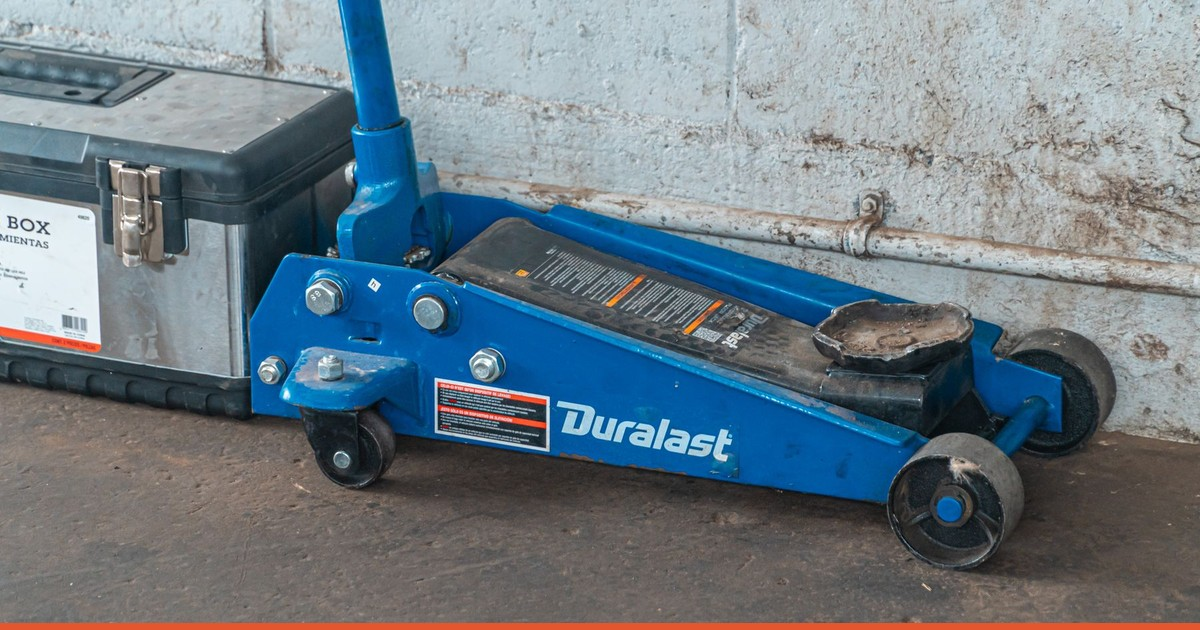
Pair them with a proper floor jack, not the scissor jack from the trunk, which NAPA notes was only ever meant for emergency tire changes. The ARCAN A20019 is a 3-ton aluminum jack with a 3.75-inch minimum height and a quick-rise pump, light enough to carry out to the driveway.
Want to do brakes and tires too? A floor jack and a pair of locking stands cover every job ramps cannot.
Shop the Jack Stands →Winner: jack and stands.
Round 4: Low cars and tight garages
Low cars are awkward for both. The Drive points out that some sports cars sit too low to get a jack under, and a steep ramp will catch the front bumper before the tires climb. The fix on the ramp side is a longer, shallower ramp.
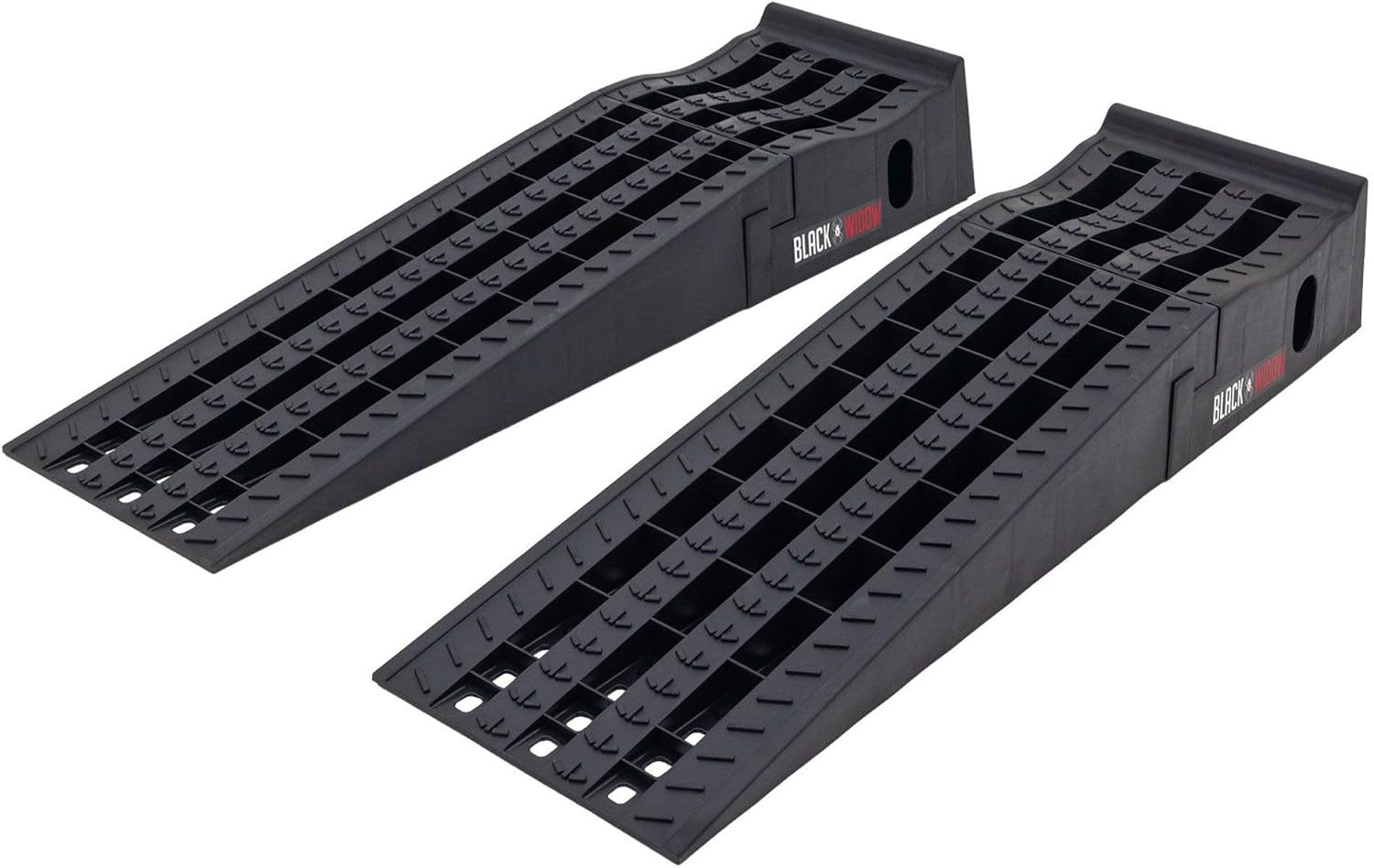
The Black Widow ramps have a 9.5-degree approach angle and a 6.5-inch lift. Each ramp is 52 inches long, rated at 6,500 lb per axle as a pair for vehicles up to 13,000 lb GVW, and the lower section pulls off once the car is up so it is not in your way underneath. Rubber pads on the bottom help keep them from sliding on smooth concrete.
For genuinely low cars, Race Ramps makes a two-piece set that is 72 inches long with an 8-inch lift, which spreads the climb over a much gentler slope. They are foam rather than plastic, light to carry, and the maker says they are built not to scoot on smooth floors.
Check the weight rating either way. Jalopnik notes ramp ratings are often quoted as total vehicle weight even though the pair only carries one axle, so read the listing carefully and compare it to your car.
Oil changes in half the setup time. Drive up, chock the rear wheels, and you are under the car in a minute.
Check the Black Widow Ramps →Space counts too. Ramps need a run-up in front of the car and a corner to live in. A jack and stands store small.
Winner: tie. Shallow ramps help low cars; a low-profile jack helps too.
Round 5: Speed and simplicity
For a routine oil change, ramps are hard to beat. Drive up, set the brake, chock the back wheels, and you are working. Jalopnik says ramps take a lot of time off jobs like oil changes. Stands take longer to set up and need more thought each time about where the jack and the stands go.
Winner: ramps.
The verdict
For jobs that keep the wheels on, ramps are the simpler and, for most people, the safer way up: fewer steps, fewer decisions, a wider footprint. For anything that takes a wheel off, a floor jack and jack stands are the only correct choice, and ramps were never an option.
If you can only buy one setup, buy the jack and stands; they do everything ramps do, just more slowly. Most people who work on their own cars end up owning both. Whichever you use, put a pair of rubber wheel chocks on your list. They are cheap and they belong on every lift.
Using the stands for wheel work? Our guides to rotating tires in the driveway and changing your own oil walk through the full jobs, and a creeper makes the time underneath a lot more comfortable.
More GarageWise guides
- Changing Your Own Oil: Every Tool You Need
- How to Rotate Your Tires in the Driveway
- Mechanic Creepers and Shop Stools for Under-Car Work
- Swapping Brake Pads at Home: Tools and Steps